

Ready & Packaged Foods
All →Vegetables & Legumes
All →Desserts & Confectionery
All →Meat & Protein
All →Grains & Bakery
All →Beverages
All →Milk & Dairy
All →

🍰 Desserts & Confectionery
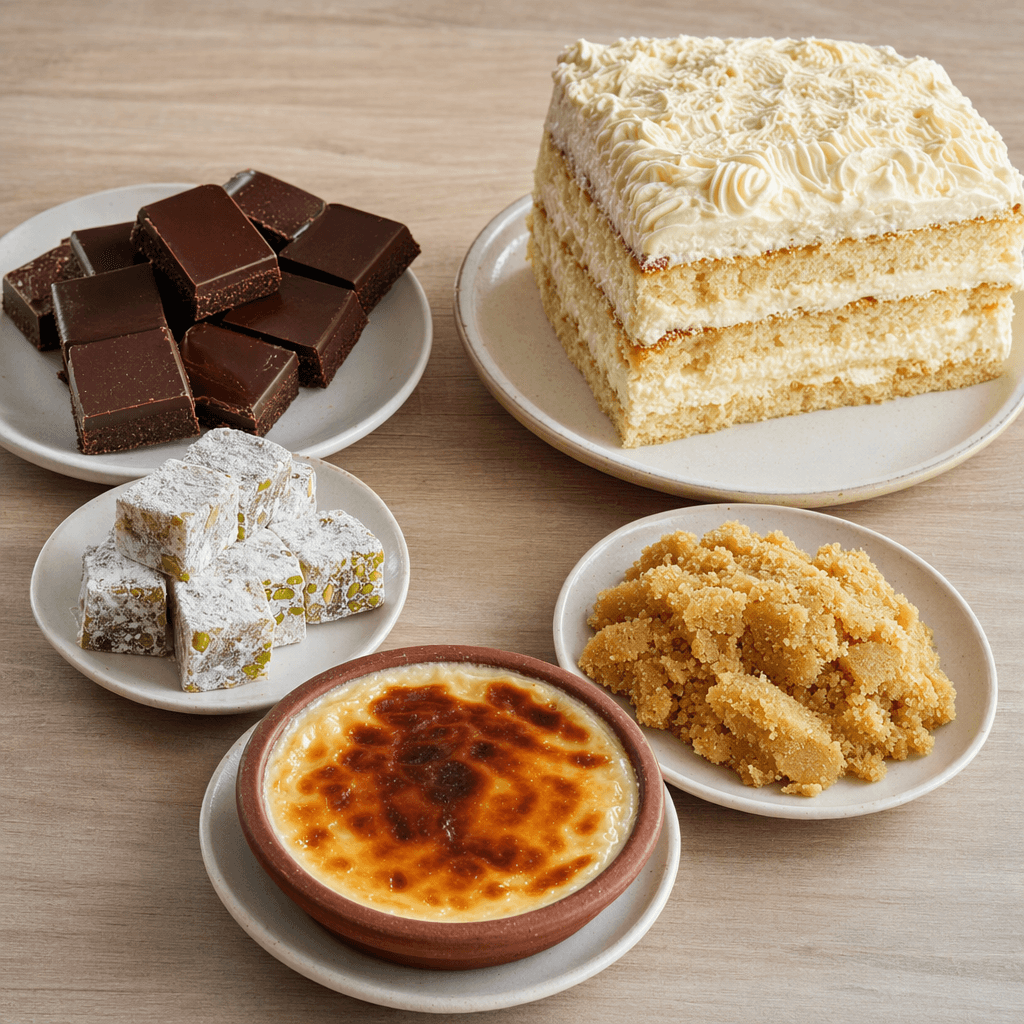
Desserts & Confectionery includes cakes and gateaux, cookies and biscuits, chocolate and confectionery, ice cream and frozen desserts, milk desserts, syrup desserts, puddings and cream desserts, and other sweets. The range runs from chilled milk-based treats such as kazandibi to rich chocolate, buttery bakes and syrup-soaked desserts.
Across the foods on EatBetter, the average per 100 g is 394 kcal, with 5.5 g protein, 50.5 g carbohydrates, 18.5 g fat and 2.9 g fiber. For a lighter choice, compare portions and look for less-rich options such as kazandibi; chocolate, cream fillings and syrup can make sweets more calorie-dense. Toppings, extra sauce and larger servings add more, while frying or soaking a dessert in syrup can make it richer than a simpler baked or chilled version.
Subcategories
Foods23,509
1 / 980
Next →Frequently asked questions
Which desserts are lowest and highest in calories?
Kazandibi is the lightest at 145 kcal per 100 g. Dark chocolate and milk chocolate with pistachio are highest among these examples at 540 kcal each; Rulokat is also energy-dense at 510 kcal per 100 g.
Which desserts here have the most protein?
Milk chocolate with pistachio has the most at 8.5 g per 100 g, followed by milk chocolate at 7.6 g and dark chocolate and Höşmerim at 7.5 g each. Desserts are generally chosen for taste rather than as a main protein source.
How do the dessert subcategories differ nutritionally?
Chocolate, cookies, cakes and cream desserts are often richer in fat and calories, while milk-based puddings can be lighter. Syrup desserts tend to be sweet and energy-dense, though recipes and portion sizes make a big difference.
How does preparation affect a dessert’s nutrition?
Added cream, butter, chocolate, nuts or syrup can raise the calories and fat or sugar in a serving. Frying or soaking a dessert in syrup generally makes it richer than a simpler baked or chilled preparation.
What is a sensible portion, and how should desserts be stored?
A small serving is a practical way to enjoy calorie-dense sweets, especially alongside a meal. Refrigerate cream- and milk-based desserts, and keep cookies and chocolate sealed in a cool, dry place; follow the package guidance for freshness.
Who should take extra care when choosing these desserts?
People monitoring their sugar or calorie intake may want to check portions and ingredients, since many sweets are rich in sugar or energy. Anyone with a food allergy should check for ingredients such as milk, nuts, wheat or eggs.
Is dark chocolate always lower in calories than milk chocolate?
No. Dark chocolate has 540 kcal per 100 g, while milk chocolate has 535 kcal, so dark chocolate is not necessarily lower in calories.
Are dessert sauces always lower in calories than solid sweets?
No. Chocolate sauce has 210 kcal per 100 g, but caramel sauce has 320 kcal, so the type of sauce matters. A sauce can also add calories to whatever it is served with.

Scan calories with your camera
Instant AI nutrition analysis
