

Ready & Packaged Foods
All →Vegetables & Legumes
All →Desserts & Confectionery
All →Meat & Protein
All →Grains & Bakery
All →Beverages
All →Milk & Dairy
All →

🥤 Beverages
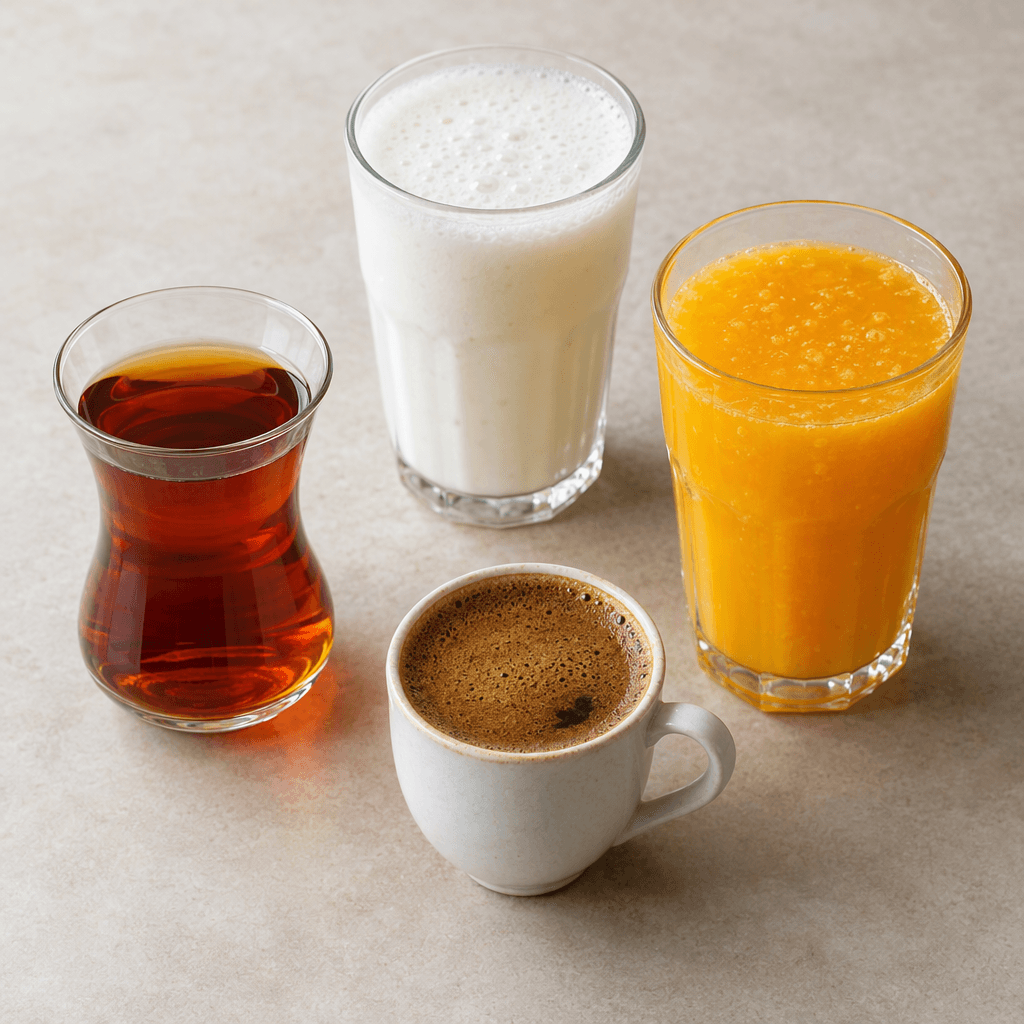
Beverages include coffee and tea, from plain brews to milk-based drinks, as well as soft drinks, fruit and vegetable juices, water and mineral water. The category also covers energy and sports drinks, smoothies and other drinks. Their ingredients and preparation can make their nutritional profiles very different, even when they share a serving size.
Across the foods on EatBetter, the average per 100 g is 70 calories, with 2.8 g protein, 10.4 g carbohydrates, 1.2 g fat and 0.7 g fiber. Plain tea and filter coffee are among the lightest choices, while sweetened drinks, juice and drinks with alcohol can be richer. Adding sugar, syrup or milk changes a drink’s calories and nutrients; choosing an unsweetened version or diluting a sweet drink can make it lighter. Check labels for packaged drinks, since recipes vary.
Subcategories
Foods16,227
1 / 677
Next →Frequently asked questions
Which beverages are lowest and highest in calories?
Tea and filter coffee are among the lowest at 1 calorie per 100 g. White wine is the highest among these popular options, at 82 calories per 100 g.
Which beverages here have the most protein?
Ayran and iced coffee with milk each provide 1.7 g of protein per 100 g among these popular options. Plain tea, coffee and soft drinks provide little or none.
How do coffee, tea, soft drinks, juices and the other beverage groups compare?
Plain coffee and tea are very low in calories, while sweetened soft drinks and fruit juices tend to provide more. Water and mineral water are simple hydration choices; energy, sports drinks and smoothies vary considerably with their ingredients.
Does preparation change a drink’s nutrition?
Yes. Sugar, syrups and milk can add calories, while straining juice removes much of its pulp and fiber. Unsweetened brewing keeps tea and coffee light, but additions can change that.
What is a sensible portion, and how should beverages be stored?
Enjoy calorie-containing drinks in portions that fit your needs, and make water a regular choice. Refrigerate opened drinks and fresh juice, follow package storage directions, and discard anything that smells or tastes off.
Who should be careful with beverages, and why?
People limiting sugar may want to check soft drinks, juices and sweetened coffee or tea; caffeine-sensitive people can choose decaffeinated or caffeine-free options. Alcoholic drinks such as white wine are not suitable for everyone, including children.
Is fruit juice calorie-free because it comes from fruit?
No. Orange juice provides 45 calories per 100 g, so “natural” does not mean calorie-free; whole fruit also offers fiber that juice may lack.
Are all drinks in this category equally filling?
No. Drinks with milk or thicker ingredients, such as smoothies, may be more substantial than plain tea, coffee or water. Sweet drinks can provide energy without being as filling as a solid snack.

Scan calories with your camera
Instant AI nutrition analysis
