

Ready & Packaged Foods
All →Vegetables & Legumes
All →Desserts & Confectionery
All →Meat & Protein
All →Grains & Bakery
All →Beverages
All →Milk & Dairy
All →

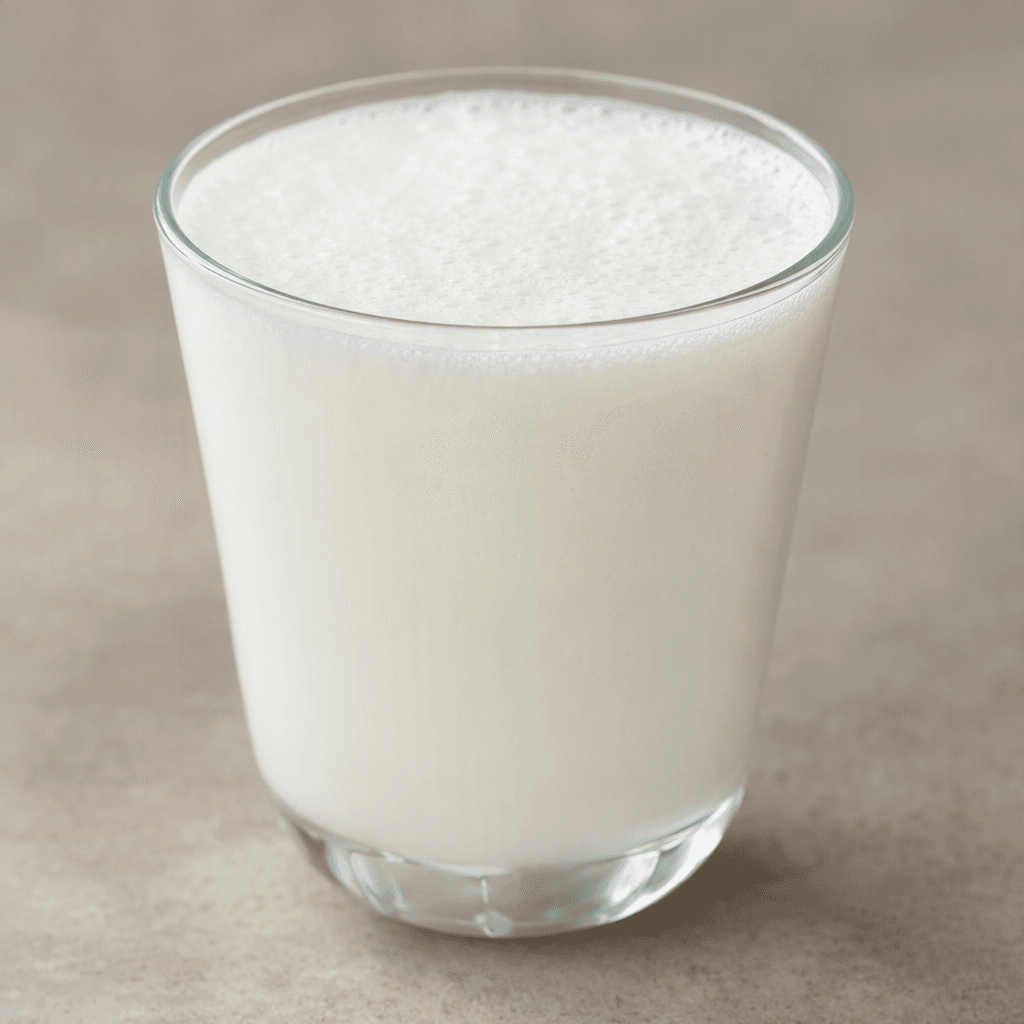
Ayran Calories
Yogurt-based refreshing drink, source of protein and calcium
In season: Spring · Summer · Autumn · Winter
CALORIES
GI
POTASSIUM
FIBER
Quick answer
1 cup (medium) of Ayran (200 g) has 74 calories. That works out to 37 calories per 100 g. It contains 8.4 g of carbs, 3.4 g of protein, 2 g of fat and 0 g of fiber. Its 190 mg of Phosphorus covers 27% of the Daily Value. Its glycemic index is 50 (low), so it raises blood sugar slowly.
What is Ayran?
Ayran is a traditional yogurt drink, made by whisking yogurt with water and often a little salt. It is widely enjoyed in Turkey and across parts of the region. Smooth and pourable, it tastes gently tangy and savoury; it is usually served cold, sometimes with a light foam on top.
In Turkey, it commonly accompanies kebabs, pide and everyday home-cooked meals, while elsewhere it makes a refreshing, non-sweet option alongside spicy or rich food. Yogurt gives ayran protein and calcium, and its watery, light character makes it an easy drink with a meal. If making it at home, adjust the salt to taste or add extra water for a milder, thinner drink.
Ayran Nutrition Facts
Selected: 100 g
37
KCAL / 100G
Carbs
4.2g
· 2% DV
Protein
1.7g
· 3% DV
Fat
1g
· 1% DV
Fiber
0g
· 0% DV
DV is the share of the daily value covered, on a 2,000 kcal reference diet.
Calories come from: Carbs 52% · Protein 21% · Fat 27%
Ayran Vitamins & Minerals
Vitamins
B2
0.15mg · 12% DV
B12
0.23µg · 10% DV
B5
0.35mg · 7% DV
Biotin
1.8µg · 6% DV
Minerals
Phosphorus
95mg · 14% DV
Calcium
120mg · 12% DV
Sodium
170mg · 7% DV
Iodine
7µg · 5% DV
How Nutritious Is Ayran?
Nutrient density
Medium
How many vitamins, minerals and how much fiber this food carries per calorie. A high score means a lot of nutrition for few calories.
Satiety score
Medium
An EatBetter score computed from fiber, protein and calorie density. A high score means staying full longer on the same calories.
Both scores are calculated per 100 g and do not change with the selected portion. The satiety score is EatBetter's own calculation, not a clinical measure.
Ayran Glycemic Index
GLYCEMIC INDEX
GLYCEMIC LOAD
Accounts for portion size — a more realistic measure than GI alone.
How to Burn Off Ayran
To burn the 37 calories in 100 g:
🚶
Walking (5 km/h)
🏃
Running (8 km/h)
🚴
Cycling
🏊
Swimming
Times are calculated with the MET equation for a 70 kg adult. Actual burn varies with your weight, age and pace.
Is Ayran Processed?
NOVA 2
Minimally Processed
1. Unprocessed
2. Minimally Processed
3. Processed
4. Ultra-Processed
NOVA classifies foods into 4 groups by industrial processing. NOVA 1 (unprocessed) is the healthiest.
Does Ayran Contain Allergens?
Contains these allergens:
Which Diets Is Ayran Good For?
Vegan
— Not suitable
Vegetarian
✓ Suitable
Gluten-Free
— Not suitable
Dairy-Free
— Not suitable
Mediterranean
✓ Suitable
Paleo
— Not suitable
Whole30
— Not suitable
DASH
— Not suitable
Keto
— Not suitable
Low FODMAP
— Not suitable
Ayran Fat Profile
SATURATED
0.6g
MONOUNSATURATED
0.25g
POLYUNSATURATED
0.04g
Omega 6:3 ratio 3:1
Below the ideal 4:1 — a good omega balance.
Compare Ayran
Foods Similar to Ayran
Frequently Asked Questions About Ayran
What is ayran made of?
Ayran is made by mixing yogurt with water, often with a little salt. It is served cold and usually has a pourable consistency; shaking or blending it can create a light foam.
Is ayran the same as lassi?
No. Ayran is generally a savory Turkish yogurt drink diluted with water, while lassi is a broader family of South Asian yogurt drinks that may be sweet, fruit-flavored, or savory and is often thicker.
Does ayran contain probiotics?
Ayran may contain live yogurt cultures if it is made with live-culture yogurt and has not been heat-treated afterward. The amount and types of cultures vary, so ayran should not be assumed to provide the same cultures as every fermented drink.
Why is ayran served with kebab?
Ayran is served with kebab as a cool, refreshing contrast to hot, savory, or spicy meat. Its tangy yogurt flavor also complements the rich seasoning without adding sweetness.
How do you make ayran thick and foamy?
Use thick yogurt, add cold water gradually, and whisk or blend until smooth and foamy. For a fuller texture, start with less water; shake the finished drink just before serving to refresh the foam.
Is ayran salty?
Ayran is often salted, but the amount varies by recipe and product. Homemade ayran can be made with little or no salt, which is useful if you are watching your sodium intake.
Can ayran help with hydration after exercise?
Ayran contributes fluid and can be a refreshing drink after exercise. Its salt content varies, so it should not automatically be treated as a sports drink; water remains a practical choice for ordinary workouts.
Can you use Greek yogurt to make ayran?
Yes, Greek yogurt works for ayran, but it needs more water than thinner yogurt to reach a pourable consistency. Whisk in cold water gradually and add salt only if you want a savory version.
How long does homemade ayran keep in the fridge?
Homemade ayran is best kept covered in the refrigerator and consumed while it still smells and tastes fresh. Stir or shake it before serving, since the yogurt and water can separate; discard it if you notice mold or an unusual odor.
Can you drink ayran with spicy food?
Yes, ayran is commonly served with spicy food, and its cool, tangy taste can make a spicy meal feel more refreshing. It does not remove the spice, but it offers a soothing contrast while you eat.
Have another question about Ayran?
Ask the AI nutrition coach — calories, portions, alternatives and more, answered in seconds in the app.

Scan calories with your camera
Instant AI nutrition analysis

Nutrition data compiled from USDA FoodData Central and scientific sources.