

Ready & Packaged Foods
All →Vegetables & Legumes
All →Desserts & Confectionery
All →Meat & Protein
All →Grains & Bakery
All →Beverages
All →Milk & Dairy
All →

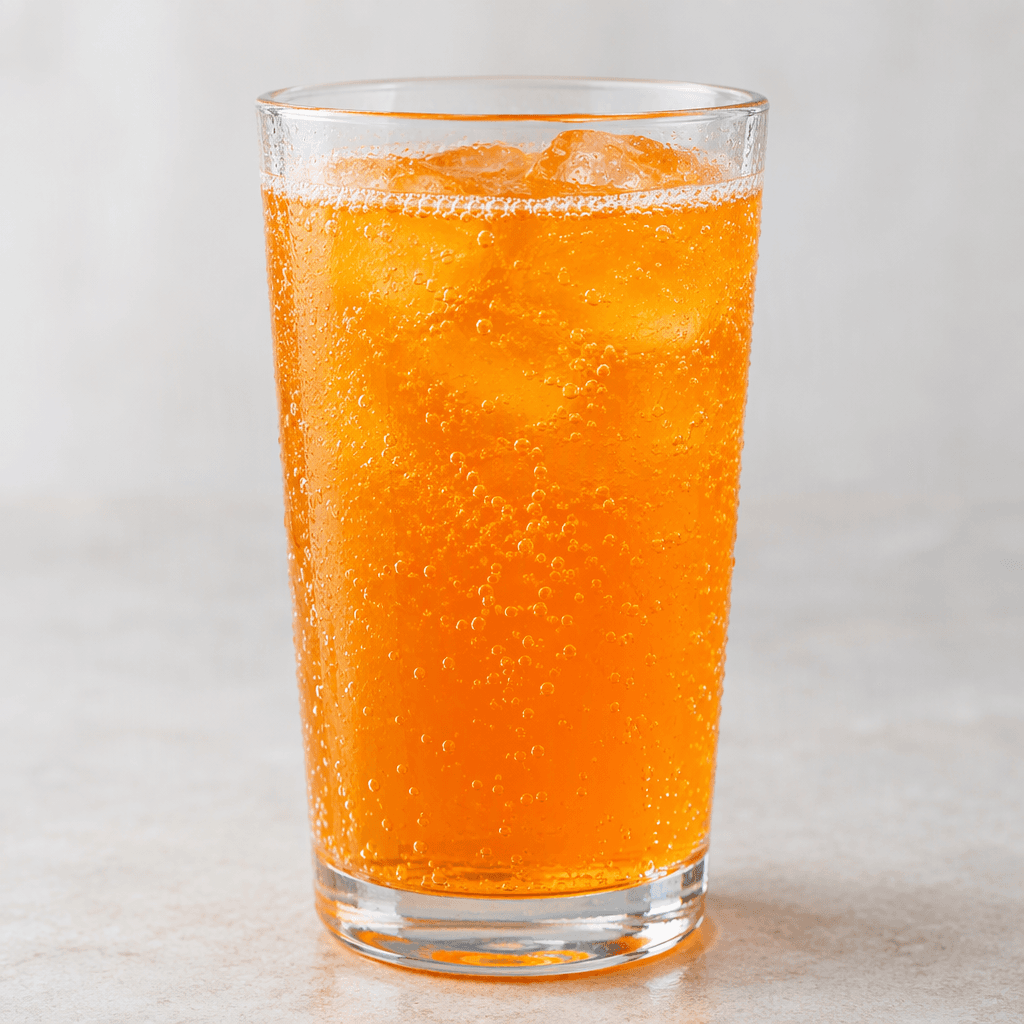
Fanta Calories
Popular soda, high sugar, no vitamin C
CALORIES
GI
POTASSIUM
FIBER
Quick answer
1 can (medium) of Fanta (330 g) has 132 calories. That works out to 40 calories per 100 g. It contains 35 g of carbs, 0 g of protein, 0 g of fat and 0 g of fiber. Its glycemic index is 65 (medium), so it raises blood sugar at a moderate pace.
What is Fanta?
Fanta is a branded, orange-flavoured fizzy soft drink, sweetened with sugar. It is a soda rather than fruit juice, and its exact recipe can vary by market, so check the label on the drink you have.
Served cold, it tastes sweet and citrusy, with a lively fizz. It is commonly poured over ice or enjoyed straight from the can alongside casual meals, takeaway food or snacks. Nutritionally, it mainly provides carbohydrates from sugar, with no protein or fibre; each 100 g contains 10.6 g of carbohydrate. If you want a lighter drink, choose a smaller serving or have water alongside it.
Fanta Nutrition Facts
Selected: 100 g
40
KCAL / 100G
Carbs
10.6g
· 4% DV
Protein
0g
· 0% DV
Fat
0g
· 0% DV
Fiber
0g
· 0% DV
DV is the share of the daily value covered, on a 2,000 kcal reference diet.
Calories come from: Carbs 100% · Protein 0% · Fat 0%
Fanta Vitamins & Minerals
Vitamins
Vitamin A
0µg · 0% DV
B1
0mg · 0% DV
B2
0mg · 0% DV
B3
0mg · 0% DV
Minerals
Calcium
2mg · 0% DV
Iron
0mg · 0% DV
Magnesium
1mg · 0% DV
Zinc
0mg · 0% DV
How Nutritious Is Fanta?
Nutrient density
Low
How many vitamins, minerals and how much fiber this food carries per calorie. A high score means a lot of nutrition for few calories.
Satiety score
Medium
An EatBetter score computed from fiber, protein and calorie density. A high score means staying full longer on the same calories.
Both scores are calculated per 100 g and do not change with the selected portion. The satiety score is EatBetter's own calculation, not a clinical measure.
Fanta Glycemic Index
GLYCEMIC INDEX
GLYCEMIC LOAD
Accounts for portion size — a more realistic measure than GI alone.
How to Burn Off Fanta
To burn the 40 calories in 100 g:
🚶
Walking (5 km/h)
🏃
Running (8 km/h)
🚴
Cycling
🏊
Swimming
Times are calculated with the MET equation for a 70 kg adult. Actual burn varies with your weight, age and pace.
Is Fanta Processed?
NOVA 4
Ultra-Processed
1. Unprocessed
2. Minimally Processed
3. Processed
4. Ultra-Processed
NOVA classifies foods into 4 groups by industrial processing. NOVA 1 (unprocessed) is the healthiest.
Does Fanta Contain Allergens?
No known major allergens
Which Diets Is Fanta Good For?
Vegan
✓ Suitable
Vegetarian
✓ Suitable
Gluten-Free
✓ Suitable
Dairy-Free
— Not suitable
Mediterranean
— Not suitable
Paleo
— Not suitable
Whole30
— Not suitable
DASH
— Not suitable
Keto
— Not suitable
Low FODMAP
— Not suitable
Fanta Fat Profile
SATURATED
0g
MONOUNSATURATED
0g
POLYUNSATURATED
0g
Compare Fanta
Foods Similar to Fanta
Frequently Asked Questions About Fanta
Does Fanta contain caffeine?
Standard orange Fanta is generally caffeine-free. Recipes can differ between flavors and markets, so check the ingredients for a specific variety if you need to avoid caffeine.
Is there real orange juice in Fanta?
Fanta’s orange flavor does not necessarily mean it contains much orange juice. Recipes vary by country, and many versions rely mainly on flavorings; any juice content depends on the specific product.
What is Fanta made of?
Fanta is typically made with carbonated water, sugar or sweeteners, acids, flavorings, and coloring. The exact ingredients—and whether a variety includes fruit juice—depend on its flavor and the country where it is sold.
Where did Fanta originate?
Fanta originated in Germany during World War II, when Coca-Cola’s local operation developed a substitute using ingredients available at the time. That original drink was different from the orange Fanta familiar today.
Is Fanta made by Coca-Cola?
Yes. Fanta is a brand owned by The Coca-Cola Company. It began as a separate drink in Germany, but today it is sold as part of Coca-Cola’s beverage range in many countries.
How much sugar does Fanta contain?
Regular Fanta is a sugary soft drink, but its sugar content varies by country, serving size, and recipe. Some markets also sell reduced-sugar or sugar-free versions, which use a different formulation.
Is Fanta Zero Sugar actually sugar-free?
Fanta Zero Sugar is formulated without sugar, using sweeteners instead. It is different from regular Fanta, and the available name and recipe can vary between countries and flavors.
Why does Fanta taste different in different countries?
Fanta recipes are adapted for different markets, so sweetness, flavorings, juice content, and sweeteners can vary. Changes in local ingredients and product preferences can make two countries’ orange Fanta taste noticeably different.
How long does Fanta last after opening?
Keep opened Fanta tightly capped in the refrigerator and drink it soon for the best fizz and flavor. It gradually goes flat after opening, even when chilled; the unopened date does not preserve its carbonation once opened.
Can Fanta damage your teeth?
Frequent Fanta consumption can contribute to tooth decay and enamel erosion because it is both sugary and acidic. Having it less often and avoiding sipping it over a long period can reduce repeated exposure to the teeth.
Have another question about Fanta?
Ask the AI nutrition coach — calories, portions, alternatives and more, answered in seconds in the app.

Scan calories with your camera
Instant AI nutrition analysis

Nutrition data compiled from USDA FoodData Central and scientific sources.