

Ready & Packaged Foods
All →Vegetables & Legumes
All →Desserts & Confectionery
All →Meat & Protein
All →Grains & Bakery
All →Beverages
All →Milk & Dairy
All →

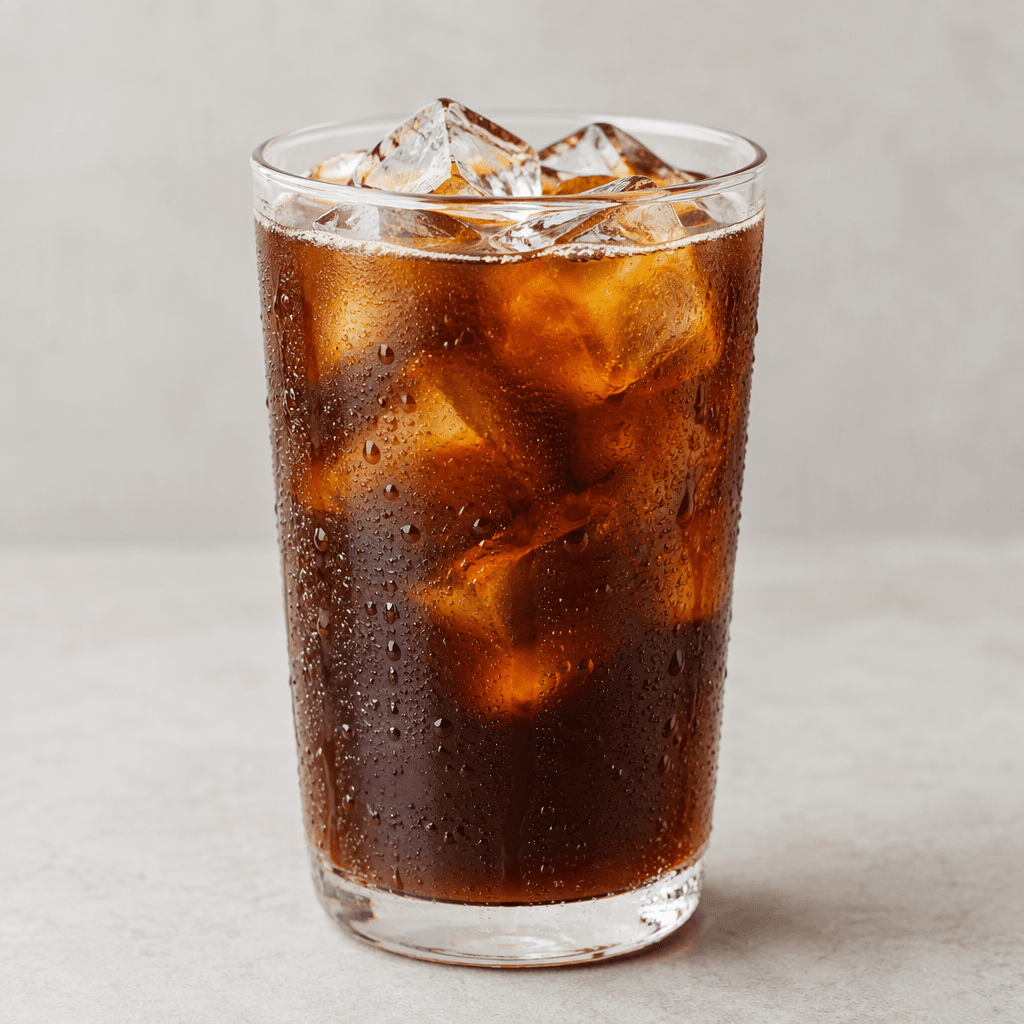
Iced Coffee Calories
Caffeinated, refreshing, low calorie
In season: Summer
CALORIES
GI
POTASSIUM
FIBER
Quick answer
1 cup (medium) of Iced Coffee (240 g) has 12 calories. That works out to 5 calories per 100 g. It contains 2.4 g of carbs, 0.7 g of protein, 0 g of fat and 0 g of fiber. Its 0.7 mg of B3 covers 5% of the Daily Value. Its glycemic index is 0 (low), so it raises blood sugar slowly.
What is Iced Coffee?
Iced coffee is brewed coffee chilled and served over ice. It is a flexible drink rather than one fixed recipe: coffee may be brewed hot and cooled, or steeped in cold water, then served plain or with milk and sweetener.
Across the world, it is a popular café and at-home choice in warm weather. The flavour can be bold and clean when served black, or smoother with milk; as the ice melts, it becomes more diluted. Plain iced coffee is mostly water and very low in calories, while still containing caffeine. For a lighter cup, skip flavoured syrups or add just a splash of milk; it also pairs well with a small pastry or fruit.
Iced Coffee Nutrition Facts
Selected: 100 g
5
KCAL / 100G
Carbs
1g
· 0% DV
Protein
0.3g
· 1% DV
Fat
0g
· 0% DV
Fiber
0g
· 0% DV
DV is the share of the daily value covered, on a 2,000 kcal reference diet.
Calories come from: Carbs 77% · Protein 23% · Fat 0%
Iced Coffee Vitamins & Minerals
Vitamins
B2
0.02mg · 2% DV
B3
0.3mg · 2% DV
B1
0.01mg · 1% DV
B5
0.05mg · 1% DV
Minerals
Magnesium
7mg · 2% DV
Phosphorus
7mg · 1% DV
Potassium ⭐
50mg · 1% DV
Calcium
2mg · 0% DV
How Nutritious Is Iced Coffee?
Nutrient density
Low
How many vitamins, minerals and how much fiber this food carries per calorie. A high score means a lot of nutrition for few calories.
Satiety score
Medium
An EatBetter score computed from fiber, protein and calorie density. A high score means staying full longer on the same calories.
Both scores are calculated per 100 g and do not change with the selected portion. The satiety score is EatBetter's own calculation, not a clinical measure.
Iced Coffee Glycemic Index
GLYCEMIC INDEX
GLYCEMIC LOAD
Accounts for portion size — a more realistic measure than GI alone.
How to Burn Off Iced Coffee
To burn the 5 calories in 100 g:
🚶
Walking (5 km/h)
🏃
Running (8 km/h)
🚴
Cycling
🏊
Swimming
Times are calculated with the MET equation for a 70 kg adult. Actual burn varies with your weight, age and pace.
Is Iced Coffee Processed?
NOVA 2
Minimally Processed
1. Unprocessed
2. Minimally Processed
3. Processed
4. Ultra-Processed
NOVA classifies foods into 4 groups by industrial processing. NOVA 1 (unprocessed) is the healthiest.
Does Iced Coffee Contain Allergens?
No known major allergens
Which Diets Is Iced Coffee Good For?
Vegan
✓ Suitable
Vegetarian
✓ Suitable
Gluten-Free
✓ Suitable
Dairy-Free
— Not suitable
Mediterranean
✓ Suitable
Paleo
✓ Suitable
Whole30
— Not suitable
DASH
— Not suitable
Keto
— Not suitable
Low FODMAP
— Not suitable
Iced Coffee Fat Profile
SATURATED
0g
MONOUNSATURATED
0g
POLYUNSATURATED
0g
Compare Iced Coffee
Foods Similar to Iced Coffee
Frequently Asked Questions About Iced Coffee
Does iced coffee have more caffeine than hot coffee?
Not necessarily; iced coffee can have more, less, or about the same caffeine as hot coffee. The amount depends on the coffee-to-water ratio, serving size, and brewing method—not on the ice itself.
How do you make iced coffee at home?
Brew coffee, let it cool, and pour it over ice. For a less diluted drink, chill the coffee before serving or freeze some brewed coffee in an ice-cube tray and use those cubes instead.
Is iced coffee the same as cold brew?
No. Iced coffee is coffee served cold, often over ice, and can be made with hot-brewed coffee that has been chilled. Cold brew is made by steeping coffee grounds in cold water for an extended time.
Can you make iced coffee with instant coffee?
Yes, dissolve instant coffee in a small amount of warm water, then add cold water or milk and ice. Dissolving it first helps prevent gritty clumps from settling in the finished iced coffee.
How do you stop iced coffee from tasting watery?
Use chilled coffee rather than pouring hot coffee straight onto ice, and choose large ice cubes that melt more slowly. You can also freeze brewed coffee into cubes so melting ice adds coffee instead of plain water.
What milk is best for iced coffee?
The best milk for iced coffee is the one that suits your taste and texture preference. Whole milk makes it creamier, while oat, soy, or other plant-based drinks offer different flavors; add the milk gradually to avoid overpowering the coffee.
How long does iced coffee last in the fridge?
Plain iced coffee keeps for a few days in a sealed container in the refrigerator. If you have added milk, drink it sooner, and discard the coffee if its smell or taste changes.
Does iced coffee keep you awake at night?
Yes, the caffeine in iced coffee can make it harder to fall asleep or reduce sleep quality, even when the drink is cold. If caffeine affects you, avoid iced coffee later in the day.
Can iced coffee upset your stomach?
Yes, iced coffee can bother some people’s stomachs, particularly if coffee itself triggers reflux or irritation for them. Adding milk may also cause discomfort for people who have trouble digesting lactose.
Can you drink iced coffee while pregnant?
Yes, iced coffee can fit during pregnancy if you keep your total caffeine within the limit recommended for pregnancy. Count caffeine from all drinks and foods that day, and ask your doctor if you need personal guidance.
Have another question about Iced Coffee?
Ask the AI nutrition coach — calories, portions, alternatives and more, answered in seconds in the app.

Scan calories with your camera
Instant AI nutrition analysis

Nutrition data compiled from USDA FoodData Central and scientific sources.