

Ready & Packaged Foods
All →Vegetables & Legumes
All →Desserts & Confectionery
All →Meat & Protein
All →Grains & Bakery
All →Beverages
All →Milk & Dairy
All →

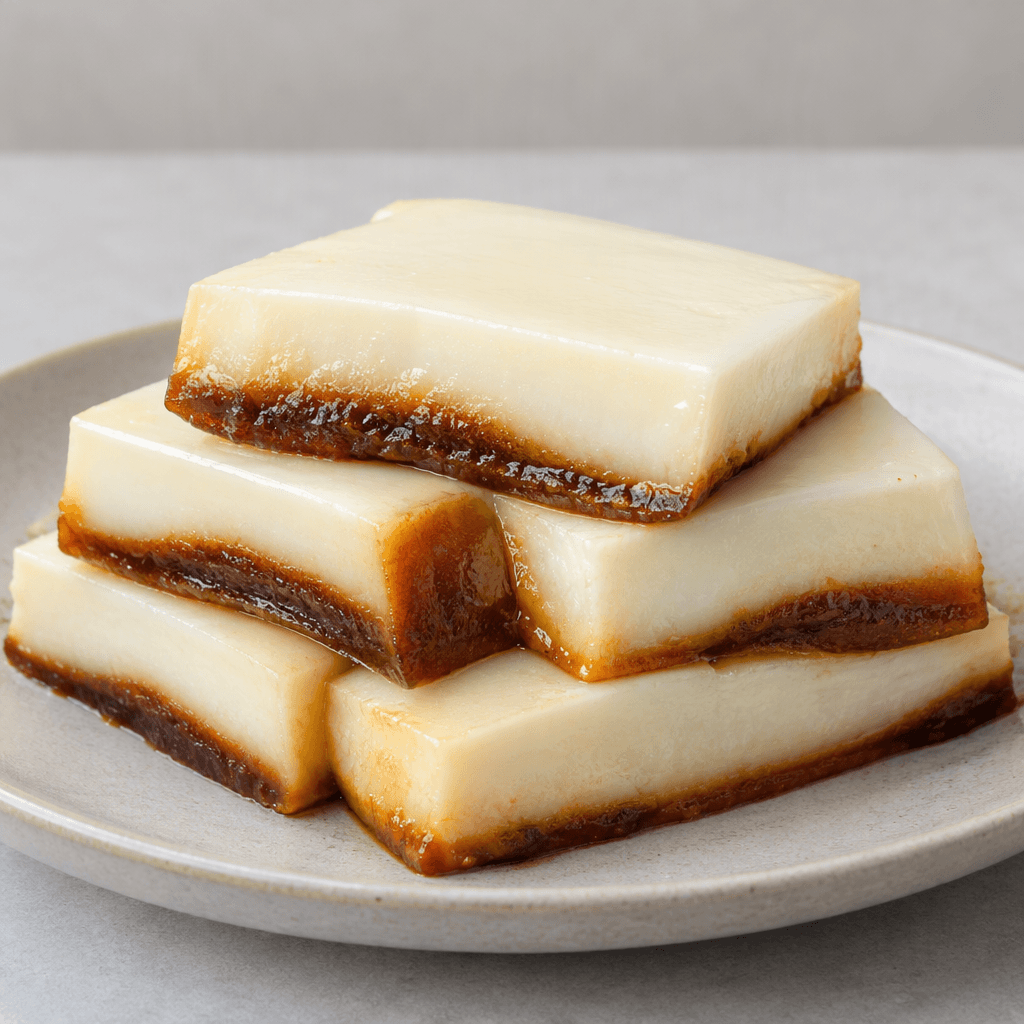
Kazandibi Calories
Classic Turkish milk pudding, caramelized top
In season: Spring · Summer · Autumn · Winter
CALORIES
GI
POTASSIUM
FIBER
Quick answer
1 slice (medium) of Kazandibi (120 g) has 174 calories. That works out to 145 calories per 100 g. It contains 30.6 g of carbs, 4 g of protein, 3.8 g of fat and 0.1 g of fiber. Its 102 mg of Phosphorus covers 15% of the Daily Value. Its glycemic index is 65 (medium), so it raises blood sugar at a moderate pace.
What is Kazandibi?
Kazandibi is a traditional Turkish milk pudding, cooked in a shallow tray until the layer against the bottom turns deeply caramelised. Its name refers to that browned base. Recipes vary: some use a pudding similar to tavuk göğsü, while others make the creamy filling with milk, sugar and starch or rice flour.
Once chilled, it is cut into portions and often folded so the caramelised side shows. The texture is smooth and softly set, with a mellow milky taste and a bittersweet, toasted edge. In Turkey it is a familiar bakery and dessert-shop treat, commonly served cold after a meal or alongside tea or coffee. It is mostly a sweet, carbohydrate-based dessert; a modest slice works well when you want something creamy without a heavy serving.
Kazandibi Nutrition Facts
Selected: 100 g
145
KCAL / 100G
Carbs
25.5g
· 9% DV
Protein
3.3g
· 7% DV
Fat
3.2g
· 4% DV
Fiber
0.1g
· 0% DV
DV is the share of the daily value covered, on a 2,000 kcal reference diet.
Calories come from: Carbs 71% · Protein 9% · Fat 20%
Kazandibi Vitamins & Minerals
Vitamins
B2
0.13mg · 10% DV
B12
0.22µg · 9% DV
B5
0.4mg · 8% DV
Biotin
2.2µg · 7% DV
Minerals
Phosphorus
85mg · 12% DV
Calcium
110mg · 11% DV
Iodine
8µg · 5% DV
Selenium
2.5µg · 5% DV
How Nutritious Is Kazandibi?
Nutrient density
Low
How many vitamins, minerals and how much fiber this food carries per calorie. A high score means a lot of nutrition for few calories.
Satiety score
Low
An EatBetter score computed from fiber, protein and calorie density. A high score means staying full longer on the same calories.
Both scores are calculated per 100 g and do not change with the selected portion. The satiety score is EatBetter's own calculation, not a clinical measure.
Kazandibi Glycemic Index
GLYCEMIC INDEX
GLYCEMIC LOAD
Accounts for portion size — a more realistic measure than GI alone.
How to Burn Off Kazandibi
To burn the 145 calories in 100 g:
🚶
Walking (5 km/h)
🏃
Running (8 km/h)
🚴
Cycling
🏊
Swimming
Times are calculated with the MET equation for a 70 kg adult. Actual burn varies with your weight, age and pace.
Is Kazandibi Processed?
NOVA 3
Processed
1. Unprocessed
2. Minimally Processed
3. Processed
4. Ultra-Processed
NOVA classifies foods into 4 groups by industrial processing. NOVA 1 (unprocessed) is the healthiest.
Does Kazandibi Contain Allergens?
Contains these allergens:
Which Diets Is Kazandibi Good For?
Vegan
— Not suitable
Vegetarian
✓ Suitable
Gluten-Free
— Not suitable
Dairy-Free
— Not suitable
Mediterranean
✓ Suitable
Paleo
— Not suitable
Whole30
— Not suitable
DASH
— Not suitable
Keto
— Not suitable
Low FODMAP
— Not suitable
Kazandibi Fat Profile
SATURATED
1.9g
MONOUNSATURATED
0.8g
POLYUNSATURATED
0.2g
Omega 6:3 ratio 3:1
Below the ideal 4:1 — a good omega balance.
Compare Kazandibi
Foods Similar to Kazandibi
Frequently Asked Questions About Kazandibi
What is kazandibi made of?
Kazandibi is a Turkish milk pudding usually made with milk, sugar, and rice flour or starch. Its defining feature is a deliberately browned layer on the bottom, which becomes the glossy caramel-colored top when the pudding is turned out.
What does the name kazandibi mean?
Kazandibi literally means “bottom of the pot” in Turkish. The name refers to the pudding’s browned underside, which is created during cooking and shown on top when the dessert is flipped for serving.
Does kazandibi contain chicken?
Some traditional kazandibi is made from tavuk göğsü, a Turkish milk pudding containing finely shredded chicken breast. Many modern recipes and shop-bought versions leave the chicken out, so the dessert can be either chicken-containing or chicken-free.
How is kazandibi different from tavuk göğsü?
Tavuk göğsü is a milk pudding that may contain finely shredded chicken; kazandibi is browned against the cooking tray and served with that caramelized layer facing up. The two can share a base, but the browned surface distinguishes kazandibi.
Why is kazandibi burnt on the bottom?
The bottom of kazandibi is intentionally browned to give it a toasted, caramel-like flavor and its characteristic dark surface. It should taste pleasantly caramelized, not bitter; excessive heat can scorch the sugar and spoil the flavor.
How do you make kazandibi at home?
Cook a milk pudding, spread it in a buttered tray with sugar on the base, and heat until the underside browns. Once it has cooled and set, cut it into portions and turn each piece over so the browned side is on top.
Is kazandibi like crème brûlée?
Kazandibi and crème brûlée both have a caramelized surface, but they are different desserts. Kazandibi is a firm Turkish milk pudding browned on the underside and flipped over; crème brûlée is a baked custard with a crisp layer of caramelized sugar on top.
How is kazandibi served?
Kazandibi is usually served chilled, cut into rectangular slices with its browned surface facing up. It is often enjoyed on its own as a dessert, though some Turkish restaurants serve it with a scoop of ice cream.
How long does kazandibi keep in the fridge?
Kazandibi keeps for about 2–3 days in a covered container in the refrigerator. Because it is milk-based, refrigerate leftovers promptly and discard them if they develop an off smell or an unusual watery texture.
Can you freeze kazandibi?
Yes, kazandibi can be frozen, but thawing may make its pudding texture watery or grainy. Freeze it in an airtight container, thaw it in the refrigerator, and do not refreeze it once it has thawed.
Have another question about Kazandibi?
Ask the AI nutrition coach — calories, portions, alternatives and more, answered in seconds in the app.

Scan calories with your camera
Instant AI nutrition analysis

Nutrition data compiled from USDA FoodData Central and scientific sources.