

Ready & Packaged Foods
All →Vegetables & Legumes
All →Desserts & Confectionery
All →Meat & Protein
All →Grains & Bakery
All →Beverages
All →Milk & Dairy
All →

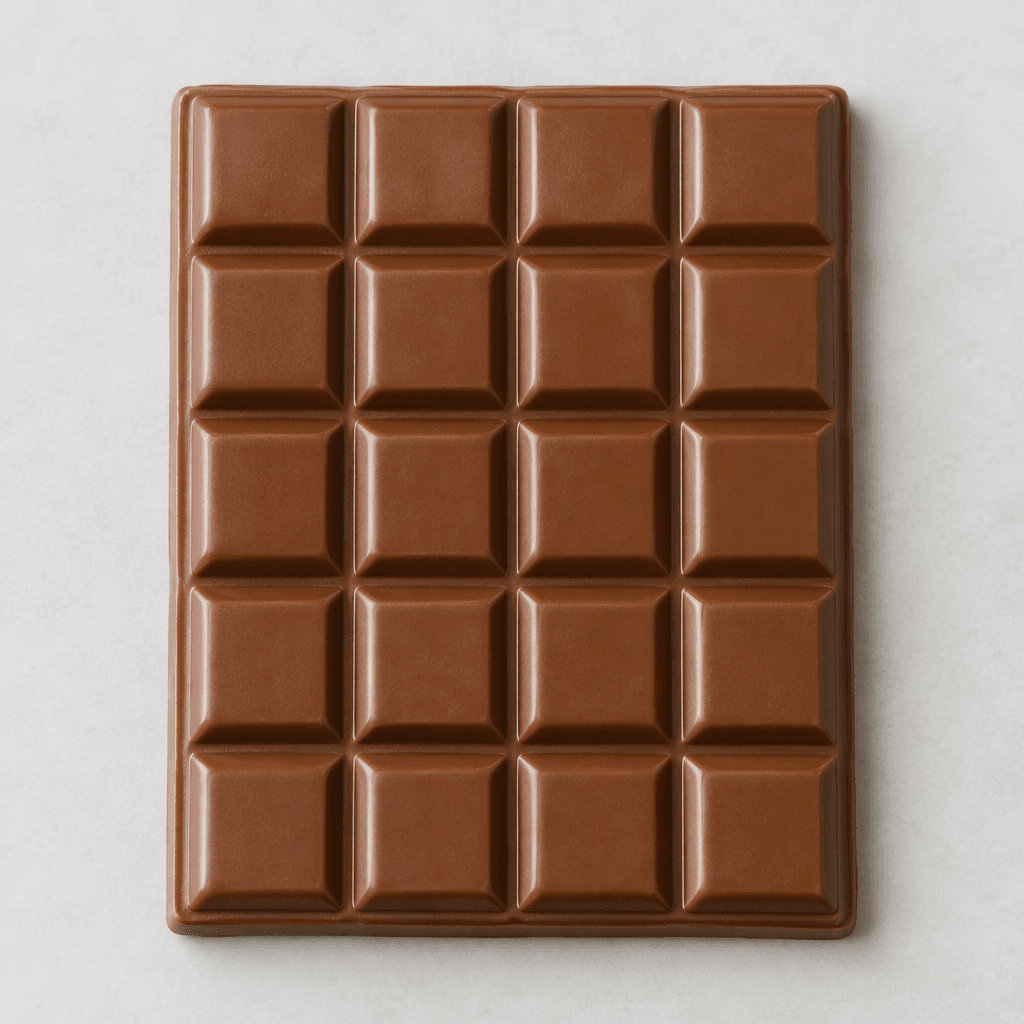
Milk Chocolate Calories
Sweet, creamy, contains cocoa and milk
In season: Winter · Spring · Summer · Autumn
CALORIES
GI
POTASSIUM
FIBER
Quick answer
1 piece (medium) of Milk Chocolate (25 g) has 134 calories. That works out to 535 calories per 100 g. It contains 14 g of carbs, 1.9 g of protein, 7.8 g of fat and 0.6 g of fiber. Its 0.1 mg of Copper covers 8% of the Daily Value. Its glycemic index is 45 (medium), so it raises blood sugar at a moderate pace.
What is Milk Chocolate?
Milk chocolate combines cocoa solids and cocoa butter with sugar and milk, and is commonly sold in bars. Its development is closely associated with Swiss chocolate-making in the 19th century. Smooth and creamy, with a mellow cocoa flavour, it is often eaten a square or two at a time as a snack, shared with coffee or tea, or used in baking and desserts. In many places, bars and small wrapped pieces are everyday treats; it also melts easily into sauces and toppings.
It is an energy-dense sweet, with much of its energy coming from sugar and fat, alongside some protein from the milk and cocoa. For a lighter treat, keep the portion modest or pair a piece with fresh fruit.
Milk Chocolate Nutrition Facts
Selected: 100 g
535
KCAL / 100G
Carbs
56g
· 20% DV
Protein
7.6g
· 15% DV
Fat
31g
· 40% DV
Fiber
2.4g
· 9% DV
DV is the share of the daily value covered, on a 2,000 kcal reference diet.
Calories come from: Carbs 42% · Protein 6% · Fat 52%
Milk Chocolate Vitamins & Minerals
Vitamins
B12
0.5µg · 21% DV
B2
0.26mg · 20% DV
Biotin
6µg · 20% DV
B5
0.6mg · 12% DV
Minerals
Phosphorus
210mg · 30% DV
Calcium
190mg · 19% DV
Zinc
2mg · 18% DV
Magnesium
60mg · 14% DV
How Nutritious Is Milk Chocolate?
Nutrient density
Low
How many vitamins, minerals and how much fiber this food carries per calorie. A high score means a lot of nutrition for few calories.
Satiety score
Low
An EatBetter score computed from fiber, protein and calorie density. A high score means staying full longer on the same calories.
Both scores are calculated per 100 g and do not change with the selected portion. The satiety score is EatBetter's own calculation, not a clinical measure.
Milk Chocolate Glycemic Index
GLYCEMIC INDEX
GLYCEMIC LOAD
Accounts for portion size — a more realistic measure than GI alone.
How to Burn Off Milk Chocolate
To burn the 535 calories in 100 g:
🚶
Walking (5 km/h)
🏃
Running (8 km/h)
🚴
Cycling
🏊
Swimming
Times are calculated with the MET equation for a 70 kg adult. Actual burn varies with your weight, age and pace.
Is Milk Chocolate Processed?
NOVA 3
Processed
1. Unprocessed
2. Minimally Processed
3. Processed
4. Ultra-Processed
NOVA classifies foods into 4 groups by industrial processing. NOVA 1 (unprocessed) is the healthiest.
Does Milk Chocolate Contain Allergens?
Contains these allergens:
Which Diets Is Milk Chocolate Good For?
Vegan
— Not suitable
Vegetarian
✓ Suitable
Gluten-Free
— Not suitable
Dairy-Free
— Not suitable
Mediterranean
— Not suitable
Paleo
— Not suitable
Whole30
— Not suitable
DASH
— Not suitable
Keto
— Not suitable
Low FODMAP
— Not suitable
Milk Chocolate Fat Profile
SATURATED
19g
MONOUNSATURATED
9.5g
POLYUNSATURATED
1.2g
Omega 6:3 ratio 11.7:1
Above the ideal 4:1 (11.7:1).
Compare Milk Chocolate
Foods Similar to Milk Chocolate
Frequently Asked Questions About Milk Chocolate
Is milk chocolate real chocolate?
Yes, milk chocolate is real chocolate because it contains cocoa ingredients, typically cocoa solids and cocoa butter, along with milk and sugar. Its milk content and sweeter taste distinguish it from dark chocolate; the exact recipe varies by product.
Does milk chocolate contain caffeine?
Yes, milk chocolate contains some caffeine because it is made with cocoa. It generally has less caffeine than a comparable amount of dark chocolate, though the amount varies with the cocoa content. Sensitive people may want to avoid it near bedtime.
Can dogs eat milk chocolate?
No, dogs should not eat milk chocolate. Cocoa contains theobromine, which dogs process slowly and which can poison them. If your dog has eaten any, contact a veterinarian promptly and share the type and estimated amount of chocolate.
How do you melt milk chocolate without burning it?
Melt milk chocolate gently in a dry bowl over barely simmering water, or microwave it in short bursts while stirring between them. Keep water and steam out of the chocolate, and stop heating while a few small pieces remain so residual heat can finish melting them.
Why does milk chocolate turn white?
Milk chocolate can develop a pale coating when cocoa butter or sugar moves to the surface, often after temperature changes or exposure to moisture. This is called bloom and is generally safe to eat, although the chocolate may taste or feel different.
How should you store milk chocolate?
Store milk chocolate tightly wrapped in a cool, dry place away from sunlight and strong-smelling foods. A stable room-temperature cupboard is usually better than the refrigerator, where moisture and temperature changes can leave the surface dull or streaked.
Can you use milk chocolate for baking?
Yes, milk chocolate works in cookies, brownies, and other baked goods, but it makes them sweeter and less cocoa-rich than dark chocolate. Consider reducing the recipe’s added sugar, and watch the baking time because chocolate can scorch.
Does milk chocolate go bad?
Yes, milk chocolate can eventually lose quality or spoil, especially if stored warm, damp, or unwrapped. Discard it if you see mold, notice an unpleasant rancid smell, or find a clearly abnormal texture; a simple white bloom is not usually spoilage.
Why does milk chocolate seize when melted?
Milk chocolate seizes when even a small amount of water gets into the melted chocolate, causing the sugar and cocoa particles to clump. Use completely dry utensils and keep steam away. For a smooth coating, avoid adding water or other watery ingredients.
Can cats eat milk chocolate?
No, milk chocolate is unsafe for cats. Its theobromine and caffeine can be toxic, and cats should not be given chocolate as a treat. If a cat eats some, contact a veterinarian for advice rather than waiting for symptoms.
Have another question about Milk Chocolate?
Ask the AI nutrition coach — calories, portions, alternatives and more, answered in seconds in the app.

Scan calories with your camera
Instant AI nutrition analysis

Nutrition data compiled from USDA FoodData Central and scientific sources.