

Ready & Packaged Foods
All →Vegetables & Legumes
All →Desserts & Confectionery
All →Meat & Protein
All →Grains & Bakery
All →Beverages
All →Milk & Dairy
All →

🥦 Vegetables & Legumes
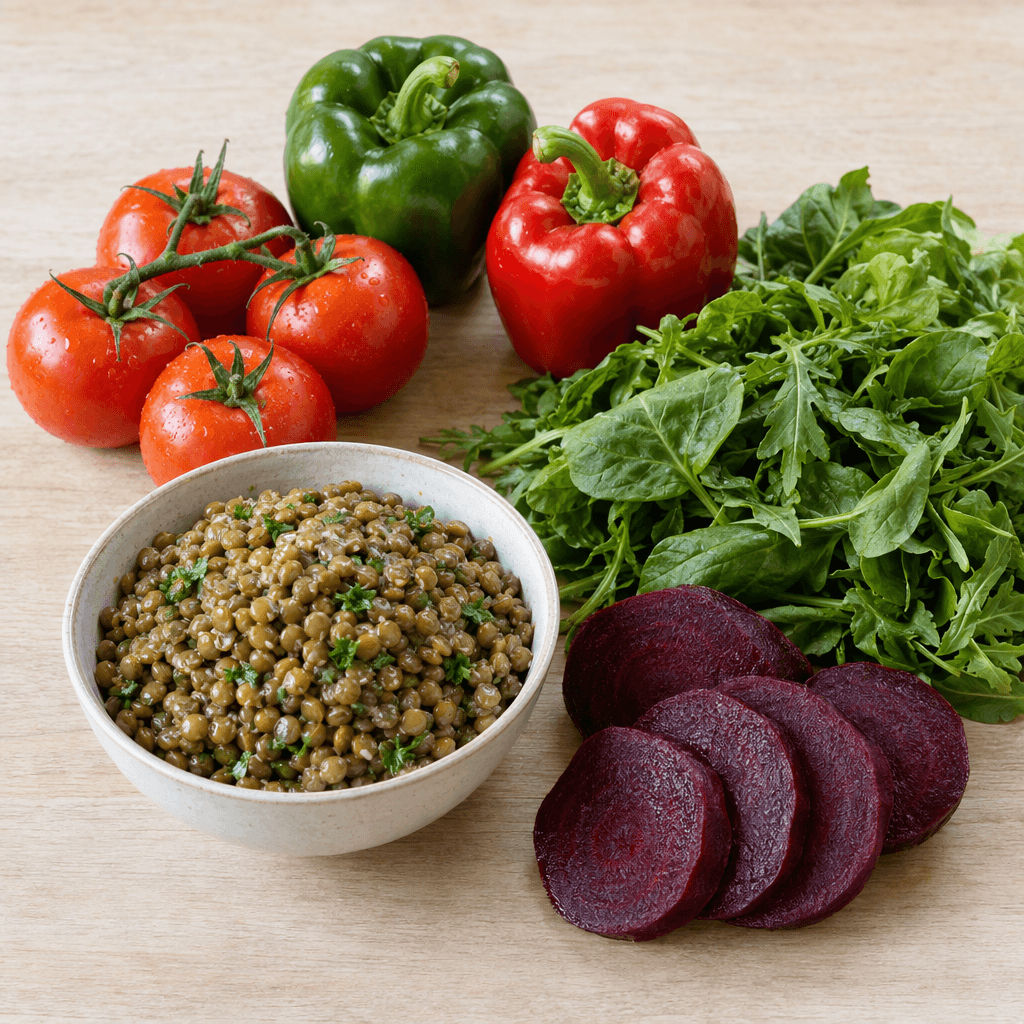
Vegetables & Legumes covers leafy greens, root vegetables, tomatoes, peppers and aubergines, radishes and brassicas, squash and courgettes, mushrooms, and onion and garlic. It also includes mixed or cooked vegetables, beans, lentils, chickpeas, and peas, soy and other legumes, bringing together fresh produce and more substantial plant foods.
Across the foods on EatBetter, the average per 100 g is 83 calories, with 3 g of protein, 10.7 g of carbohydrates, 2.6 g of fat and 3 g of fiber. Watery vegetables and leafy greens are often lighter choices, while legumes tend to provide more protein and energy; dressings, oil and other cooking additions can raise a dish’s calories. For example, lettuce and cucumber each have 15 calories per 100 g, while boiled green lentils have 116. Parsley is also notably nutrient-dense by weight, providing 3 g of protein per 100 g.
Subcategories
Foods27,785
1 / 1158
Next →Frequently asked questions
Which vegetables and legumes are lowest and highest in calories?
Among these examples, lettuce and cucumber are lowest at 15 calories per 100 g each. Boiled green lentils are highest at 116 calories, followed by potato salad at 110.
Which options have the most protein?
Boiled green lentils provide the most protein among these examples, at 9 g per 100 g. Parsley provides 3 g per 100 g, equal to the category average.
How do vegetables compare with legumes?
Leafy greens and watery vegetables such as lettuce and cucumber are generally lighter, while beans, lentils and chickpeas are more substantial and tend to provide more protein and fiber. The category average across the foods on EatBetter is 83 calories and 3 g of protein per 100 g.
Does cooking change the calories in vegetables?
Cooking can reduce water content, making calories more concentrated per 100 g, while boiling can add water and dilute them. Oil, dressings and sauces add calories, so roasted or dressed vegetables may be richer than plain vegetables.
How much should I serve, and how should I store vegetables?
Use vegetables generously as part of a meal, and pair a sensible serving of legumes with other foods according to your appetite. Refrigerate cut or cooked vegetables promptly, keep fresh produce appropriately chilled, and follow package guidance for prepared foods.
Who should take extra care with vegetables and legumes?
People with a soy or legume allergy should avoid the relevant foods, and those sensitive to digestive discomfort may prefer smaller servings of beans or lentils at first. If sodium is a concern, check the seasoning and dressing in prepared dishes such as potato salad.
Do vegetables lose all their nutrients when cooked?
No. Cooking does not remove all nutrients, and its effects vary by vegetable and method; some nutrients can be reduced while others remain available. Steaming or briefly cooking can be useful alternatives to prolonged boiling.
Are all foods in this category low in calories?
No. While lettuce and cucumber have 15 calories per 100 g, boiled green lentils have 116 and potato salad has 110. Ingredients such as legumes, oil and dressing make a difference.

Scan calories with your camera
Instant AI nutrition analysis
