

Ready & Packaged Foods
All →Vegetables & Legumes
All →Desserts & Confectionery
All →Meat & Protein
All →Grains & Bakery
All →Beverages
All →Milk & Dairy
All →

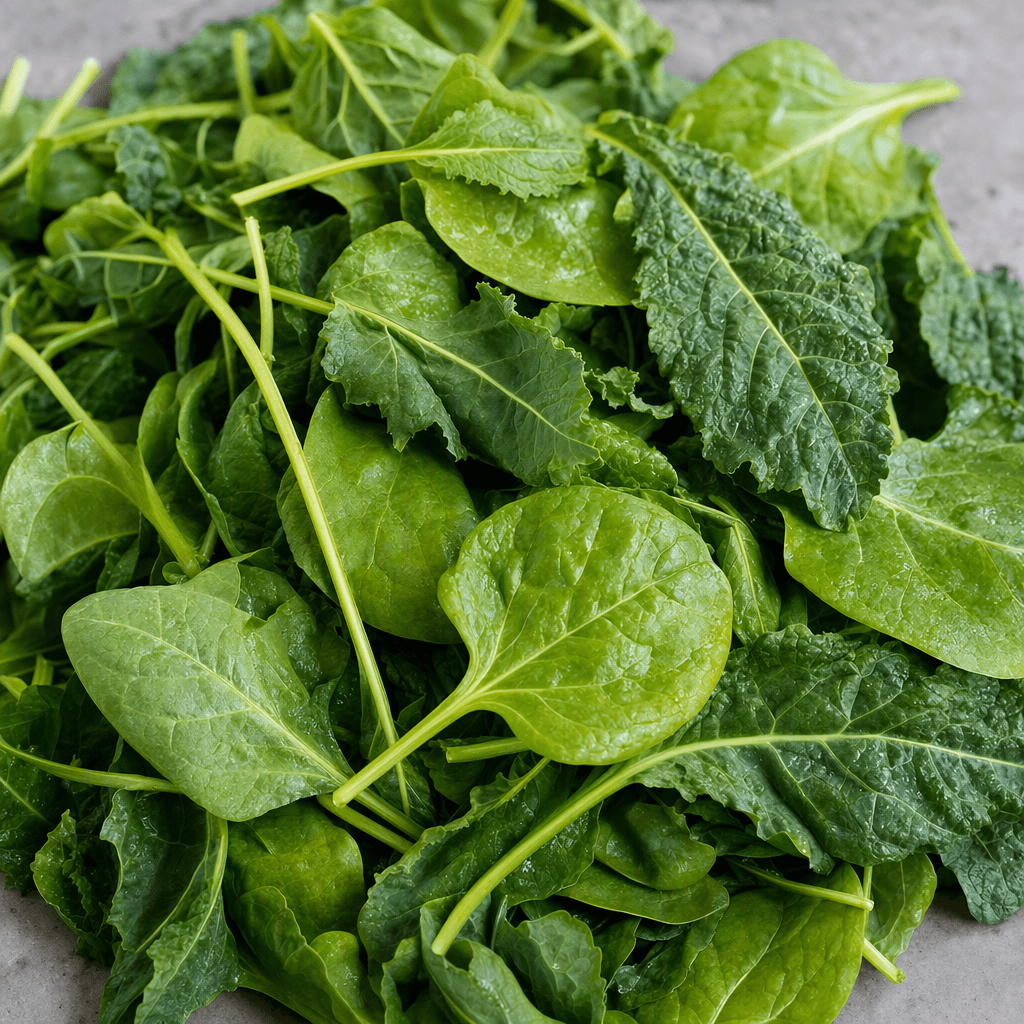
Greens Calories
Nutrient-rich, low-calorie leafy vegetables
In season: Spring · Summer · Autumn · Winter
CALORIES
GI
POTASSIUM
FIBER
Quick answer
1 cup (medium) of Greens (30 g) has 7 calories. That works out to 23 calories per 100 g. It contains 1.1 g of carbs, 0.7 g of protein, 0.1 g of fat and 0.6 g of fiber. Its 116.1 µg of Vitamin K covers 97% of the Daily Value. Its glycemic index is 15 (low), so it raises blood sugar slowly.
What is Greens?
Greens are the edible leaves of vegetables such as lettuce, spinach, chard and rocket. Some are usually eaten raw, while sturdier leaves are often cooked; their flavours range from mild and crisp to earthy or pleasantly bitter. They can bring freshness to a meal without making it feel heavy.
In Turkey, greens commonly appear in salads, alongside breakfast dishes, or tucked into wraps and sandwiches; peppery rocket is also a familiar partner for fish. Elsewhere, they might be tossed into salads, wilted into soups or served as a cooked side. They are generally low in calories and provide fibre: 100 g has 23 calories. Pair them with beans, eggs or grains for a more substantial meal.
Greens Nutrition Facts
Selected: 100 g
23
KCAL / 100G
Carbs
3.6g
· 1% DV
Protein
2.2g
· 4% DV
Fat
0.3g
· 0% DV
Fiber
2.1g
· 8% DV
DV is the share of the daily value covered, on a 2,000 kcal reference diet.
Calories come from: Carbs 56% · Protein 34% · Fat 10%
Greens Vitamins & Minerals
Vitamins
Vitamin K
387µg · 323% DV
Vitamin A
469µg · 52% DV
Folate
194µg · 49% DV
Vitamin C
28mg · 31% DV
Minerals
Manganese
1mg · 43% DV
Magnesium
79mg · 19% DV
Iron
3mg · 17% DV
Potassium ⭐
558mg · 16% DV
How Nutritious Is Greens?
Nutrient density
Very high
How many vitamins, minerals and how much fiber this food carries per calorie. A high score means a lot of nutrition for few calories.
Satiety score
Medium
An EatBetter score computed from fiber, protein and calorie density. A high score means staying full longer on the same calories.
Both scores are calculated per 100 g and do not change with the selected portion. The satiety score is EatBetter's own calculation, not a clinical measure.
Greens Glycemic Index
GLYCEMIC INDEX
GLYCEMIC LOAD
Accounts for portion size — a more realistic measure than GI alone.
How to Burn Off Greens
To burn the 23 calories in 100 g:
🚶
Walking (5 km/h)
🏃
Running (8 km/h)
🚴
Cycling
🏊
Swimming
Times are calculated with the MET equation for a 70 kg adult. Actual burn varies with your weight, age and pace.
Is Greens Processed?
NOVA 1
Unprocessed
1. Unprocessed
2. Minimally Processed
3. Processed
4. Ultra-Processed
NOVA classifies foods into 4 groups by industrial processing. NOVA 1 (unprocessed) is the healthiest.
Does Greens Contain Allergens?
No known major allergens
Which Diets Is Greens Good For?
Vegan
✓ Suitable
Vegetarian
✓ Suitable
Gluten-Free
✓ Suitable
Dairy-Free
— Not suitable
Mediterranean
✓ Suitable
Paleo
✓ Suitable
Whole30
— Not suitable
DASH
— Not suitable
Keto
✓ Suitable
Low FODMAP
— Not suitable
Greens Fat Profile
SATURATED
0.04g
MONOUNSATURATED
0.01g
POLYUNSATURATED
0.15g
Omega 6:3 ratio 0.2:1
Below the ideal 4:1 — a good omega balance.
Compare Greens
Foods Similar to Greens
Frequently Asked Questions About Greens
What counts as greens?
Greens are edible leafy vegetables, including lettuce, spinach, kale, arugula, chard, and many culinary herbs. Some are usually eaten raw, while tougher leaves are often cooked; the term describes a broad group rather than one specific plant.
How do you keep greens from getting slimy in the fridge?
Keep greens cold and dry to slow spoilage. Remove damaged leaves, wrap the rest loosely in a paper towel, and store them in a breathable bag or container. Excess moisture trapped around the leaves is a common cause of sliminess.
Can you freeze greens without blanching them?
Yes, you can freeze greens without blanching, especially if you plan to add them to soups, smoothies, or cooked dishes. Wash and dry them thoroughly, remove tough stems, and expect a softer texture after thawing. Blanching helps preserve quality for longer storage.
Are greens healthier raw or cooked?
Both raw and cooked greens can be nutritious. Raw leaves work well in salads and retain their crisp texture, while cooking softens tougher leaves and makes them easier to eat in larger amounts. Use brief cooking rather than boiling them for a long time.
Why do greens shrink so much when cooked?
Greens shrink because heat collapses their delicate leaf structure and releases water. Add them gradually to a wide pan, since a large pile can quickly cook down. This change in volume is normal and does not mean the greens have gone bad.
Which greens are best for salads?
Tender leaves such as lettuce, baby spinach, arugula, and watercress are easy to use raw in salads. Mixing mild leaves with peppery ones adds variety. Wash them well and dry them before dressing so the dressing clings instead of becoming watery.
Do you remove the stems from greens before cooking?
Not always. Tender stems from spinach, chard, or herbs can be chopped and cooked with the leaves, while thick, fibrous stems may need longer cooking or removal. Add firm stems to the pan first so they have time to soften.
How do you make bitter greens taste less bitter?
Balance bitter greens with acidity, such as lemon juice or vinegar, or pair them with a creamy dressing. Briefly sautéing sturdy leaves can also mellow their flavor. Combining a bitter leaf with milder lettuce makes salads taste less sharp.
Can you eat wilted greens?
Slightly wilted greens are usually usable if they still smell fresh and have no slimy patches or mold; add them to a cooked dish rather than a salad. Discard leaves that smell unpleasant, feel slimy, or show signs of decay.
Should you wash greens labeled pre-washed?
Pre-washed greens can generally be used straight from the package if the label says they are ready to eat and the package is intact. Rewashing them at home can expose the leaves to dirty sinks or utensils, so keep them refrigerated and handle them cleanly.
Have another question about Greens?
Ask the AI nutrition coach — calories, portions, alternatives and more, answered in seconds in the app.

Scan calories with your camera
Instant AI nutrition analysis

Nutrition data compiled from USDA FoodData Central and scientific sources.