

Ready & Packaged Foods
All →Vegetables & Legumes
All →Desserts & Confectionery
All →Meat & Protein
All →Grains & Bakery
All →Beverages
All →Milk & Dairy
All →

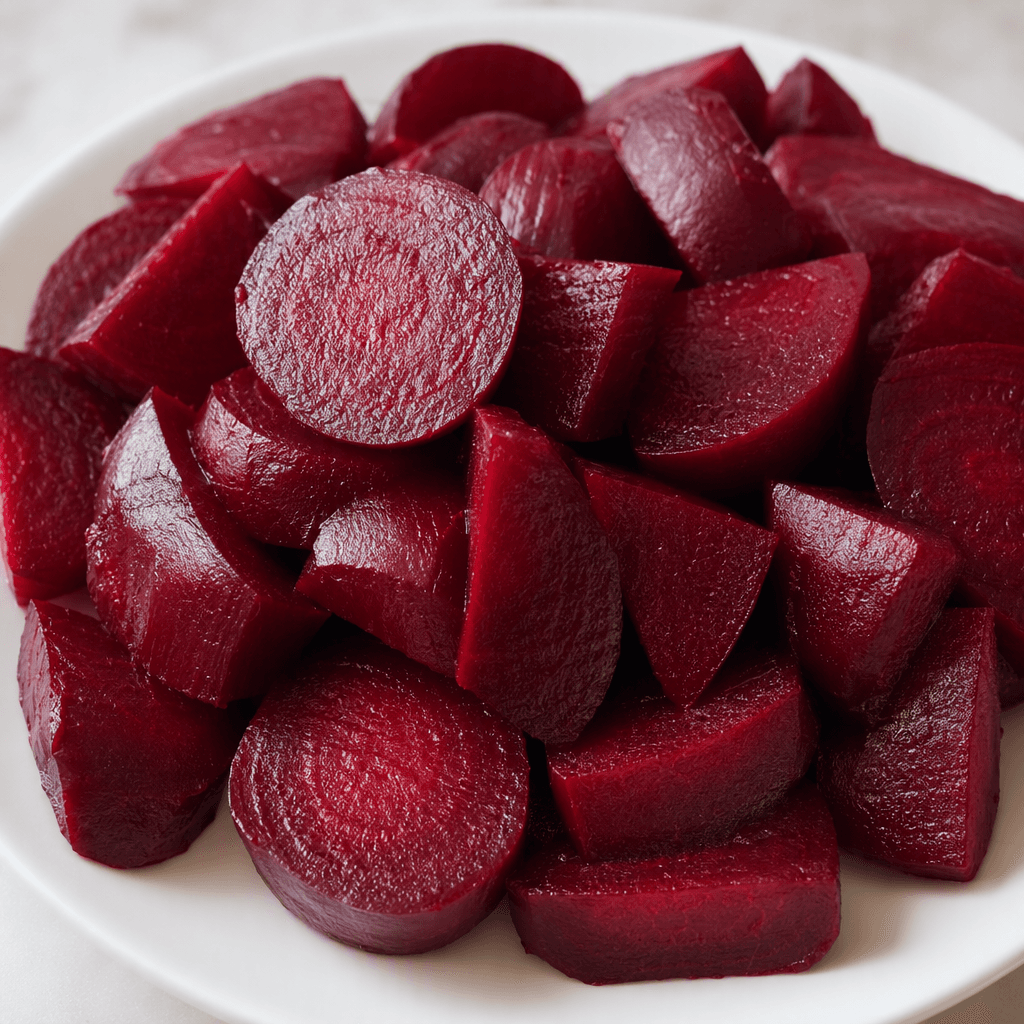
Boiled Beetroot Calories
Source of iron and folate, rich in antioxidants, low calorie
In season: Autumn · Winter
CALORIES
GI
POTASSIUM
FIBER
Quick answer
1 piece (medium) of Boiled Beetroot (80 g) has 35 calories. That works out to 44 calories per 100 g. It contains 7.7 g of carbs, 1.3 g of protein, 0.1 g of fat and 2.2 g of fiber. Its 64 µg of Folate covers 16% of the Daily Value. Its glycemic index is 65 (medium), so it raises blood sugar at a moderate pace.
What is Boiled Beetroot?
Boiled Beetroot is the tender root of the beet plant, cooked whole or in pieces until soft. It keeps its deep burgundy colour and has a gently earthy, sweet flavour. Across its native Eastern European and Mediterranean food traditions, it is served chilled in salads, alongside roast dishes, or blended into soups; it is also easy to add to everyday salads and sandwiches. A little lemon or vinegar balances its sweetness, while herbs and olive oil make a simple dressing.
It is mostly carbohydrate and water, with fibre and folate, and very little fat; 100 g provides 2.8 g of fibre. For a light meal, pair it with leafy greens and beans, or add grains and cheese for a more filling salad.
Boiled Beetroot Nutrition Facts
Selected: 100 g
44
KCAL / 100G
Carbs
9.6g
· 3% DV
Protein
1.6g
· 3% DV
Fat
0.1g
· 0% DV
Fiber
2.8g
· 10% DV
DV is the share of the daily value covered, on a 2,000 kcal reference diet.
Calories come from: Carbs 84% · Protein 14% · Fat 2%
Boiled Beetroot Vitamins & Minerals
Vitamins
Folate
80µg · 20% DV
Vitamin C
4.9mg · 5% DV
B6
0.07mg · 4% DV
B2
0.04mg · 3% DV
Minerals
Potassium ⭐
305mg · 9% DV
Iron
1mg · 6% DV
Magnesium
23mg · 5% DV
Phosphorus
33mg · 5% DV
How Nutritious Is Boiled Beetroot?
Nutrient density
Very high
How many vitamins, minerals and how much fiber this food carries per calorie. A high score means a lot of nutrition for few calories.
Satiety score
Medium
An EatBetter score computed from fiber, protein and calorie density. A high score means staying full longer on the same calories.
Both scores are calculated per 100 g and do not change with the selected portion. The satiety score is EatBetter's own calculation, not a clinical measure.
Boiled Beetroot Glycemic Index
GLYCEMIC INDEX
GLYCEMIC LOAD
Accounts for portion size — a more realistic measure than GI alone.
How to Burn Off Boiled Beetroot
To burn the 44 calories in 100 g:
🚶
Walking (5 km/h)
🏃
Running (8 km/h)
🚴
Cycling
🏊
Swimming
Times are calculated with the MET equation for a 70 kg adult. Actual burn varies with your weight, age and pace.
Is Boiled Beetroot Processed?
NOVA 2
Minimally Processed
1. Unprocessed
2. Minimally Processed
3. Processed
4. Ultra-Processed
NOVA classifies foods into 4 groups by industrial processing. NOVA 1 (unprocessed) is the healthiest.
Does Boiled Beetroot Contain Allergens?
No known major allergens
Which Diets Is Boiled Beetroot Good For?
Vegan
✓ Suitable
Vegetarian
✓ Suitable
Gluten-Free
✓ Suitable
Dairy-Free
— Not suitable
Mediterranean
✓ Suitable
Paleo
✓ Suitable
Whole30
— Not suitable
DASH
— Not suitable
Keto
— Not suitable
Low FODMAP
— Not suitable
Boiled Beetroot Fat Profile
SATURATED
0.03g
MONOUNSATURATED
0.02g
POLYUNSATURATED
0.04g
Omega 6:3 ratio 2:1
Below the ideal 4:1 — a good omega balance.
Compare Boiled Beetroot
Foods Similar to Boiled Beetroot
Frequently Asked Questions About Boiled Beetroot
How long does boiled beetroot take to cook?
Medium boiled beetroot usually takes about 30–45 minutes to become tender; larger roots can take longer. Test it with a fork: it is ready when the fork slides in easily. Keep the roots whole while they cook.
Can you eat the skin of boiled beetroot?
Yes, boiled beetroot skin is edible, though many people find it easier to remove after cooking. Rinse and scrub the root first, then rub or peel off the skin once it has cooled if you prefer a smoother texture.
How do you stop boiled beetroot from losing its colour?
Cook boiled beetroot whole and unpeeled to limit the colour that escapes into the water. Trim away only damaged parts before cooking, then peel and cut the roots after they are tender. Avoid slicing them before boiling.
How should you store boiled beetroot?
Store boiled beetroot in a covered container in the refrigerator and use it within about 3–5 days. Keeping it whole and unpeeled helps protect its texture; refrigerate it promptly after cooking rather than leaving it at room temperature.
Can you freeze boiled beetroot?
Yes, boiled beetroot freezes well enough for later cooking. Let it cool, peel and slice or cube it, then pack it in an airtight freezer container. Thawed beetroot may be softer, so it works especially well in soups and cooked dishes.
Can you eat boiled beetroot cold?
Yes, boiled beetroot is commonly eaten cold or at room temperature. Chill it after cooking, then add it to salads, grain bowls, or sandwiches; its earthy sweetness pairs well with citrus, herbs, and tangy dressings.
Why does boiled beetroot stain your hands, and how can you remove the stains?
Boiled beetroot stains hands because its deep red pigments transfer easily when you peel or cut it. Wearing food-safe gloves helps prevent stains; washing your hands promptly with soap and water usually removes most of the colour.
Does boiled beetroot make your urine turn pink or red?
Yes, boiled beetroot can temporarily make some people’s urine look pink or red because of its natural pigments. The colour usually fades after the beetroot passes through your system; seek medical advice if it continues or appears when you have not eaten beetroot.
Can you use the water from boiling beetroot?
Yes, you can use beetroot cooking water in soups or sauces for colour and a mild earthy flavour. Strain it and refrigerate it promptly if you are not using it right away, and discard it if it has been left out for a long time.
Is boiled beetroot different from pickled beetroot?
Yes, boiled beetroot is simply cooked, while pickled beetroot is preserved in a vinegar-based brine, often with added sugar or seasonings. Pickling gives it a sharper, tangier taste; boiled beetroot has a milder, naturally earthy flavour.
Have another question about Boiled Beetroot?
Ask the AI nutrition coach — calories, portions, alternatives and more, answered in seconds in the app.

Scan calories with your camera
Instant AI nutrition analysis

Nutrition data compiled from USDA FoodData Central and scientific sources.