

Ready & Packaged Foods
All →Vegetables & Legumes
All →Desserts & Confectionery
All →Meat & Protein
All →Grains & Bakery
All →Beverages
All →Milk & Dairy
All →

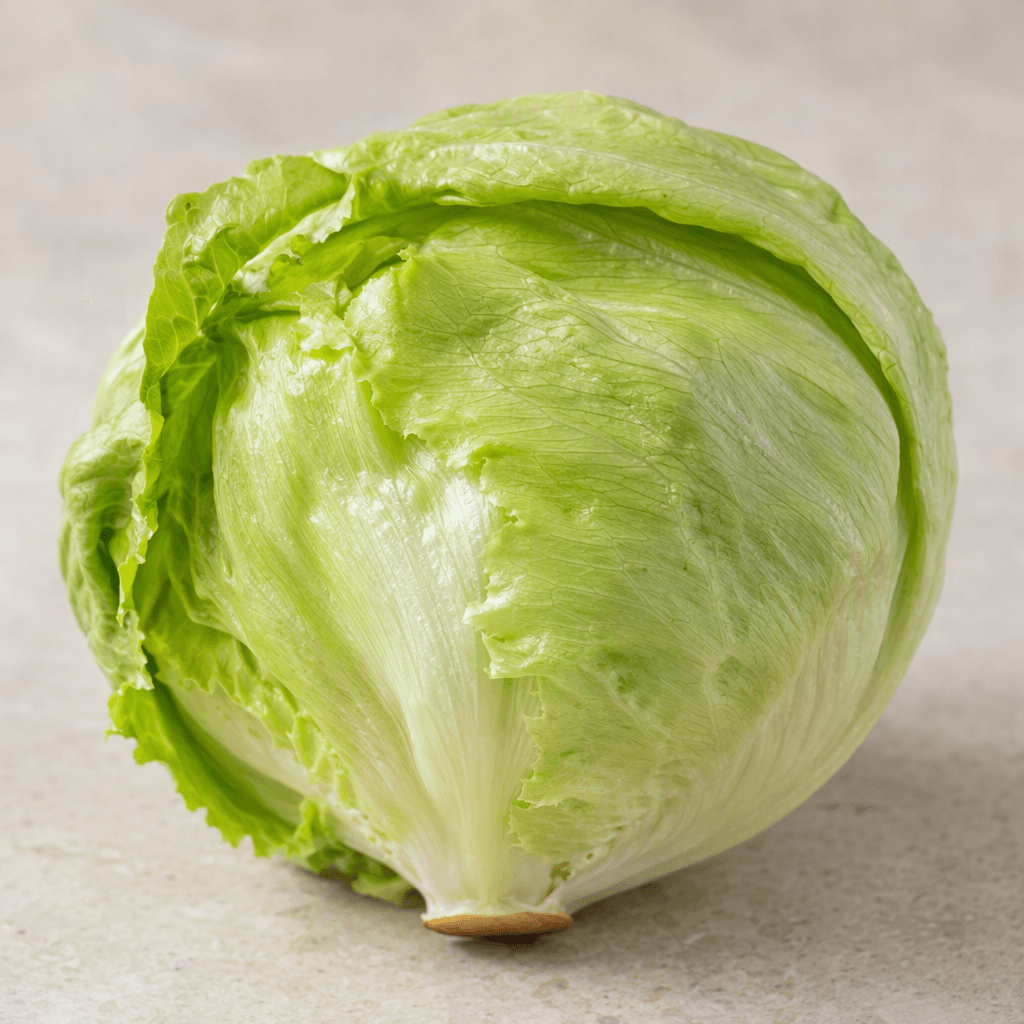
Lettuce Calories
Very low calorie, good fiber source, high water content
In season: Spring · Summer · Autumn
CALORIES
GI
POTASSIUM
FIBER
Quick answer
1 cup (medium) of Lettuce (50 g) has 8 calories. That works out to 15 calories per 100 g. It contains 1.5 g of carbs, 0.7 g of protein, 0.1 g of fat and 0.7 g of fiber. Its 63 µg of Vitamin K covers 53% of the Daily Value. Its glycemic index is 15 (low), so it raises blood sugar slowly.
What is Lettuce?
Lettuce is a leafy vegetable, usually eaten raw, with a high water content and crisp leaves. Several kinds are common, from tightly layered heads to loose-leaf varieties; the flavor is mild, sometimes with a faint sweetness or pleasant bitterness. It is used in salads around the world and tucked into sandwiches, burgers, wraps and tacos for freshness and crunch. In Turkey, it is also served alongside breakfast foods and added to dürüm. Lettuce is very light in calories and contributes some fibre, making it an easy way to add volume and freshness to a meal. Wash and dry the leaves well, then dress them just before serving to keep them crisp.
Lettuce Nutrition Facts
Selected: 100 g
15
KCAL / 100G
Carbs
2.9g
· 1% DV
Protein
1.4g
· 3% DV
Fat
0.2g
· 0% DV
Fiber
1.3g
· 5% DV
DV is the share of the daily value covered, on a 2,000 kcal reference diet.
Calories come from: Carbs 61% · Protein 29% · Fat 10%
Lettuce Vitamins & Minerals
Vitamins
Vitamin K
126µg · 105% DV
Vitamin A
370µg · 41% DV
Folate
38µg · 10% DV
Vitamin C
9mg · 10% DV
Minerals
Potassium ⭐
238mg · 7% DV
Iron
1mg · 6% DV
Calcium
35mg · 4% DV
Phosphorus
28mg · 4% DV
How Nutritious Is Lettuce?
Nutrient density
High
How many vitamins, minerals and how much fiber this food carries per calorie. A high score means a lot of nutrition for few calories.
Satiety score
Medium
An EatBetter score computed from fiber, protein and calorie density. A high score means staying full longer on the same calories.
Both scores are calculated per 100 g and do not change with the selected portion. The satiety score is EatBetter's own calculation, not a clinical measure.
Lettuce Glycemic Index
GLYCEMIC INDEX
GLYCEMIC LOAD
Accounts for portion size — a more realistic measure than GI alone.
How to Burn Off Lettuce
To burn the 15 calories in 100 g:
🚶
Walking (5 km/h)
🏃
Running (8 km/h)
🚴
Cycling
🏊
Swimming
Times are calculated with the MET equation for a 70 kg adult. Actual burn varies with your weight, age and pace.
Is Lettuce Processed?
NOVA 1
Unprocessed
1. Unprocessed
2. Minimally Processed
3. Processed
4. Ultra-Processed
NOVA classifies foods into 4 groups by industrial processing. NOVA 1 (unprocessed) is the healthiest.
Does Lettuce Contain Allergens?
No known major allergens
Which Diets Is Lettuce Good For?
Vegan
✓ Suitable
Vegetarian
✓ Suitable
Gluten-Free
✓ Suitable
Dairy-Free
— Not suitable
Mediterranean
✓ Suitable
Paleo
✓ Suitable
Whole30
— Not suitable
DASH
— Not suitable
Keto
— Not suitable
Low FODMAP
— Not suitable
Lettuce Fat Profile
SATURATED
0.03g
MONOUNSATURATED
0.01g
POLYUNSATURATED
0.05g
Omega 6:3 ratio 0.5:1
Below the ideal 4:1 — a good omega balance.
Compare Lettuce
Foods Similar to Lettuce
Frequently Asked Questions About Lettuce
How do you keep lettuce crisp in the fridge?
Keep lettuce dry in a loosely closed bag or container in the refrigerator’s crisper drawer. Tuck a paper towel around the leaves to absorb excess moisture, and replace it if it becomes damp. Avoid compressing the head, which can bruise the leaves.
Should you wash lettuce before storing it?
Usually, wash lettuce just before you eat it. Storing wet leaves encourages them to wilt and spoil sooner; if you wash it ahead, dry it thoroughly before refrigerating it in a clean container with a paper towel.
Can you freeze lettuce?
Yes, but thawed lettuce loses its crisp texture and becomes limp. It is not a good choice for salads afterward, though you can add it to cooked dishes such as soups. Wash and dry the leaves well before freezing.
Why does cut lettuce turn brown?
Cut lettuce can brown where the damaged edges react with oxygen in the air. Cut it shortly before serving, use a clean, sharp knife, and refrigerate leftovers in an airtight container to slow the discoloration.
How can you revive wilted lettuce?
You can often perk up slightly wilted lettuce by soaking the leaves in ice-cold water for a short time, then drying them thoroughly. This helps restore some crispness, but it will not make spoiled lettuce safe; discard leaves that smell bad or feel slimy.
Can you eat the core of a lettuce head?
Yes, the pale core and stem are edible. They are usually firmer and crunchier than the leaves, so slice them thinly for salads or sandwiches. Remove any part that is discolored, dried out, or damaged.
Is it safe to eat raw lettuce?
Yes, raw lettuce is generally safe when it is fresh and washed well under clean running water. Separate the leaves so you can rinse away dirt, and discard any that are spoiled. Washing reduces dirt and germs but does not eliminate every risk.
Why does lettuce taste bitter?
Lettuce can taste bitter when hot weather or flowering changes the plant’s flavor; some varieties are naturally more bitter, too. Try removing the tougher outer leaves. If the lettuce also smells unpleasant or feels slimy, throw it away.
Does lettuce make you sleepy?
No, an ordinary serving of lettuce is not known to make people sleepy. Claims about lettuce as a sleep aid are not established for typical portions; feeling drowsy after a meal is more likely related to the meal or other factors.
Is lettuce good for weight loss?
Lettuce can fit into a weight-loss eating plan because its water and fiber add volume to meals. It does not cause weight loss on its own, and creamy dressings or high-calorie toppings can substantially change the meal.
Have another question about Lettuce?
Ask the AI nutrition coach — calories, portions, alternatives and more, answered in seconds in the app.

Scan calories with your camera
Instant AI nutrition analysis

Nutrition data compiled from USDA FoodData Central and scientific sources.