

Ready & Packaged Foods
All →Vegetables & Legumes
All →Desserts & Confectionery
All →Meat & Protein
All →Grains & Bakery
All →Beverages
All →Milk & Dairy
All →

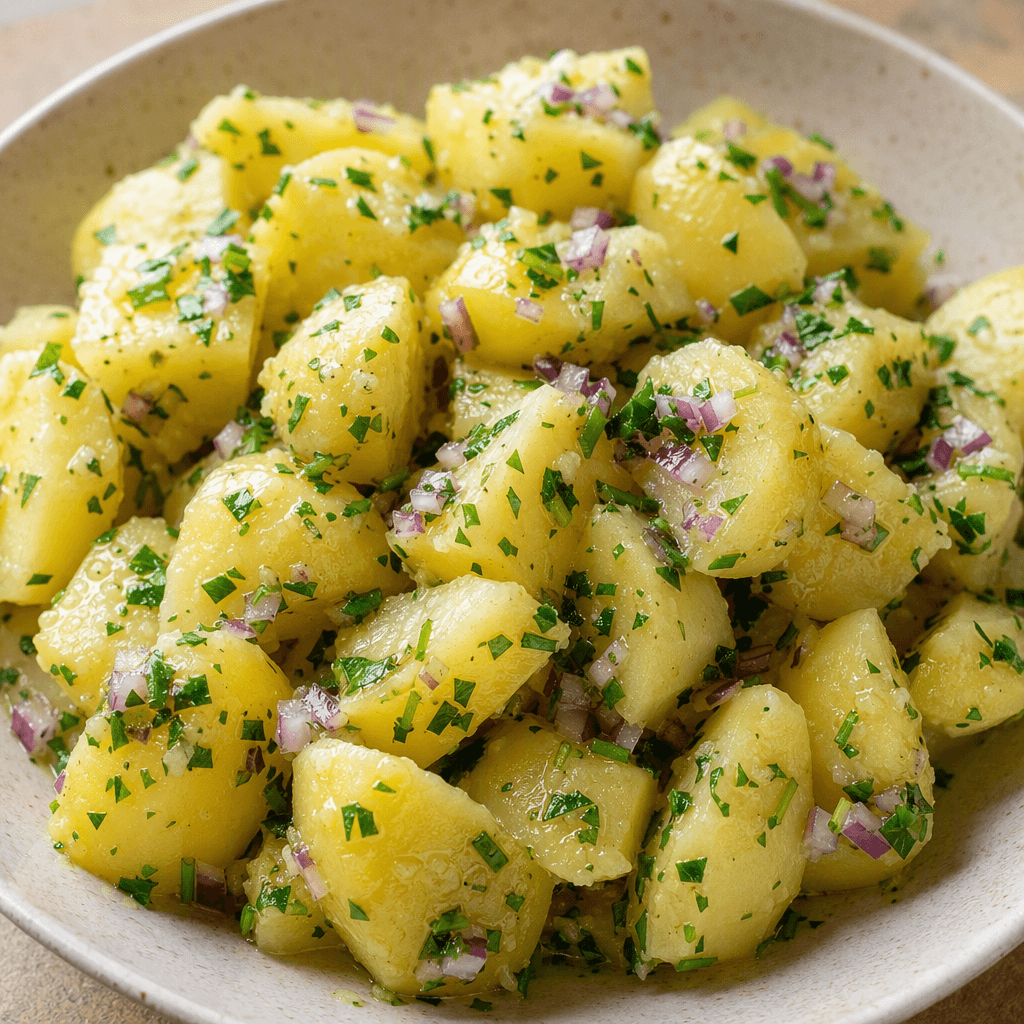
Potato Salad Calories
Classic salad made with boiled potatoes, vegetables, and dressing.
In season: Spring · Summer · Autumn
CALORIES
GI
POTASSIUM
FIBER
Quick answer
1 serving (medium) of Potato Salad (150 g) has 165 calories. That works out to 110 calories per 100 g. It contains 24.8 g of carbs, 3 g of protein, 6 g of fat and 3.2 g of fiber. Its 405 mg of Sodium covers 18% of the Daily Value. Its glycemic index is 65 (medium), so it raises blood sugar at a moderate pace.
What is Potato Salad?
Potato Salad combines boiled potatoes with chopped vegetables and herbs, brought together with a dressing. Recipes vary widely: some use a light oil-and-vinegar or lemon dressing, while others are creamy. It is a familiar side dish in many places, including Europe and North America, rather than a recipe with just one fixed version.
The potatoes are tender and filling, with the herbs and onion adding freshness and bite. Serve it chilled or at room temperature alongside grilled food, sandwiches, or a picnic spread. It is mainly a source of carbohydrates, with a little fibre and protein; the dressing contributes much of the fat. For a lighter bowl, use less dressing and add extra herbs or crunchy vegetables.
Potato Salad Nutrition Facts
Selected: 100 g
110
KCAL / 100G
Carbs
16.5g
· 6% DV
Protein
2g
· 4% DV
Fat
4g
· 5% DV
Fiber
2.1g
· 8% DV
DV is the share of the daily value covered, on a 2,000 kcal reference diet.
Calories come from: Carbs 60% · Protein 7% · Fat 33%
Potato Salad Vitamins & Minerals
Vitamins
B6
0.16mg · 9% DV
Vitamin C
7mg · 8% DV
B1
0.08mg · 7% DV
B3
1.1mg · 7% DV
Minerals
Sodium
270mg · 12% DV
Potassium ⭐
260mg · 8% DV
Iron
1mg · 6% DV
Phosphorus
38mg · 5% DV
How Nutritious Is Potato Salad?
Nutrient density
Medium
How many vitamins, minerals and how much fiber this food carries per calorie. A high score means a lot of nutrition for few calories.
Satiety score
Medium
An EatBetter score computed from fiber, protein and calorie density. A high score means staying full longer on the same calories.
Both scores are calculated per 100 g and do not change with the selected portion. The satiety score is EatBetter's own calculation, not a clinical measure.
Potato Salad Glycemic Index
GLYCEMIC INDEX
GLYCEMIC LOAD
Accounts for portion size — a more realistic measure than GI alone.
How to Burn Off Potato Salad
To burn the 110 calories in 100 g:
🚶
Walking (5 km/h)
🏃
Running (8 km/h)
🚴
Cycling
🏊
Swimming
Times are calculated with the MET equation for a 70 kg adult. Actual burn varies with your weight, age and pace.
Is Potato Salad Processed?
NOVA 2
Minimally Processed
1. Unprocessed
2. Minimally Processed
3. Processed
4. Ultra-Processed
NOVA classifies foods into 4 groups by industrial processing. NOVA 1 (unprocessed) is the healthiest.
Does Potato Salad Contain Allergens?
No known major allergens
Which Diets Is Potato Salad Good For?
Vegan
— Not suitable
Vegetarian
✓ Suitable
Gluten-Free
✓ Suitable
Dairy-Free
— Not suitable
Mediterranean
✓ Suitable
Paleo
— Not suitable
Whole30
— Not suitable
DASH
— Not suitable
Keto
— Not suitable
Low FODMAP
— Not suitable
Potato Salad Fat Profile
SATURATED
0.7g
MONOUNSATURATED
2g
POLYUNSATURATED
0.5g
Omega 6:3 ratio 4.3:1
Above the ideal 4:1 (4.3:1).
Compare Potato Salad
Foods Similar to Potato Salad
Frequently Asked Questions About Potato Salad
How do you make potato salad?
Potato salad is made by tossing cooked, cooled potatoes with dressing and additions such as onion, herbs, or pickles. For a simple version, use a vinaigrette; mayonnaise-based recipes are another common style. Mix gently so the potatoes keep their shape.
What potatoes are best for potato salad?
Waxy potatoes are usually best for potato salad because they hold their shape after cooking. Red potatoes and fingerlings work well; if using a starchier variety, cook it whole and check it often to avoid a crumbly texture.
How do you keep potato salad from getting mushy?
To keep potato salad from getting mushy, cook whole potatoes just until a knife can pierce them, then drain and cool them before cutting. Fold in the dressing gently rather than stirring vigorously, which can break up the pieces.
How long does potato salad last in the fridge?
Potato salad usually keeps for 3–4 days in a covered container in the refrigerator. Keep mayonnaise-based potato salad chilled, and discard it if it has been left at room temperature for an extended period.
Can you make potato salad ahead of time?
Yes, you can make potato salad ahead of time and refrigerate it so the flavors meld. Add delicate fresh herbs shortly before serving, and taste the dressing again after chilling because cold temperatures can mute its flavor.
Can you freeze potato salad?
Freezing potato salad is not recommended because cooked potatoes can become watery or grainy after thawing. Mayonnaise-based dressing may also separate. Refrigerate leftovers instead and eat them within a few days.
Should potato salad be served warm or cold?
Potato salad is commonly served chilled or at room temperature, though some regional versions are served warm. For a vinaigrette-style salad, dressing warm potatoes can help them absorb more flavor before the dish cools.
What goes well with potato salad?
Potato salad pairs well with grilled meat, sausages, burgers, and fish, and it is a familiar side at picnics and cookouts. A crisp green salad or tangy pickles can balance its soft, rich texture.
What is the difference between German and American potato salad?
German potato salad is often dressed with vinegar and served warm or at room temperature, while many American versions use mayonnaise and are served cold. Recipes vary by region, so neither style represents every household’s version.
Do you peel potatoes before making potato salad?
Peeling potatoes for potato salad is optional. Leaving the skins on adds texture and saves preparation time, especially with thin-skinned potatoes; peel them if you prefer a smoother salad or are using thick-skinned potatoes.
Have another question about Potato Salad?
Ask the AI nutrition coach — calories, portions, alternatives and more, answered in seconds in the app.

Scan calories with your camera
Instant AI nutrition analysis

Nutrition data compiled from USDA FoodData Central and scientific sources.