

Ready & Packaged Foods
All →Vegetables & Legumes
All →Desserts & Confectionery
All →Meat & Protein
All →Grains & Bakery
All →Beverages
All →Milk & Dairy
All →

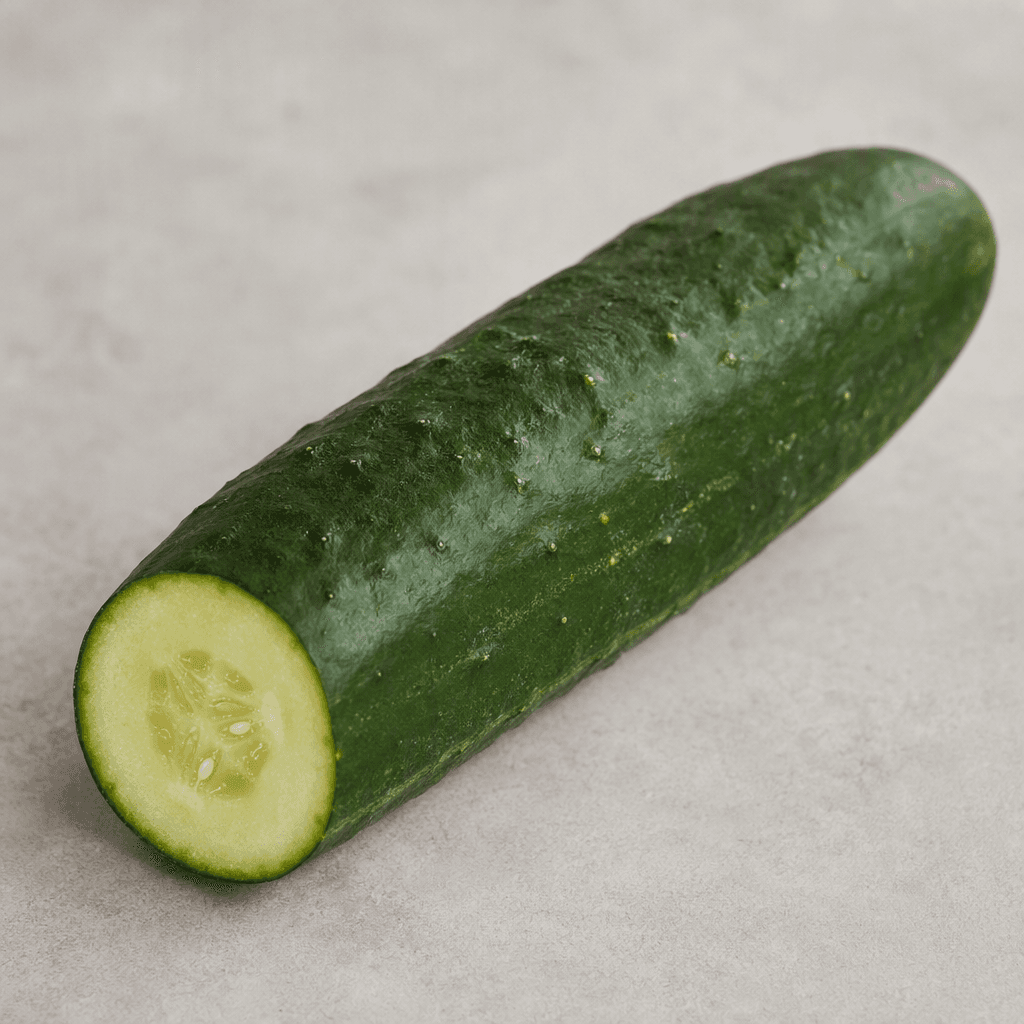
Cucumber Calories
Very low calorie, high water content, refreshing
In season: Spring · Summer · Autumn
CALORIES
GI
POTASSIUM
FIBER
Quick answer
1 piece (medium) of Cucumber (120 g) has 18 calories. That works out to 15 calories per 100 g. It contains 4.3 g of carbs, 0.8 g of protein, 0.1 g of fat and 0.6 g of fiber. Its 19.7 µg of Vitamin K covers 16% of the Daily Value. Its glycemic index is 15 (low), so it raises blood sugar slowly.
What is Cucumber?
Cucumber is the crisp, mild-flavoured fruit of a climbing plant, though it is usually treated as a vegetable in the kitchen. Eaten around the world, it is especially common raw in salads, sandwiches and cold dishes.
Its cool, juicy flesh and gentle flavour pair well with tomatoes, herbs, yoghurt and sharp dressings. In Turkey it often appears at breakfast alongside tomatoes and cheese, and is grated into cacık, a yoghurt-and-cucumber dish. Cucumber is mostly water and very low in energy, with 15 calories per 100 grams. Serve it sliced for a refreshing snack, or add it to a meal for crunch; salting it briefly can draw out moisture before mixing it into a salad.
Cucumber Nutrition Facts
Selected: 100 g
15
KCAL / 100G
Carbs
3.6g
· 1% DV
Protein
0.7g
· 1% DV
Fat
0.1g
· 0% DV
Fiber
0.5g
· 2% DV
DV is the share of the daily value covered, on a 2,000 kcal reference diet.
Calories come from: Carbs 80% · Protein 15% · Fat 5%
Cucumber Vitamins & Minerals
Vitamins
Vitamin K
16.4µg · 14% DV
Vitamin A
105µg · 12% DV
B5
0.26mg · 5% DV
B1
0.03mg · 3% DV
Minerals
Potassium ⭐
147mg · 4% DV
Magnesium
13mg · 3% DV
Phosphorus
24mg · 3% DV
Calcium
16mg · 2% DV
How Nutritious Is Cucumber?
Nutrient density
Medium
How many vitamins, minerals and how much fiber this food carries per calorie. A high score means a lot of nutrition for few calories.
Satiety score
Medium
An EatBetter score computed from fiber, protein and calorie density. A high score means staying full longer on the same calories.
Both scores are calculated per 100 g and do not change with the selected portion. The satiety score is EatBetter's own calculation, not a clinical measure.
Cucumber Glycemic Index
GLYCEMIC INDEX
GLYCEMIC LOAD
Accounts for portion size — a more realistic measure than GI alone.
How to Burn Off Cucumber
To burn the 15 calories in 100 g:
🚶
Walking (5 km/h)
🏃
Running (8 km/h)
🚴
Cycling
🏊
Swimming
Times are calculated with the MET equation for a 70 kg adult. Actual burn varies with your weight, age and pace.
Is Cucumber Processed?
NOVA 1
Unprocessed
1. Unprocessed
2. Minimally Processed
3. Processed
4. Ultra-Processed
NOVA classifies foods into 4 groups by industrial processing. NOVA 1 (unprocessed) is the healthiest.
Does Cucumber Contain Allergens?
No known major allergens
Which Diets Is Cucumber Good For?
Vegan
✓ Suitable
Vegetarian
✓ Suitable
Gluten-Free
✓ Suitable
Dairy-Free
— Not suitable
Mediterranean
✓ Suitable
Paleo
✓ Suitable
Whole30
— Not suitable
DASH
— Not suitable
Keto
✓ Suitable
Low FODMAP
— Not suitable
Cucumber Fat Profile
SATURATED
0.04g
MONOUNSATURATED
0.01g
POLYUNSATURATED
0.03g
Compare Cucumber
Foods Similar to Cucumber
Frequently Asked Questions About Cucumber
Is a cucumber a fruit or a vegetable?
A cucumber is botanically a fruit because it develops from a flower and contains seeds. In cooking, it is treated as a vegetable because it is usually used in savory dishes, salads, and sandwiches.
Can you eat cucumber skin?
Yes, cucumber skin is edible. Rinse the cucumber under running water and rub the surface before eating it. You can peel it if the skin tastes bitter, feels tough, or simply is not to your liking.
Should cucumbers be refrigerated?
Yes, refrigerate cucumbers if you will not use them soon, ideally in the crisper drawer and away from ethylene-producing fruits such as apples and bananas. Keep them dry; prolonged exposure to very cold temperatures can make their texture deteriorate.
Why are cucumbers bitter?
Cucumbers can taste bitter because of naturally occurring cucurbitacins, which may become more noticeable in some fruits. If a cucumber tastes strongly bitter, do not eat it; peeling may not remove the bitterness, so discard it.
Are cucumber seeds safe to eat?
Yes, the soft seeds inside a cucumber are safe to eat and are usually eaten along with the flesh. If the cucumber is overripe and its center is watery or the seeds are large, you can scoop out the middle for a firmer salad.
Can you freeze cucumbers?
Yes, but freezing changes their texture: thawed cucumber becomes soft and watery. It will not work well in a fresh salad, so use frozen cucumber in blended drinks or recipes where a softer texture is acceptable.
How do you stop cucumber from making salad watery?
Salt sliced cucumber lightly, let it sit briefly, then drain and pat it dry before adding it to the salad. You can also add cucumber just before serving, which gives it less time to release water into the other ingredients.
Can dogs eat cucumber?
Yes, dogs can eat plain cucumber in small pieces. Wash it first, cut it into bite-size pieces to reduce choking risk, and skip salt, dressings, and pickled cucumber. Introduce it gradually if your dog has not eaten it before.
How do you store a cut cucumber?
Cover the cut end or place the cucumber pieces in an airtight container, then refrigerate them. Keep them dry and use them promptly; discard any pieces that become slimy, moldy, or develop an unpleasant smell.
Are cucumbers good for weight loss?
Cucumbers can fit into a weight-loss eating plan, but they do not cause weight loss on their own. Their high water content makes them a refreshing, light addition to meals, especially when they replace more energy-dense snacks.
Have another question about Cucumber?
Ask the AI nutrition coach — calories, portions, alternatives and more, answered in seconds in the app.

Scan calories with your camera
Instant AI nutrition analysis

Nutrition data compiled from USDA FoodData Central and scientific sources.