

Ready & Packaged Foods
All →Vegetables & Legumes
All →Desserts & Confectionery
All →Meat & Protein
All →Grains & Bakery
All →Beverages
All →Milk & Dairy
All →

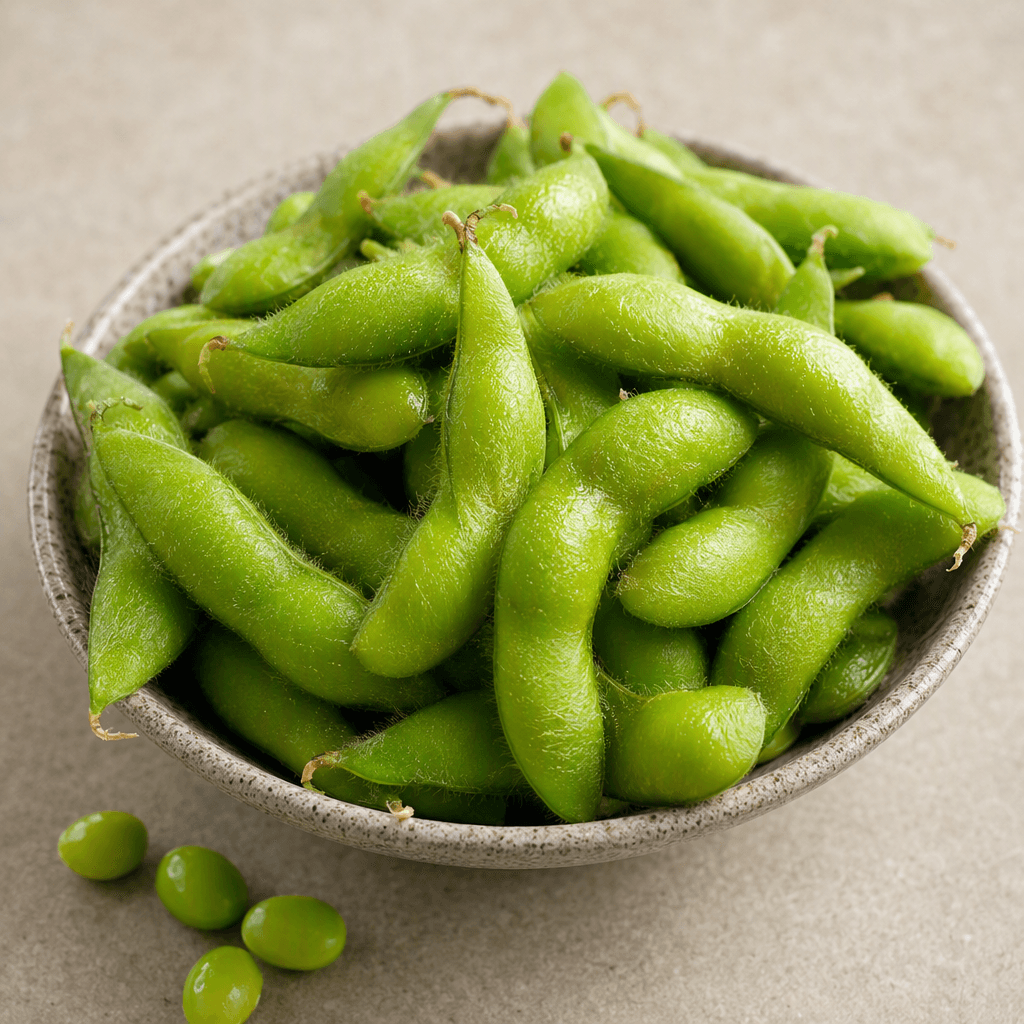
Edamame Calories
High in protein and fiber, low fat, vegan-friendly
In season: Summer · Autumn
CALORIES
GI
POTASSIUM
FIBER
Quick answer
1 cup (medium) of Edamame (155 g) has 188 calories. That works out to 121 calories per 100 g. It contains 13.8 g of carbs, 17.4 g of protein, 8.1 g of fat and 7.8 g of fiber. Its 482.1 µg of Folate covers 121% of the Daily Value. Its glycemic index is 18 (low), so it raises blood sugar slowly.
What is Edamame?
Edamame are young, green soybeans harvested before they mature. They’re closely associated with Japanese cooking, where the pods are commonly boiled or steamed, lightly salted and served as a snack or starter. The plump beans taste gently sweet and grassy, with a tender but pleasantly firm bite; diners squeeze them from the pods, which are not usually eaten. Edamame also works well tossed into salads, grain bowls or soups. It provides plant-based protein and fibre, making it a satisfying choice for a snack or light meal. For a less salty serving, season it with lemon, chilli or herbs instead of adding much salt.
Edamame Nutrition Facts
Selected: 100 g
121
KCAL / 100G
Carbs
8.9g
· 3% DV
Protein
11.2g
· 22% DV
Fat
5.2g
· 7% DV
Fiber
5g
· 18% DV
DV is the share of the daily value covered, on a 2,000 kcal reference diet.
Calories come from: Carbs 28% · Protein 35% · Fat 37%
Edamame Vitamins & Minerals
Vitamins
Folate
311µg · 78% DV
Biotin
8µg · 27% DV
B1
0.3mg · 25% DV
Vitamin K
26µg · 22% DV
Minerals
Manganese
1mg · 43% DV
Phosphorus
168mg · 24% DV
Magnesium
61mg · 15% DV
Potassium ⭐
436mg · 13% DV
How Nutritious Is Edamame?
Nutrient density
Very high
How many vitamins, minerals and how much fiber this food carries per calorie. A high score means a lot of nutrition for few calories.
Satiety score
High
An EatBetter score computed from fiber, protein and calorie density. A high score means staying full longer on the same calories.
Both scores are calculated per 100 g and do not change with the selected portion. The satiety score is EatBetter's own calculation, not a clinical measure.
Edamame Glycemic Index
GLYCEMIC INDEX
GLYCEMIC LOAD
Accounts for portion size — a more realistic measure than GI alone.
How to Burn Off Edamame
To burn the 121 calories in 100 g:
🚶
Walking (5 km/h)
🏃
Running (8 km/h)
🚴
Cycling
🏊
Swimming
Times are calculated with the MET equation for a 70 kg adult. Actual burn varies with your weight, age and pace.
Is Edamame Processed?
NOVA 2
Minimally Processed
1. Unprocessed
2. Minimally Processed
3. Processed
4. Ultra-Processed
NOVA classifies foods into 4 groups by industrial processing. NOVA 1 (unprocessed) is the healthiest.
Does Edamame Contain Allergens?
Contains these allergens:
Which Diets Is Edamame Good For?
Vegan
✓ Suitable
Vegetarian
✓ Suitable
Gluten-Free
✓ Suitable
Dairy-Free
— Not suitable
Mediterranean
✓ Suitable
Paleo
— Not suitable
Whole30
— Not suitable
DASH
— Not suitable
Keto
— Not suitable
Low FODMAP
— Not suitable
Edamame Fat Profile
SATURATED
0.6g
MONOUNSATURATED
1.2g
POLYUNSATURATED
2.8g
Omega 6:3 ratio 8.3:1
Above the ideal 4:1 (8.3:1).
Compare Edamame
Foods Similar to Edamame
Frequently Asked Questions About Edamame
What is edamame?
Edamame is immature soybeans harvested while the beans are still green and tender. They are commonly cooked and served in their pods as a snack, or shelled and added to meals.
How do you cook edamame?
Boil or steam edamame until the beans are tender, then drain it. Salt the pods after cooking if you like. Shelled edamame can also be stirred into soups, grain bowls, salads, or noodles.
Can you eat edamame pods?
No, the outer edamame pods are usually not eaten. They are fibrous and tough to chew; squeeze or scrape the beans out of the pod and eat the beans instead.
How do you eat edamame in the pod?
Hold the pod and use your teeth to gently pull the beans out, leaving the fibrous shell uneaten. You can also squeeze the cooked beans into a bowl first if you prefer not to eat them directly from the pod.
Can you eat edamame raw?
It is best to cook edamame rather than eat it raw. Boiling or steaming makes the beans tender and ready to eat; follow the package directions if you are using a packaged product.
Is edamame a vegetable or a bean?
Edamame is a legume: it is the fresh, immature form of the soybean. It may be served like a vegetable, but botanically and nutritionally it belongs to the bean family.
Is edamame healthy?
Yes, edamame can be a nutritious addition to meals because it provides plant protein and fiber. For a less salty snack, cook it with little or no salt and add seasoning at the table.
How do you season edamame?
Edamame is often seasoned simply with salt, but it also pairs well with garlic, chili, lemon, sesame, or soy sauce. Add stronger seasonings sparingly so they complement rather than cover its mild flavor.
How do you cook frozen edamame?
Cook frozen edamame straight from the freezer by boiling or steaming it; thawing first is unnecessary. Heat it until the beans are tender and hot throughout, then drain and season.
How should you store cooked edamame?
Refrigerate cooked edamame in a covered container once it has cooled, and eat it within a few days. For longer storage, freeze the cooked beans or pods in a freezer-safe container.
Have another question about Edamame?
Ask the AI nutrition coach — calories, portions, alternatives and more, answered in seconds in the app.

Scan calories with your camera
Instant AI nutrition analysis

Nutrition data compiled from USDA FoodData Central and scientific sources.