

Ready & Packaged Foods
All →Vegetables & Legumes
All →Desserts & Confectionery
All →Meat & Protein
All →Grains & Bakery
All →Beverages
All →Milk & Dairy
All →

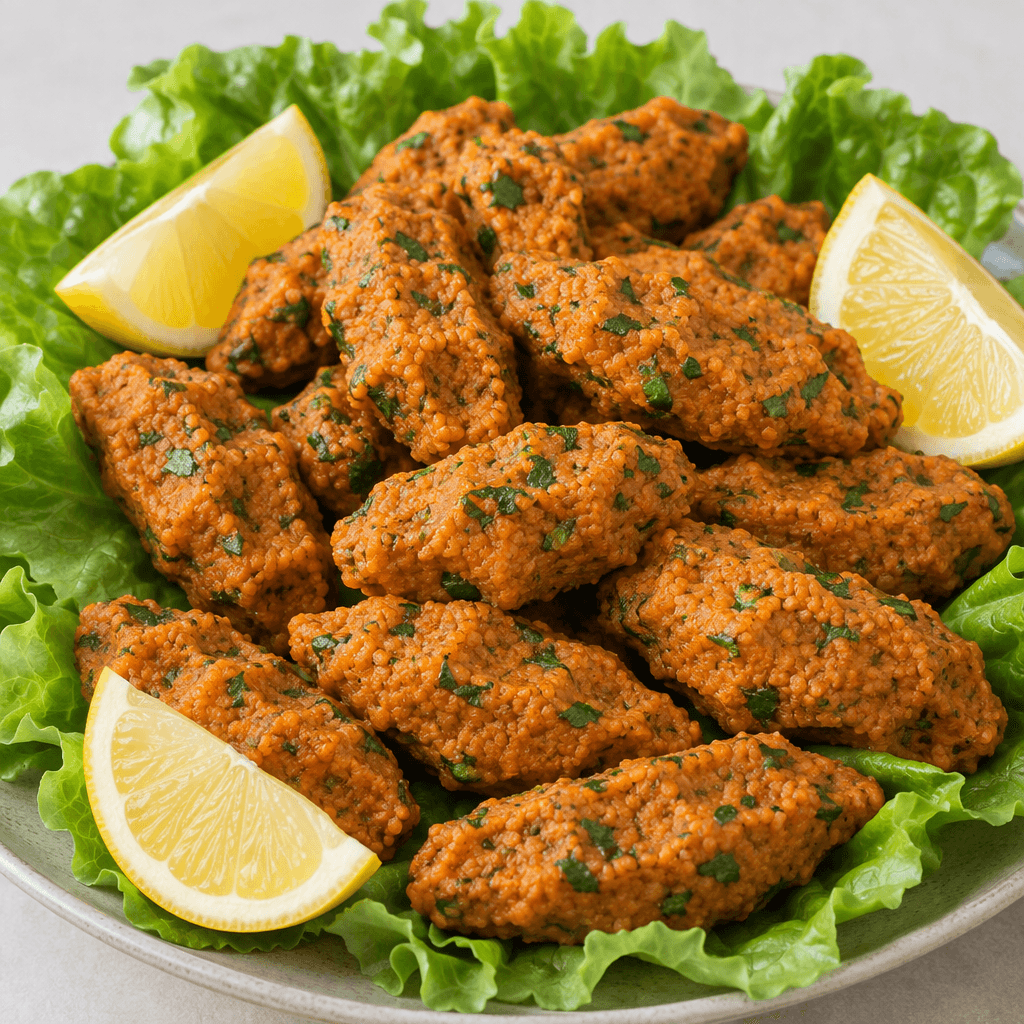
Lentil meatballs Calories
Plant protein, fiber, vegan, low fat
In season: Spring · Summer · Autumn · Winter
CALORIES
GI
POTASSIUM
FIBER
Quick answer
3 piece (medium) of Lentil meatballs (90 g) has 131 calories. That works out to 145 calories per 100 g. It contains 22.5 g of carbs, 5.9 g of protein, 2 g of fat and 5.2 g of fiber. Its 0.2 mg of Copper covers 19% of the Daily Value. Its glycemic index is 35 (low), so it raises blood sugar slowly.
What is Lentil meatballs?
Lentil meatballs are the English-listed name for mercimek köftesi, a Turkish home-style dish made by mixing cooked red lentils with fine bulgur, onion, tomato or pepper paste, herbs and seasonings. The mixture is shaped by hand into small ridged pieces; despite the name, they contain no meat.
Soft and gently spiced, they are usually served cool or at room temperature with lettuce leaves and lemon, as part of a spread, a light lunch or a gathering-time snack. They offer plant protein and fibre while remaining relatively low in fat. For a fuller meal, pair them with a crisp salad; extra lemon and fresh herbs bring brightness without making the dish heavier.
Lentil meatballs Nutrition Facts
Selected: 100 g
145
KCAL / 100G
Carbs
25g
· 9% DV
Protein
6.5g
· 13% DV
Fat
2.2g
· 3% DV
Fiber
5.8g
· 21% DV
DV is the share of the daily value covered, on a 2,000 kcal reference diet.
Calories come from: Carbs 69% · Protein 18% · Fat 13%
Lentil meatballs Vitamins & Minerals
Vitamins
B1
0.22mg · 18% DV
Folate
65µg · 16% DV
B6
0.18mg · 11% DV
B5
0.45mg · 9% DV
Minerals
Sodium
340mg · 15% DV
Phosphorus
90mg · 13% DV
Iron
2mg · 11% DV
Zinc
1mg · 9% DV
How Nutritious Is Lentil meatballs?
Nutrient density
High
How many vitamins, minerals and how much fiber this food carries per calorie. A high score means a lot of nutrition for few calories.
Satiety score
High
An EatBetter score computed from fiber, protein and calorie density. A high score means staying full longer on the same calories.
Both scores are calculated per 100 g and do not change with the selected portion. The satiety score is EatBetter's own calculation, not a clinical measure.
Lentil meatballs Glycemic Index
GLYCEMIC INDEX
GLYCEMIC LOAD
Accounts for portion size — a more realistic measure than GI alone.
How to Burn Off Lentil meatballs
To burn the 145 calories in 100 g:
🚶
Walking (5 km/h)
🏃
Running (8 km/h)
🚴
Cycling
🏊
Swimming
Times are calculated with the MET equation for a 70 kg adult. Actual burn varies with your weight, age and pace.
Is Lentil meatballs Processed?
NOVA 2
Minimally Processed
1. Unprocessed
2. Minimally Processed
3. Processed
4. Ultra-Processed
NOVA classifies foods into 4 groups by industrial processing. NOVA 1 (unprocessed) is the healthiest.
Does Lentil meatballs Contain Allergens?
No known major allergens
Which Diets Is Lentil meatballs Good For?
Vegan
✓ Suitable
Vegetarian
✓ Suitable
Gluten-Free
✓ Suitable
Dairy-Free
— Not suitable
Mediterranean
✓ Suitable
Paleo
— Not suitable
Whole30
— Not suitable
DASH
— Not suitable
Keto
— Not suitable
Low FODMAP
— Not suitable
Lentil meatballs Fat Profile
SATURATED
0.3g
MONOUNSATURATED
0.5g
POLYUNSATURATED
1.1g
Omega 6:3 ratio 3.1:1
Below the ideal 4:1 — a good omega balance.
Compare Lentil meatballs
Foods Similar to Lentil meatballs
Frequently Asked Questions About Lentil meatballs
What are lentil meatballs made of?
Lentil meatballs are typically made from red lentils, fine bulgur, onion, tomato or pepper paste, herbs, and spices. In the Turkish version, the cooked lentil mixture is combined with bulgur, then shaped by hand rather than fried like conventional meatballs.
How do you make Turkish lentil meatballs?
To make Turkish lentil meatballs, cook red lentils until soft, stir in fine bulgur, and cover the mixture so the bulgur can absorb moisture. Knead it with sautéed onion, paste, and seasonings, then mix in herbs and shape by hand.
Do lentil meatballs contain meat?
No, Turkish lentil meatballs are traditionally meat-free. Their name refers to their hand-shaped form, not to minced meat; red lentils and fine bulgur provide the base, with herbs and seasonings for flavor.
Why do lentil meatballs fall apart?
Lentil meatballs can fall apart if the mixture is too dry or the bulgur has not softened enough to bind it. Let the bulgur absorb moisture while covered, then knead the mixture thoroughly before shaping.
What kind of lentils should you use for lentil meatballs?
Use red split lentils for Turkish lentil meatballs. They cook down into a soft base that blends with fine bulgur; green or brown lentils stay firmer and produce a noticeably different texture.
Can lentil meatballs be baked?
Turkish lentil meatballs are not usually baked; the lentils and bulgur are cooked, mixed, and shaped without a final oven step. Baking them changes their soft, moist texture, though other recipes may use a different method.
What do you serve with lentil meatballs?
Serve lentil meatballs with lettuce leaves, lemon wedges, and fresh herbs. They are also commonly part of a Turkish spread with salad or other small dishes, and can be wrapped in lettuce before eating.
How long do lentil meatballs last in the fridge?
Lentil meatballs keep for a few days in the refrigerator when stored in a covered container. Their herbs and green onions soften as they sit, so refrigerate leftovers promptly and serve them chilled or at room temperature.
Can you freeze lentil meatballs?
Yes, lentil meatballs can be frozen in an airtight container, although thawing may make their texture softer. Thaw them in the refrigerator and reshape gently if needed; adding fresh herbs after thawing can brighten the flavor.
Are lentil meatballs served hot or cold?
Turkish lentil meatballs are usually served cold or at room temperature, not hot. Let the mixture cool before adding fresh herbs and shaping, then chill the finished pieces if you prefer a firmer texture.
Have another question about Lentil meatballs?
Ask the AI nutrition coach — calories, portions, alternatives and more, answered in seconds in the app.

Scan calories with your camera
Instant AI nutrition analysis

Nutrition data compiled from USDA FoodData Central and scientific sources.