

Ready & Packaged Foods
All →Vegetables & Legumes
All →Desserts & Confectionery
All →Meat & Protein
All →Grains & Bakery
All →Beverages
All →Milk & Dairy
All →

Hummus Calories
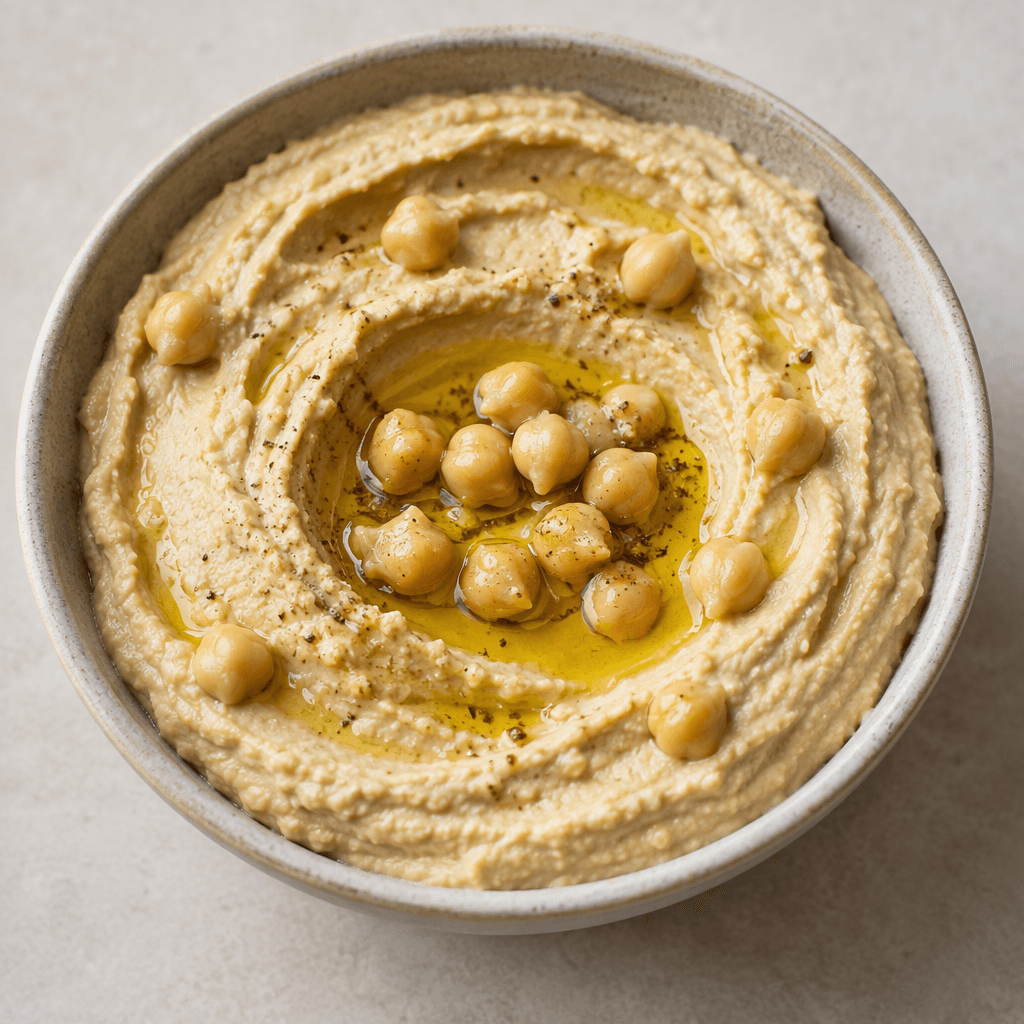
A nutritious dip made from chickpeas, tahini, olive oil, lemon, and garlic.
In season: Spring · Summer · Autumn · Winter
CALORIES
GI
POTASSIUM
FIBER
Quick answer
2 tablespoon (medium) of Hummus (40 g) has 66 calories. That works out to 166 calories per 100 g. It contains 5.7 g of carbs, 3.2 g of protein, 3.4 g of fat and 2.4 g of fiber. Its 0.1 mg of Copper covers 16% of the Daily Value. Its glycemic index is 15 (low), so it raises blood sugar slowly.
What is Hummus?
Hummus is a thick chickpea spread from the Levant, usually blended with tahini, lemon juice, garlic and olive oil. Across the Middle East it is served in many ways, and it has also become a familiar dip in homes and restaurants around the world.
Its texture is smooth and creamy, with a gentle tang from the lemon and a nutty note from the tahini. Serve it with warm flatbread, crisp vegetables or as part of a mezze spread; a little olive oil on top is a common finishing touch. Chickpeas give hummus fibre and plant-based protein, making it a satisfying snack or side. For a lighter version, use less oil and loosen the mixture with water or chickpea cooking liquid.
Hummus Nutrition Facts
Selected: 100 g
166
KCAL / 100G
Carbs
14.3g
· 5% DV
Protein
7.9g
· 16% DV
Fat
8.6g
· 11% DV
Fiber
6g
· 21% DV
DV is the share of the daily value covered, on a 2,000 kcal reference diet.
Calories come from: Carbs 34% · Protein 19% · Fat 47%
Hummus Vitamins & Minerals
Vitamins
Biotin
6µg · 20% DV
B1
0.18mg · 15% DV
B6
0.25mg · 15% DV
Vitamin K
18µg · 15% DV
Minerals
Phosphorus
150mg · 21% DV
Iron
2mg · 11% DV
Magnesium
41mg · 10% DV
Sodium
240mg · 10% DV
How Nutritious Is Hummus?
Nutrient density
High
How many vitamins, minerals and how much fiber this food carries per calorie. A high score means a lot of nutrition for few calories.
Satiety score
High
An EatBetter score computed from fiber, protein and calorie density. A high score means staying full longer on the same calories.
Both scores are calculated per 100 g and do not change with the selected portion. The satiety score is EatBetter's own calculation, not a clinical measure.
Hummus Glycemic Index
GLYCEMIC INDEX
GLYCEMIC LOAD
Accounts for portion size — a more realistic measure than GI alone.
How to Burn Off Hummus
To burn the 166 calories in 100 g:
🚶
Walking (5 km/h)
🏃
Running (8 km/h)
🚴
Cycling
🏊
Swimming
Times are calculated with the MET equation for a 70 kg adult. Actual burn varies with your weight, age and pace.
Is Hummus Processed?
NOVA 2
Minimally Processed
1. Unprocessed
2. Minimally Processed
3. Processed
4. Ultra-Processed
NOVA classifies foods into 4 groups by industrial processing. NOVA 1 (unprocessed) is the healthiest.
Does Hummus Contain Allergens?
Contains these allergens:
Which Diets Is Hummus Good For?
Vegan
✓ Suitable
Vegetarian
✓ Suitable
Gluten-Free
✓ Suitable
Dairy-Free
— Not suitable
Mediterranean
✓ Suitable
Paleo
— Not suitable
Whole30
— Not suitable
DASH
— Not suitable
Keto
— Not suitable
Low FODMAP
— Not suitable
Hummus Fat Profile
SATURATED
1.1g
MONOUNSATURATED
3.1g
POLYUNSATURATED
3g
Omega 6:3 ratio 32.5:1
Above the ideal 4:1 (32.5:1).
Compare Hummus
Foods Similar to Hummus
Frequently Asked Questions About Hummus
What is hummus made of?
Hummus is made from chickpeas, tahini, lemon juice, garlic and olive oil. The ingredients are blended into a smooth spread; a little chickpea cooking liquid or water can loosen the texture if needed.
How do you make hummus smooth and creamy?
To make hummus smooth, blend the tahini and lemon juice first, then add well-cooked chickpeas and blend thoroughly. Removing the chickpea skins can make the texture silkier, while a splash of cold water helps loosen a thick mixture.
What do you eat hummus with?
Hummus goes well with pita, flatbread, crackers and sliced vegetables such as carrots or cucumber. It is also served with falafel, in wraps, or as part of a mezze spread alongside other dips and salads.
How long does hummus last in the fridge?
Homemade hummus usually keeps for about 3–4 days in a sealed container in the refrigerator. Use a clean spoon each time, and discard it if it has been left out for a long time or develops an unusual smell or appearance.
Can you freeze hummus?
Yes, hummus can be frozen in an airtight container, leaving a little room for expansion. Thaw it in the refrigerator and stir well before serving, since the oil and liquid may separate and the texture can become less creamy.
Why does hummus taste bitter?
Hummus can taste bitter if it contains bitter tahini, too much garlic, or olive oil with a strong bitter flavor. Taste the ingredients separately, then balance the batch with more chickpeas and lemon juice rather than adding extra tahini.
Can hummus be heated?
Yes, hummus can be served warm. Heat it gently in a saucepan or microwave, stirring as it warms; avoid overheating, which can make it dry or cause the oil to separate. Warm hummus is often finished with olive oil or spices.
Is hummus good for weight loss?
Hummus can fit into a weight-loss eating plan because its chickpeas provide fiber and protein, which can help make a meal more filling. Its tahini and olive oil make large servings energy-dense, so pair a modest amount with vegetables or a balanced meal.
Can people with diabetes eat hummus?
Yes, many people with diabetes can include hummus in meals; chickpeas provide fiber and protein, but hummus still contains carbohydrates. Match the portion to your meal plan, and ask your healthcare professional for individual advice if you use glucose-lowering medication.
Can you eat hummus every day?
Yes, most people can eat hummus every day as part of varied meals. Rotate it with other dips and spreads, and serve it with vegetables or a meal rather than relying on large amounts of hummus and refined snack foods.
Have another question about Hummus?
Ask the AI nutrition coach — calories, portions, alternatives and more, answered in seconds in the app.

Scan calories with your camera
Instant AI nutrition analysis

Nutrition data compiled from USDA FoodData Central and scientific sources.