

Ready & Packaged Foods
All →Vegetables & Legumes
All →Desserts & Confectionery
All →Meat & Protein
All →Grains & Bakery
All →Beverages
All →Milk & Dairy
All →

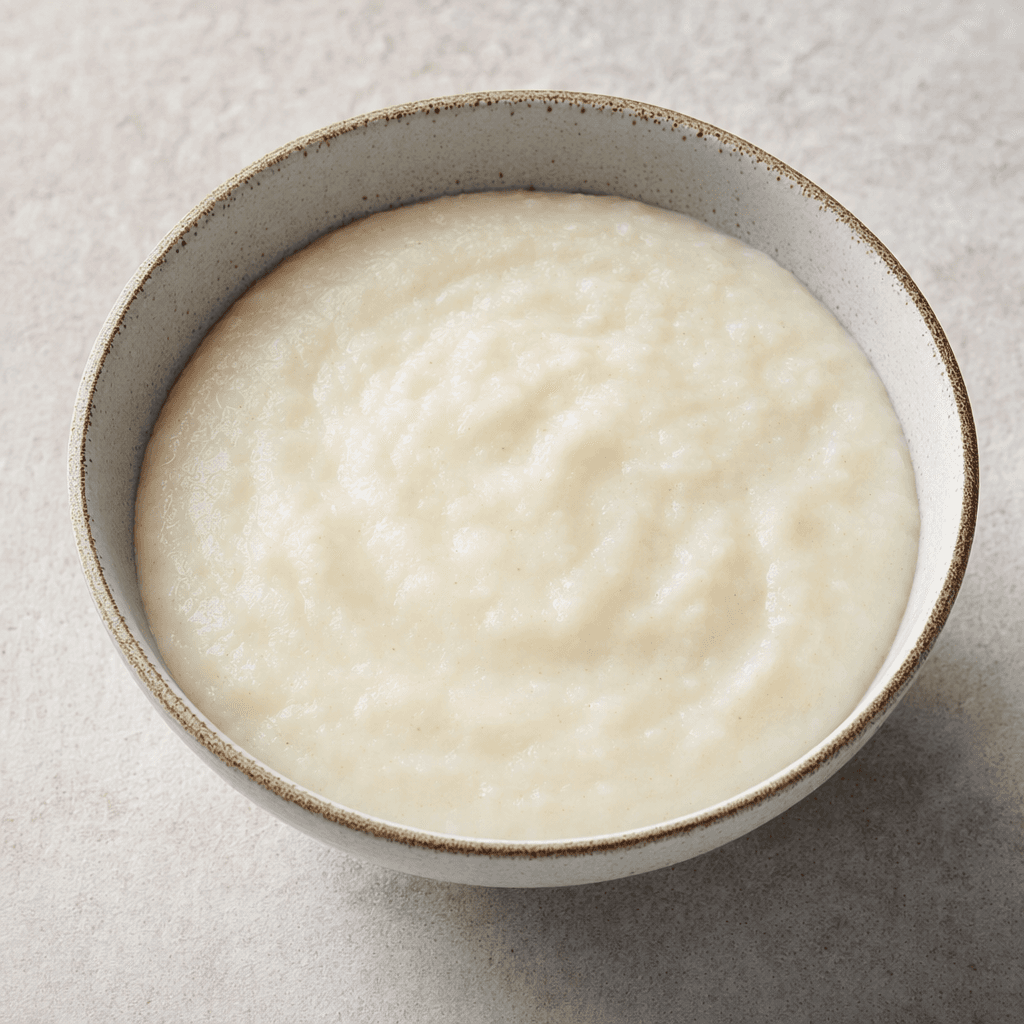
Protein Ocean Cream of Rice Calories
Easy-to-digest carbohydrate source
CALORIES
GI
POTASSIUM
FIBER
Quick answer
1 serving (medium) of Protein Ocean Cream of Rice (50 g) has 181 calories. That works out to 362 calories per 100 g. It contains 40.3 g of carbs, 3.7 g of protein, 0.4 g of fat and 0.6 g of fiber. Its 0.4 mg of Manganese covers 15% of the Daily Value. Its glycemic index is 80 (high), so it raises blood sugar quickly.
What is Protein Ocean Cream of Rice?
Protein Ocean Cream of Rice is a packaged rice-based product for making a smooth, spoonable porridge; despite the name, it is not dairy cream. It cooks to a mild-tasting, soft and thick texture. Cream of rice is commonly served as a warm breakfast or snack, and can be made with water or milk. Add fruit, cinnamon or nuts for sweetness and texture, or keep it plain as a simple base.
It is primarily a carbohydrate source, with relatively little fat and modest protein. For a lighter bowl, use water; to make it more filling, serve it with yoghurt, fruit or another protein-rich topping.
Protein Ocean Cream of Rice Nutrition Facts
Selected: 100 g
362
KCAL / 100G
Carbs
80.5g
· 29% DV
Protein
7.4g
· 15% DV
Fat
0.8g
· 1% DV
Fiber
1.1g
· 4% DV
DV is the share of the daily value covered, on a 2,000 kcal reference diet.
Calories come from: Carbs 90% · Protein 8% · Fat 2%
Protein Ocean Cream of Rice Vitamins & Minerals
Vitamins
B1
0.12mg · 10% DV
B3
1.6mg · 10% DV
B5
0.45mg · 9% DV
B6
0.16mg · 9% DV
Minerals
Manganese
1mg · 43% DV
Selenium
15µg · 27% DV
Phosphorus
95mg · 14% DV
Zinc
1mg · 9% DV
How Nutritious Is Protein Ocean Cream of Rice?
Nutrient density
Low
How many vitamins, minerals and how much fiber this food carries per calorie. A high score means a lot of nutrition for few calories.
Satiety score
Low
An EatBetter score computed from fiber, protein and calorie density. A high score means staying full longer on the same calories.
Both scores are calculated per 100 g and do not change with the selected portion. The satiety score is EatBetter's own calculation, not a clinical measure.
Protein Ocean Cream of Rice Glycemic Index
GLYCEMIC INDEX
GLYCEMIC LOAD
Accounts for portion size — a more realistic measure than GI alone.
How to Burn Off Protein Ocean Cream of Rice
To burn the 362 calories in 100 g:
🚶
Walking (5 km/h)
🏃
Running (8 km/h)
🚴
Cycling
🏊
Swimming
Times are calculated with the MET equation for a 70 kg adult. Actual burn varies with your weight, age and pace.
Is Protein Ocean Cream of Rice Processed?
NOVA 3
Processed
1. Unprocessed
2. Minimally Processed
3. Processed
4. Ultra-Processed
NOVA classifies foods into 4 groups by industrial processing. NOVA 1 (unprocessed) is the healthiest.
Does Protein Ocean Cream of Rice Contain Allergens?
No known major allergens
Which Diets Is Protein Ocean Cream of Rice Good For?
Vegan
✓ Suitable
Vegetarian
✓ Suitable
Gluten-Free
✓ Suitable
Dairy-Free
— Not suitable
Mediterranean
✓ Suitable
Paleo
— Not suitable
Whole30
— Not suitable
DASH
— Not suitable
Keto
— Not suitable
Low FODMAP
— Not suitable
Protein Ocean Cream of Rice Fat Profile
SATURATED
0.2g
MONOUNSATURATED
0.2g
POLYUNSATURATED
0.2g
Omega 6:3 ratio 10:1
Above the ideal 4:1 (10:1).
Compare Protein Ocean Cream of Rice
Foods Similar to Protein Ocean Cream of Rice
Frequently Asked Questions About Protein Ocean Cream of Rice
What is Protein Ocean Cream of Rice?
Protein Ocean Cream of Rice is a rice-based product used to make a smooth porridge. It is a convenient alternative to cooking rice into a breakfast cereal; the exact ingredients and preparation instructions can vary by product formulation.
How do you make Protein Ocean Cream of Rice?
Stir Protein Ocean Cream of Rice gradually into hot water or milk until smooth, then continue mixing to your preferred thickness. Follow the package directions for the liquid amount and any resting or cooking time, since these can vary.
Can you make Protein Ocean Cream of Rice with milk instead of water?
Yes, Protein Ocean Cream of Rice can be made with either milk or water. Milk gives it a creamier taste, while water keeps the flavour simpler; add the liquid gradually so you can control the consistency.
Why does Protein Ocean Cream of Rice go lumpy?
Protein Ocean Cream of Rice can turn lumpy when liquid is added too quickly or the mixture is not stirred evenly. Start by mixing it with a small amount of liquid to form a smooth paste, then gradually add the rest.
What ingredients are in Protein Ocean Cream of Rice?
Protein Ocean Cream of Rice is rice-based, but its full ingredient list may include other components and can vary by formulation. For the exact ingredients in your pack, use the product’s ingredient list rather than assuming every version has the same recipe.
Is Protein Ocean Cream of Rice good before a workout?
Yes, Protein Ocean Cream of Rice can work as a pre-workout food because it provides rice-based carbohydrates and is often chosen for easy digestion. If you plan to eat shortly before exercising, try a smaller serving first to see how it feels.
Can you eat Protein Ocean Cream of Rice for breakfast?
Yes, Protein Ocean Cream of Rice can be served as a warm breakfast porridge. Add fruit, yogurt, milk, or nuts to make the bowl more varied and satisfying, or keep it plain if you prefer a simple rice flavour.
Does Protein Ocean Cream of Rice raise blood sugar?
Yes, Protein Ocean Cream of Rice can raise blood sugar because rice-based carbohydrates are digested and absorbed. If you have diabetes, ask your dietitian or clinician how to portion it and pair it with other foods for your individual needs.
How should you store Protein Ocean Cream of Rice after opening?
Keep Protein Ocean Cream of Rice tightly closed in a cool, dry place after opening. Moisture can make the powder clump or spoil, so use a dry scoop and follow any different storage instructions printed on the pack.
Can Protein Ocean Cream of Rice be eaten without sweetener?
Yes, Protein Ocean Cream of Rice can be eaten plain without added sweetener. Its mild flavour also works with cinnamon, fruit, or yogurt; mashed banana or berries can add sweetness without needing to stir in sugar.
Have another question about Protein Ocean Cream of Rice?
Ask the AI nutrition coach — calories, portions, alternatives and more, answered in seconds in the app.

Scan calories with your camera
Instant AI nutrition analysis

Nutrition data compiled from USDA FoodData Central and scientific sources.