

Ready & Packaged Foods
All →Vegetables & Legumes
All →Desserts & Confectionery
All →Meat & Protein
All →Grains & Bakery
All →Beverages
All →Milk & Dairy
All →

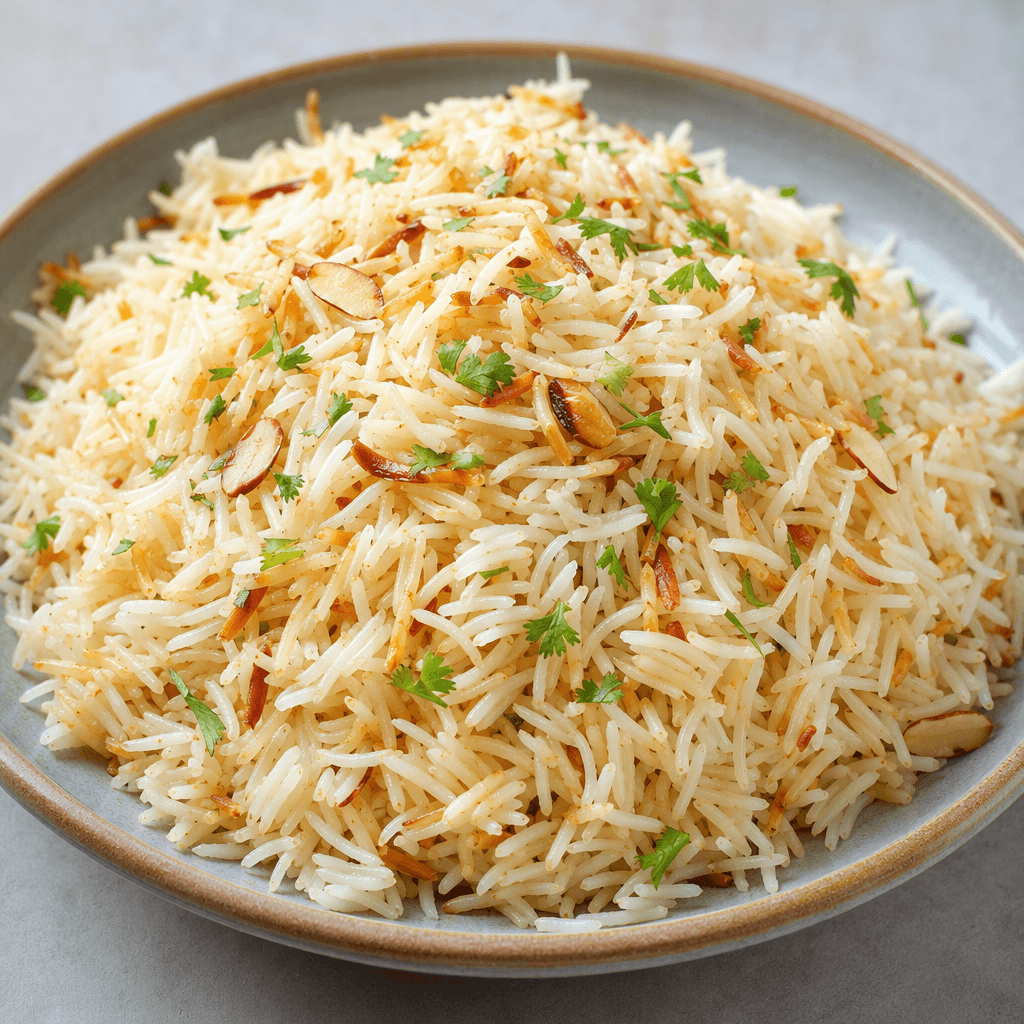
Basmati Rice Pilaf Calories
Long-grain, light and aromatic pilaf. Low fat, moderate carbs.
In season: Spring · Summer · Autumn · Winter
CALORIES
GI
POTASSIUM
FIBER
Quick answer
1 cup (medium) of Basmati Rice Pilaf (150 g) has 210 calories. That works out to 140 calories per 100 g. It contains 44.3 g of carbs, 4.1 g of protein, 1.8 g of fat and 1 g of fiber. Its 0.6 mg of Manganese covers 26% of the Daily Value. Its glycemic index is 60 (medium), so it raises blood sugar at a moderate pace.
What is Basmati Rice Pilaf?
Basmati Rice Pilaf is made by gently toasting long-grain basmati rice, then simmering it in water or stock until the grains are tender and separate. Basmati is especially associated with South Asian cooking, while pilaf-style rice is enjoyed across many regions.
Its light, fragrant character works well beside curries, grilled meat, fish or vegetables, and it can also be served with herbs or toasted nuts. It is mainly a source of carbohydrates and is typically low in fat when prepared with little oil. For a more filling meal, pair it with lentils or chickpeas; use stock and a measured amount of oil to keep the texture flavorful without making it heavy.
Basmati Rice Pilaf Nutrition Facts
Selected: 100 g
140
KCAL / 100G
Carbs
29.5g
· 11% DV
Protein
2.7g
· 5% DV
Fat
1.2g
· 2% DV
Fiber
0.7g
· 3% DV
DV is the share of the daily value covered, on a 2,000 kcal reference diet.
Calories come from: Carbs 85% · Protein 8% · Fat 7%
Basmati Rice Pilaf Vitamins & Minerals
Vitamins
B3
1.2mg · 8% DV
B6
0.08mg · 5% DV
B1
0.03mg · 3% DV
B5
0.13mg · 3% DV
Minerals
Selenium
7µg · 13% DV
Zinc
1mg · 9% DV
Phosphorus
35mg · 5% DV
Magnesium
12mg · 3% DV
How Nutritious Is Basmati Rice Pilaf?
Nutrient density
Medium
How many vitamins, minerals and how much fiber this food carries per calorie. A high score means a lot of nutrition for few calories.
Satiety score
Low
An EatBetter score computed from fiber, protein and calorie density. A high score means staying full longer on the same calories.
Both scores are calculated per 100 g and do not change with the selected portion. The satiety score is EatBetter's own calculation, not a clinical measure.
Basmati Rice Pilaf Glycemic Index
GLYCEMIC INDEX
GLYCEMIC LOAD
Accounts for portion size — a more realistic measure than GI alone.
How to Burn Off Basmati Rice Pilaf
To burn the 140 calories in 100 g:
🚶
Walking (5 km/h)
🏃
Running (8 km/h)
🚴
Cycling
🏊
Swimming
Times are calculated with the MET equation for a 70 kg adult. Actual burn varies with your weight, age and pace.
Is Basmati Rice Pilaf Processed?
NOVA 2
Minimally Processed
1. Unprocessed
2. Minimally Processed
3. Processed
4. Ultra-Processed
NOVA classifies foods into 4 groups by industrial processing. NOVA 1 (unprocessed) is the healthiest.
Does Basmati Rice Pilaf Contain Allergens?
No known major allergens
Which Diets Is Basmati Rice Pilaf Good For?
Vegan
✓ Suitable
Vegetarian
✓ Suitable
Gluten-Free
✓ Suitable
Dairy-Free
— Not suitable
Mediterranean
✓ Suitable
Paleo
— Not suitable
Whole30
— Not suitable
DASH
— Not suitable
Keto
— Not suitable
Low FODMAP
— Not suitable
Basmati Rice Pilaf Fat Profile
SATURATED
0.3g
MONOUNSATURATED
0.3g
POLYUNSATURATED
0.5g
Omega 6:3 ratio 18:1
Above the ideal 4:1 (18:1).
Compare Basmati Rice Pilaf
Foods Similar to Basmati Rice Pilaf
Frequently Asked Questions About Basmati Rice Pilaf
How do you make basmati rice pilaf fluffy?
For fluffy basmati rice pilaf, rinse the rice until the water runs mostly clear, drain it well, and briefly toast it in a little fat. Add hot liquid, cover, and cook gently without stirring; let it rest before fluffing with a fork.
What is the water-to-rice ratio for basmati rice pilaf?
A common starting point for basmati rice pilaf is about one and a half parts water to one part rice. The amount can vary with soaking, the pan, and the rice brand, so adjust to the package directions and your preferred texture.
Why does basmati rice pilaf turn sticky or mushy?
Basmati rice pilaf often turns sticky when excess starch remains on the grains, too much liquid is used, or the rice is stirred during cooking. Rinse and drain the rice well, measure the liquid carefully, and keep the lid on while it cooks.
Should you soak rice before making basmati rice pilaf?
Soaking is optional for basmati rice pilaf, but it can help the grains cook evenly and stay separate. If you soak the rice, drain it thoroughly and use less cooking liquid than you would for unsoaked rice.
Which spices are used in basmati rice pilaf?
Cumin, cardamom, cinnamon, cloves, and bay leaf are common seasonings for basmati rice pilaf. Toast whole spices briefly in the cooking fat before adding the rice, or keep the seasoning simple when serving the pilaf with a strongly flavored main dish.
How is basmati rice pilaf different from plain basmati rice?
Basmati rice pilaf is cooked with added flavor, often by briefly sautéing the rice with aromatics before adding the liquid. Plain basmati rice is usually simmered with water and salt, without the same toasted base or additional ingredients.
What is the difference between basmati rice pilaf and biryani?
Basmati rice pilaf is generally a straightforward rice dish, sometimes flavored with spices or a few additions. Biryani is a layered, more elaborate preparation in which seasoned meat or vegetables cook with basmati rice and a fuller set of aromatics.
What can you add to basmati rice pilaf?
You can add toasted almonds or cashews, peas, raisins, caramelized onions, or fresh herbs to basmati rice pilaf. Add delicate ingredients near the end so they keep their texture, and choose additions that complement the spices in the rest of the meal.
Can you freeze basmati rice pilaf?
Yes, basmati rice pilaf can be frozen once it has cooled. Pack it in airtight, meal-sized portions and thaw it in the refrigerator or reheat it from frozen with a splash of water, making sure it is steaming hot throughout.
How do you reheat basmati rice pilaf without drying it out?
Reheat basmati rice pilaf with a small splash of water and a covered dish so the trapped steam softens the grains. On the stovetop, use low heat and stir gently; in a microwave, pause to mix it so it heats evenly.
Have another question about Basmati Rice Pilaf?
Ask the AI nutrition coach — calories, portions, alternatives and more, answered in seconds in the app.

Scan calories with your camera
Instant AI nutrition analysis

Nutrition data compiled from USDA FoodData Central and scientific sources.