

Ready & Packaged Foods
All →Vegetables & Legumes
All →Desserts & Confectionery
All →Meat & Protein
All →Grains & Bakery
All →Beverages
All →Milk & Dairy
All →

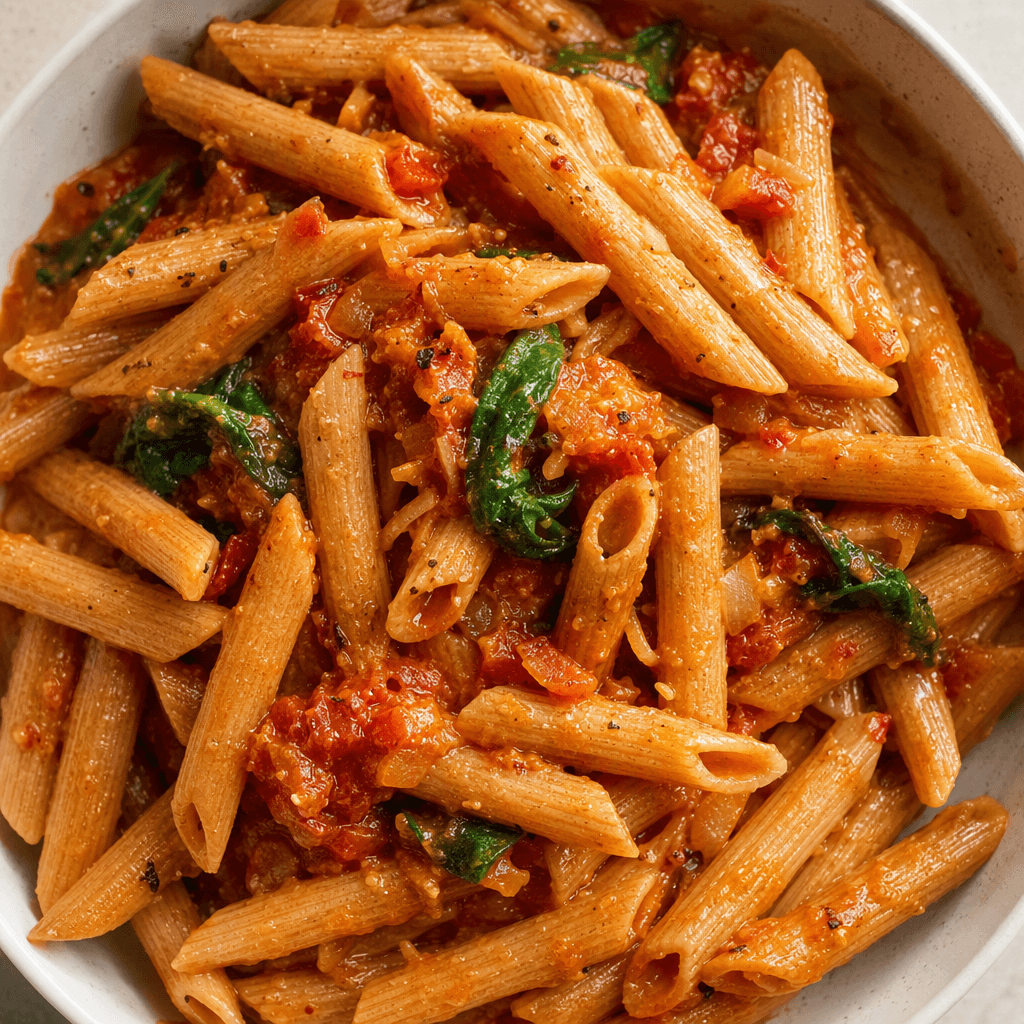
Whole wheat pasta Calories
High fiber, complex carbohydrates, contains vitamins and minerals
In season: Spring · Summer · Autumn · Winter
CALORIES
GI
POTASSIUM
FIBER
Quick answer
1 cup (medium) of Whole wheat pasta (140 g) has 174 calories. That works out to 124 calories per 100 g. It contains 37.1 g of carbs, 7.3 g of protein, 1.3 g of fat and 5.2 g of fiber. Its 44.8 µg of Selenium covers 81% of the Daily Value. Its glycemic index is 45 (medium), so it raises blood sugar at a moderate pace.
What is Whole wheat pasta?
Whole wheat pasta is pasta made with whole wheat flour rather than refined flour, rooted in Italy’s long tradition of pasta-making. It comes in familiar shapes and can be used much like conventional pasta in everyday meals.
Its flavour is nuttier and more pronounced, with a slightly rougher surface and a firmer, heartier bite. Serve it with tomato sauce, vegetables, olive oil or a simple cheese sauce; it works just as well in a packed lunch or a warm dinner across many cuisines. It provides fibre alongside complex carbohydrates, with 3.7 g of fibre per 100 g in the figures shown. For a lighter plate, add plenty of vegetables and keep rich sauces modest.
Whole wheat pasta Nutrition Facts
Selected: 100 g
124
KCAL / 100G
Carbs
26.5g
· 10% DV
Protein
5.2g
· 10% DV
Fat
0.9g
· 1% DV
Fiber
3.7g
· 13% DV
DV is the share of the daily value covered, on a 2,000 kcal reference diet.
Calories come from: Carbs 79% · Protein 15% · Fat 6%
Whole wheat pasta Vitamins & Minerals
Vitamins
B1
0.13mg · 11% DV
B3
1.2mg · 8% DV
B6
0.08mg · 5% DV
Folate
18µg · 5% DV
Minerals
Selenium
32µg · 58% DV
Manganese
1mg · 43% DV
Phosphorus
110mg · 16% DV
Magnesium
43mg · 10% DV
How Nutritious Is Whole wheat pasta?
Nutrient density
Medium
How many vitamins, minerals and how much fiber this food carries per calorie. A high score means a lot of nutrition for few calories.
Satiety score
Medium
An EatBetter score computed from fiber, protein and calorie density. A high score means staying full longer on the same calories.
Both scores are calculated per 100 g and do not change with the selected portion. The satiety score is EatBetter's own calculation, not a clinical measure.
Whole wheat pasta Glycemic Index
GLYCEMIC INDEX
GLYCEMIC LOAD
Accounts for portion size — a more realistic measure than GI alone.
How to Burn Off Whole wheat pasta
To burn the 124 calories in 100 g:
🚶
Walking (5 km/h)
🏃
Running (8 km/h)
🚴
Cycling
🏊
Swimming
Times are calculated with the MET equation for a 70 kg adult. Actual burn varies with your weight, age and pace.
Is Whole wheat pasta Processed?
NOVA 2
Minimally Processed
1. Unprocessed
2. Minimally Processed
3. Processed
4. Ultra-Processed
NOVA classifies foods into 4 groups by industrial processing. NOVA 1 (unprocessed) is the healthiest.
Does Whole wheat pasta Contain Allergens?
Contains these allergens:
Which Diets Is Whole wheat pasta Good For?
Vegan
✓ Suitable
Vegetarian
✓ Suitable
Gluten-Free
— Not suitable
Dairy-Free
— Not suitable
Mediterranean
✓ Suitable
Paleo
— Not suitable
Whole30
— Not suitable
DASH
— Not suitable
Keto
— Not suitable
Low FODMAP
— Not suitable
Whole wheat pasta Fat Profile
SATURATED
0.18g
MONOUNSATURATED
0.11g
POLYUNSATURATED
0.39g
Omega 6:3 ratio 12:1
Above the ideal 4:1 (12:1).
Compare Whole wheat pasta
Foods Similar to Whole wheat pasta
Frequently Asked Questions About Whole wheat pasta
Is whole wheat pasta healthier than regular pasta?
Yes, whole wheat pasta contains more fiber and retains more of the grain than refined pasta. That can make it a more filling choice, though the sauce and portion still matter; try pairing it with vegetables and a protein source.
How do you cook whole wheat pasta so it isn’t chewy?
Cook whole wheat pasta in plenty of boiling water and start tasting it before the package’s suggested time is up. Its texture is naturally firmer than refined pasta, so drain it when it is pleasantly tender rather than waiting for it to feel soft.
Does whole wheat pasta taste different from regular pasta?
Yes, whole wheat pasta has a stronger, nuttier flavor and a firmer texture than regular pasta. Its taste works especially well with robust sauces, roasted vegetables, garlic, and herbs, though it may stand out more in delicate, mild dishes.
Can you use whole wheat pasta in any recipe?
Yes, whole wheat pasta can replace regular pasta in most recipes, but its firmer texture and stronger flavor may change the result. It pairs particularly well with hearty tomato sauces, beans, mushrooms, and vegetables; check doneness early when adapting a recipe.
Should you rinse whole wheat pasta after cooking?
No, don’t rinse whole wheat pasta if you’re serving it hot. The surface starch helps sauce cling to the noodles. Rinsing is useful only when you want to cool the pasta quickly for a cold pasta salad.
Is whole wheat pasta better for blood sugar than white pasta?
Whole wheat pasta may cause a slower rise in blood sugar than white pasta because it has more fiber, but it still contains carbohydrates. Pairing a moderate serving with vegetables and protein can help make a meal more balanced.
Does whole wheat pasta need more water than regular pasta?
No, whole wheat pasta doesn’t need a special water ratio; cook it in a large pot of boiling water, as you would other dried pasta. Stir after adding it and occasionally during cooking to help the pieces cook evenly and avoid sticking.
Does whole wheat pasta work with pesto?
Yes, whole wheat pasta works well with pesto. Its earthy, nutty flavor complements basil, garlic, and nuts, while a little cooking water can help the pesto coat the pasta instead of sitting in clumps.
Can you use whole wheat pasta in mac and cheese?
Yes, whole wheat pasta can be used in mac and cheese, though its firmer texture and grainier flavor make the dish taste heartier. Choose a shape that holds sauce well, and check the pasta early so it doesn’t become mushy beneath the cheese sauce.
Can you meal prep whole wheat pasta?
Yes, whole wheat pasta is suitable for meal prep. Cook it slightly firm, cool it promptly, and store it separately from the sauce when possible; keeping them apart helps the pasta retain a better texture when you reheat the meal.
Have another question about Whole wheat pasta?
Ask the AI nutrition coach — calories, portions, alternatives and more, answered in seconds in the app.

Scan calories with your camera
Instant AI nutrition analysis

Nutrition data compiled from USDA FoodData Central and scientific sources.