

Ready & Packaged Foods
All →Vegetables & Legumes
All →Desserts & Confectionery
All →Meat & Protein
All →Grains & Bakery
All →Beverages
All →Milk & Dairy
All →

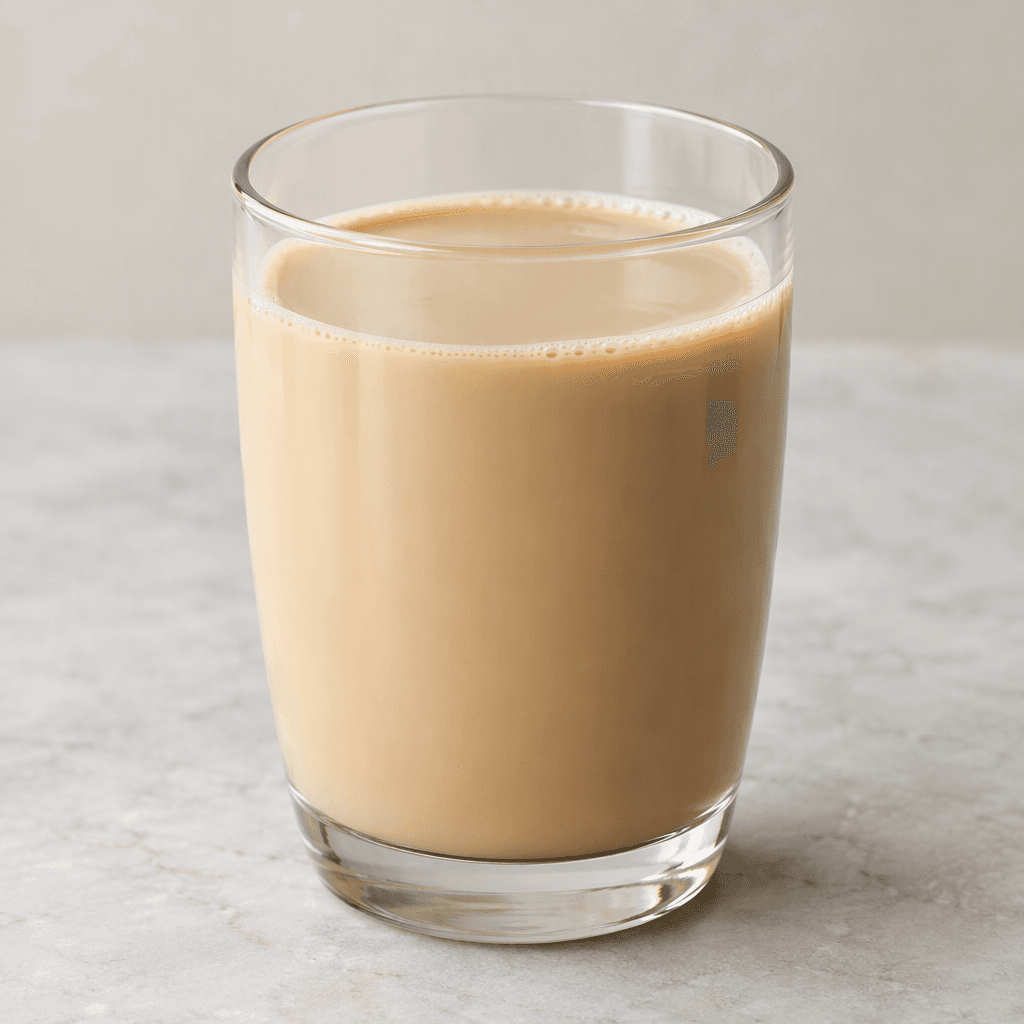
İçim Fit Protein Coffee Milk Calories
High protein, coffee milk, low fat
In season: Spring · Summer · Autumn · Winter
CALORIES
GI
POTASSIUM
FIBER
Quick answer
1 bottle (medium) of İçim Fit Protein Coffee Milk (250 g) has 135 calories. That works out to 54 calories per 100 g. It contains 13 g of carbs, 15 g of protein, 1.8 g of fat and 0 g of fiber. Its 525 mg of Calcium covers 53% of the Daily Value. Its glycemic index is 35 (low), so it raises blood sugar slowly.
İçim Fit Protein Coffee Milk Nutrition Facts
Selected: 100 g
54
KCAL / 100G
Carbs
5.2g
· 2% DV
Protein
6g
· 12% DV
Fat
0.7g
· 1% DV
Fiber
0g
· 0% DV
DV is the share of the daily value covered, on a 2,000 kcal reference diet.
Calories come from: Carbs 41% · Protein 47% · Fat 12%
İçim Fit Protein Coffee Milk Vitamins & Minerals
Vitamins
B12
0.4µg · 17% DV
B2
0.18mg · 14% DV
B5
0.5mg · 10% DV
Biotin
1.5µg · 5% DV
Minerals
Calcium
210mg · 21% DV
Phosphorus
90mg · 13% DV
Zinc
1mg · 9% DV
Iodine
7µg · 5% DV
How Nutritious Is İçim Fit Protein Coffee Milk?
Nutrient density
High
How many vitamins, minerals and how much fiber this food carries per calorie. A high score means a lot of nutrition for few calories.
Satiety score
Medium
An EatBetter score computed from fiber, protein and calorie density. A high score means staying full longer on the same calories.
Both scores are calculated per 100 g and do not change with the selected portion. The satiety score is EatBetter's own calculation, not a clinical measure.
İçim Fit Protein Coffee Milk Glycemic Index
GLYCEMIC INDEX
GLYCEMIC LOAD
Accounts for portion size — a more realistic measure than GI alone.
How to Burn Off İçim Fit Protein Coffee Milk
To burn the 54 calories in 100 g:
🚶
Walking (5 km/h)
🏃
Running (8 km/h)
🚴
Cycling
🏊
Swimming
Times are calculated with the MET equation for a 70 kg adult. Actual burn varies with your weight, age and pace.
Is İçim Fit Protein Coffee Milk Processed?
NOVA 3
Processed
1. Unprocessed
2. Minimally Processed
3. Processed
4. Ultra-Processed
NOVA classifies foods into 4 groups by industrial processing. NOVA 1 (unprocessed) is the healthiest.
Does İçim Fit Protein Coffee Milk Contain Allergens?
Contains these allergens:
Which Diets Is İçim Fit Protein Coffee Milk Good For?
Vegan
— Not suitable
Vegetarian
✓ Suitable
Gluten-Free
— Not suitable
Dairy-Free
— Not suitable
Mediterranean
✓ Suitable
Paleo
— Not suitable
Whole30
— Not suitable
DASH
— Not suitable
Keto
— Not suitable
Low FODMAP
— Not suitable
İçim Fit Protein Coffee Milk Fat Profile
SATURATED
0.4g
MONOUNSATURATED
0.2g
POLYUNSATURATED
0.1g
Omega 6:3 ratio 2:1
Below the ideal 4:1 — a good omega balance.
Compare İçim Fit Protein Coffee Milk
Foods Similar to İçim Fit Protein Coffee Milk
Frequently Asked Questions About İçim Fit Protein Coffee Milk
Is İçim Fit Protein Coffee Milk better before or after a workout?
It is often more useful after training as a convenient way to get some protein in. Before a workout, the coffee component may feel energizing for some people but can bother sensitive stomachs.
How long does it keep once opened?
After opening, it should be refrigerated and ideally finished soon. The safest choice is to follow the storage guidance printed on the package.
Can İçim Fit Protein Coffee Milk be frozen?
It can be frozen for safety, but the texture may change after thawing. Milk-based drinks often separate, so fresh use is usually the better option.
Is it okay to drink protein coffee milk on an empty stomach?
That depends on the person. The coffee content may trigger stomach discomfort, acidity, or jitters in some people, so having it with food can be easier to tolerate.
Does it keep you full?
It can work as a practical short-term snack because it contains protein. How filling it feels depends on your appetite, portion, and what you pair it with.
What should I pair it with for a more balanced snack?
Fruit, oats, or a small handful of nuts can make it more balanced. Pairing it with fiber-rich foods may help with fullness and make the snack feel more complete.
Is it a better breakfast option than regular coffee?
Compared with plain coffee, it can be more nourishing because it also provides protein. Still, on its own it is not a full breakfast, so adding fiber-rich and whole foods is a better approach.
Because it is processed, should I avoid it completely?
No. Processed does not automatically mean unhealthy; what matters more is your overall diet, how often you drink it, and whether it fits your needs.
Should people with lactose sensitivity be careful with it?
Yes. Since it is a dairy product, it may cause bloating, gas, or digestive discomfort in people who do not tolerate lactose well.
Can drinking it in the evening affect sleep?
Yes, it can, because the coffee content means it likely contains caffeine. If you are caffeine-sensitive, having it late in the day may make it harder to fall asleep.
Have another question about İçim Fit Protein Coffee Milk?
Ask the AI nutrition coach — calories, portions, alternatives and more, answered in seconds in the app.

Scan calories with your camera
Instant AI nutrition analysis

Nutrition data compiled from USDA FoodData Central and scientific sources.