

Ready & Packaged Foods
All →Vegetables & Legumes
All →Desserts & Confectionery
All →Meat & Protein
All →Grains & Bakery
All →Beverages
All →Milk & Dairy
All →

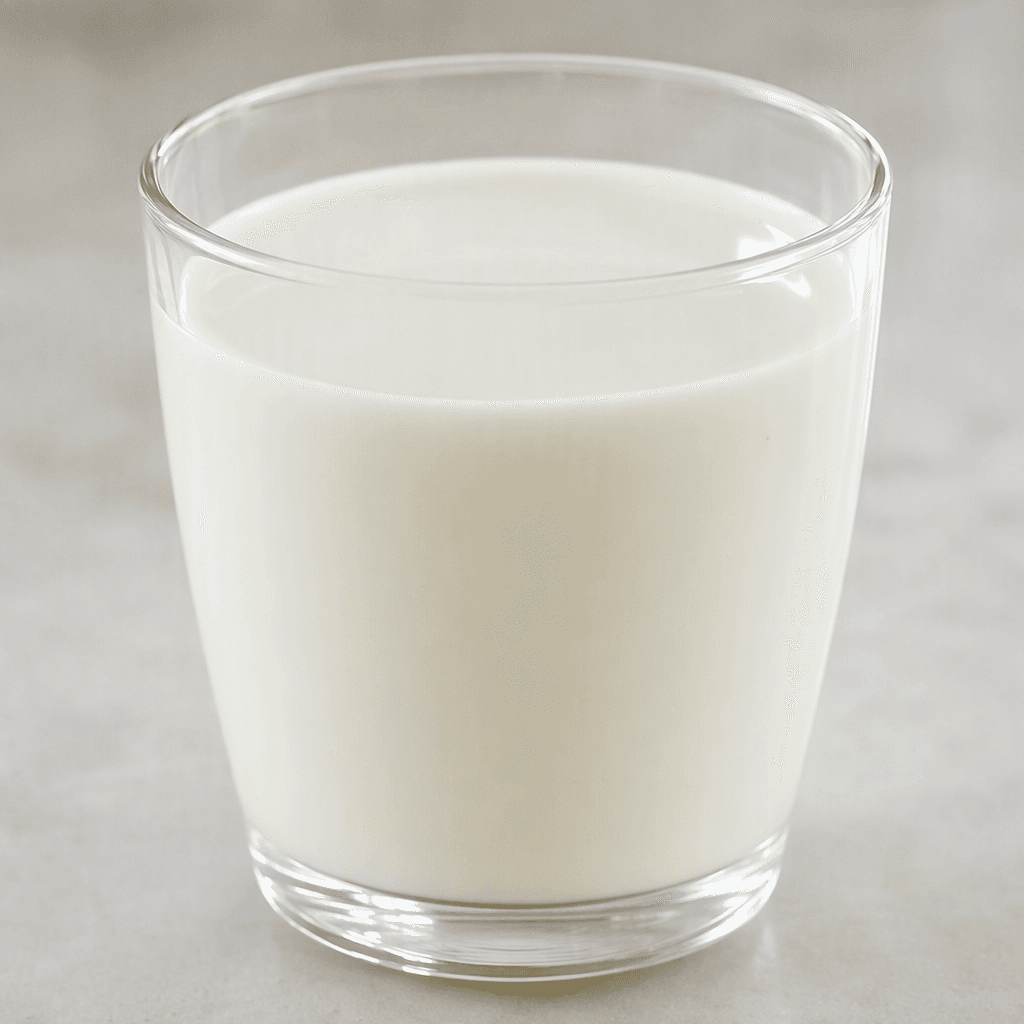
Milk Calories
Source of calcium and protein, important for bone health.
In season: Spring · Summer · Autumn · Winter
CALORIES
GI
POTASSIUM
FIBER
Quick answer
1 cup (medium) of Milk (240 g) has 154 calories. That works out to 64 calories per 100 g. It contains 11.5 g of carbs, 7.9 g of protein, 8.6 g of fat and 0 g of fiber. Its 1.1 µg of B12 covers 45% of the Daily Value. Its glycemic index is 47 (low), so it raises blood sugar slowly.
What is Milk?
Milk is the familiar white drink collected from dairy animals, most commonly cows, and is also used as an ingredient in everyday cooking. It can be poured over cereal, stirred into porridge or coffee, or used in sauces, soups and baking.
Its flavour is mild and slightly sweet, with a smooth, creamy texture. Around the world, people drink it cold or warm, serve it with breakfast, or use it in tea and coffee. Milk provides protein and calcium; 100 grams contains 3.3 grams of protein. A glass is an easy way to add it to a meal, while a smaller pour works well in coffee or over cereal when you want a lighter serving.
Milk Nutrition Facts
Selected: 100 g
64
KCAL / 100G
Carbs
4.8g
· 2% DV
Protein
3.3g
· 7% DV
Fat
3.6g
· 5% DV
Fiber
0g
· 0% DV
DV is the share of the daily value covered, on a 2,000 kcal reference diet.
Calories come from: Carbs 30% · Protein 20% · Fat 50%
Milk Vitamins & Minerals
Vitamins
B12
0.45µg · 19% DV
B2
0.18mg · 14% DV
Biotin
3.5µg · 12% DV
B5
0.35mg · 7% DV
Minerals
Phosphorus
95mg · 14% DV
Calcium
120mg · 12% DV
Iodine
16µg · 11% DV
Selenium
2.5µg · 5% DV
How Nutritious Is Milk?
Nutrient density
High
How many vitamins, minerals and how much fiber this food carries per calorie. A high score means a lot of nutrition for few calories.
Satiety score
Medium
An EatBetter score computed from fiber, protein and calorie density. A high score means staying full longer on the same calories.
Both scores are calculated per 100 g and do not change with the selected portion. The satiety score is EatBetter's own calculation, not a clinical measure.
Milk Glycemic Index
GLYCEMIC INDEX
GLYCEMIC LOAD
Accounts for portion size — a more realistic measure than GI alone.
How to Burn Off Milk
To burn the 64 calories in 100 g:
🚶
Walking (5 km/h)
🏃
Running (8 km/h)
🚴
Cycling
🏊
Swimming
Times are calculated with the MET equation for a 70 kg adult. Actual burn varies with your weight, age and pace.
Is Milk Processed?
NOVA 2
Minimally Processed
1. Unprocessed
2. Minimally Processed
3. Processed
4. Ultra-Processed
NOVA classifies foods into 4 groups by industrial processing. NOVA 1 (unprocessed) is the healthiest.
Does Milk Contain Allergens?
Contains these allergens:
Which Diets Is Milk Good For?
Vegan
— Not suitable
Vegetarian
✓ Suitable
Gluten-Free
— Not suitable
Dairy-Free
— Not suitable
Mediterranean
✓ Suitable
Paleo
— Not suitable
Whole30
— Not suitable
DASH
— Not suitable
Keto
— Not suitable
Low FODMAP
— Not suitable
Milk Fat Profile
SATURATED
2.3g
MONOUNSATURATED
0.8g
POLYUNSATURATED
0.1g
Omega 6:3 ratio 4:1
Below the ideal 4:1 — a good omega balance.
Compare Milk
Foods Similar to Milk
Frequently Asked Questions About Milk
How long does milk last after opening?
Opened milk usually keeps for about 3–5 days in the refrigerator. Keep it cold with the cap tightly closed, and use it sooner if the carton gives a shorter timeframe.
Can you freeze milk?
Yes, you can freeze milk, though it may separate or become grainy after thawing. Leave room in the container for expansion, thaw it in the refrigerator, then shake or stir it well; do not refreeze thawed milk.
Should you boil milk before drinking it?
No, pasteurized milk does not need to be boiled before drinking. You can warm it if you prefer. Raw milk should be thoroughly heated because it may contain harmful germs.
Why does milk curdle in coffee?
Milk can curdle in coffee when it is old, or when acidity and high heat cause its proteins to clump. Try fresh, cold milk and add it gradually; discard it if it smells or looks spoiled.
How can you tell if milk has gone bad?
Spoiled milk often smells sour, looks lumpy, or has an unusual texture. Do not taste it to check; discard it if you notice these signs or if it has been left unrefrigerated for too long.
Does milk help you sleep?
Milk is not proven to reliably improve sleep. A warm drink may feel relaxing as part of an evening routine, but it is not a treatment for insomnia.
Is raw milk safe to drink?
Raw milk is not considered a safe choice because it can carry germs that cause foodborne illness. Pasteurized milk is safer, especially for young children, pregnant people, older adults, and people with weakened immune systems.
What is the difference between whole milk and skim milk?
Whole milk retains more of its natural fat, while skim milk has most of that fat removed. They can generally be used in the same ways, although whole milk tastes richer and gives drinks or recipes a creamier texture.
Does milk cause mucus?
No, milk does not increase mucus production. It may leave a thicker coating sensation in your mouth or throat, which can feel like extra mucus without actually creating more.
When can babies drink cow’s milk?
Cow’s milk should not be a baby’s main drink before 12 months; breast milk or infant formula is recommended during that period. Ask your child’s clinician about introducing it after the first birthday, especially if your baby has feeding or health concerns.
Have another question about Milk?
Ask the AI nutrition coach — calories, portions, alternatives and more, answered in seconds in the app.

Scan calories with your camera
Instant AI nutrition analysis

Nutrition data compiled from USDA FoodData Central and scientific sources.