

Ready & Packaged Foods
All →Vegetables & Legumes
All →Desserts & Confectionery
All →Meat & Protein
All →Grains & Bakery
All →Beverages
All →Milk & Dairy
All →

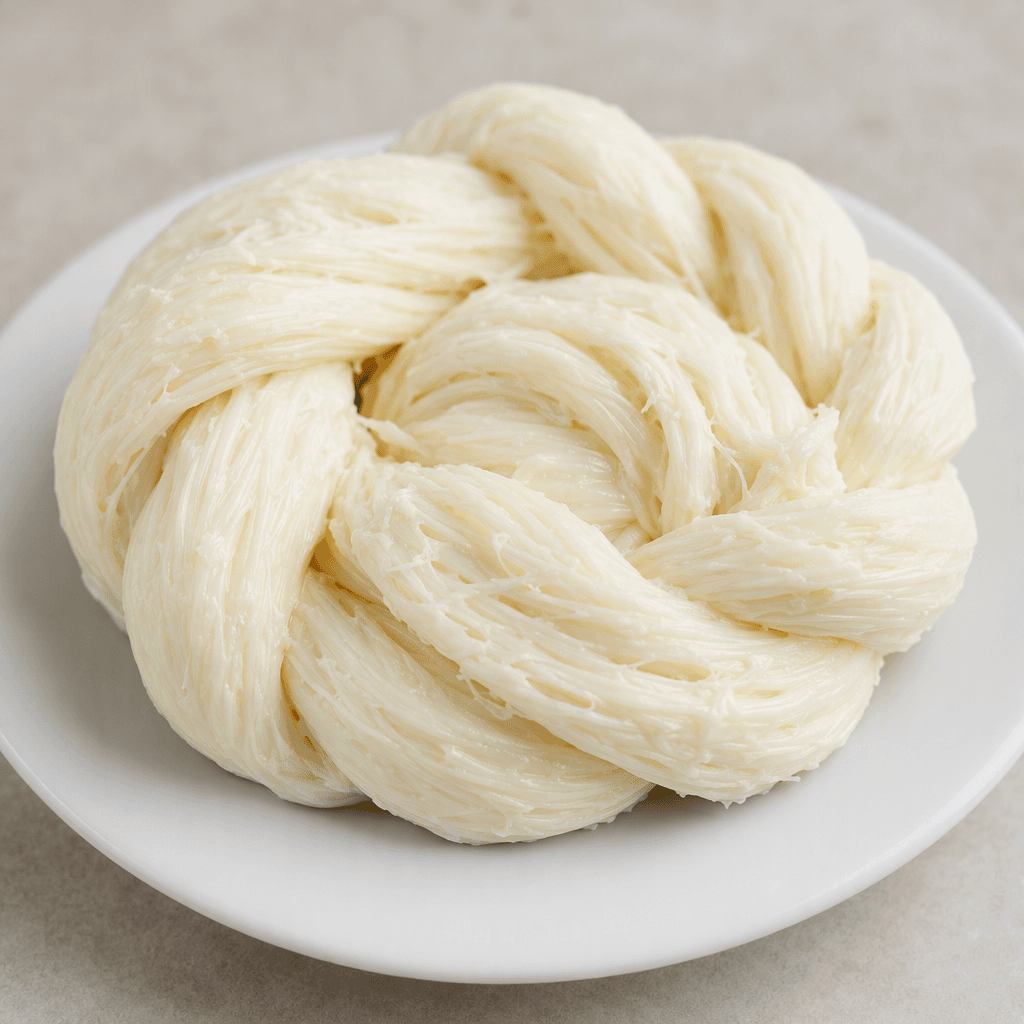
Cecil Cheese Calories
Salty, stringy traditional cheese
In season: Spring · Summer · Autumn · Winter
CALORIES
GI
POTASSIUM
FIBER
Quick answer
1 piece (medium) of Cecil Cheese (40 g) has 128 calories. That works out to 320 calories per 100 g. It contains 1 g of carbs, 10 g of protein, 9.2 g of fat and 0 g of fiber. Its 192 mg of Phosphorus covers 27% of the Daily Value. Its glycemic index is 0 (low), so it raises blood sugar slowly.
What is Cecil Cheese?
Cecil cheese is a traditional Turkish string cheese, especially associated with eastern Anatolia. The curds are worked into long, fibrous strands, giving it a pale colour and a firm, slightly chewy texture. Its saltiness and rope-like form make it easy to pull apart by hand.
In Turkey, it is commonly served at breakfast with bread and tea, and can also be tucked into pastries or flatbreads. Elsewhere, enjoy it as a savoury addition to a cheese board or alongside fresh vegetables. With 25 g of protein per 100 g, it is protein-rich, while its pronounced saltiness makes smaller portions a practical choice.
Cecil Cheese Nutrition Facts
Selected: 100 g
320
KCAL / 100G
Carbs
2.5g
· 1% DV
Protein
25g
· 50% DV
Fat
23g
· 29% DV
Fiber
0g
· 0% DV
DV is the share of the daily value covered, on a 2,000 kcal reference diet.
Calories come from: Carbs 3% · Protein 32% · Fat 65%
Cecil Cheese Vitamins & Minerals
Vitamins
B12
1.2µg · 50% DV
B2
0.35mg · 27% DV
Vitamin A
220µg · 24% DV
B5
0.7mg · 14% DV
Minerals
Phosphorus
480mg · 69% DV
Calcium
650mg · 65% DV
Sodium
1200mg · 52% DV
Zinc
3mg · 27% DV
How Nutritious Is Cecil Cheese?
Nutrient density
High
How many vitamins, minerals and how much fiber this food carries per calorie. A high score means a lot of nutrition for few calories.
Satiety score
Medium
An EatBetter score computed from fiber, protein and calorie density. A high score means staying full longer on the same calories.
Both scores are calculated per 100 g and do not change with the selected portion. The satiety score is EatBetter's own calculation, not a clinical measure.
Cecil Cheese Glycemic Index
GLYCEMIC INDEX
GLYCEMIC LOAD
Accounts for portion size — a more realistic measure than GI alone.
How to Burn Off Cecil Cheese
To burn the 320 calories in 100 g:
🚶
Walking (5 km/h)
🏃
Running (8 km/h)
🚴
Cycling
🏊
Swimming
Times are calculated with the MET equation for a 70 kg adult. Actual burn varies with your weight, age and pace.
Is Cecil Cheese Processed?
NOVA 2
Minimally Processed
1. Unprocessed
2. Minimally Processed
3. Processed
4. Ultra-Processed
NOVA classifies foods into 4 groups by industrial processing. NOVA 1 (unprocessed) is the healthiest.
Does Cecil Cheese Contain Allergens?
Contains these allergens:
Which Diets Is Cecil Cheese Good For?
Vegan
— Not suitable
Vegetarian
✓ Suitable
Gluten-Free
— Not suitable
Dairy-Free
— Not suitable
Mediterranean
✓ Suitable
Paleo
— Not suitable
Whole30
— Not suitable
DASH
— Not suitable
Keto
— Not suitable
Low FODMAP
— Not suitable
Cecil Cheese Fat Profile
SATURATED
14.5g
MONOUNSATURATED
6.5g
POLYUNSATURATED
0.4g
Omega 6:3 ratio 3.1:1
Below the ideal 4:1 — a good omega balance.
Compare Cecil Cheese
Foods Similar to Cecil Cheese
Frequently Asked Questions About Cecil Cheese
What is Cecil Cheese, and how is it made?
Cecil Cheese is a traditional Turkish cheese, known as çeçil peyniri in Turkish, with a salty taste and strands that pull apart. The curds are stretched into thin ropes, which are gathered or braided into a loose bundle.
How do you eat Cecil Cheese?
Eat Cecil Cheese on its own, pull it into strands as a snack, or serve it with bread and fresh vegetables. It also works as a filling for pastries and flatbreads; taste it before adding salt to a recipe.
What does Cecil Cheese taste and feel like?
Cecil Cheese has a mild, milky flavor with noticeable saltiness and a firm, stringy texture. Its strands separate easily by hand, though the exact salt level and firmness can vary between producers and regional styles.
How should you store Cecil Cheese after opening?
Keep Cecil Cheese in a sealed container in the refrigerator so it does not dry out or absorb odors. Once opened, use it promptly and discard it if you notice mold, an unusual smell, or other signs of spoilage.
Can you freeze Cecil Cheese?
Yes, Cecil Cheese can be frozen, although thawing may make its strands less springy or change the texture. Freeze it in small, airtight portions, thaw it in the refrigerator, and use it in cooked dishes if the texture has changed.
Is Cecil Cheese the same as string cheese?
No, Cecil Cheese is a traditional Turkish braided cheese, while string cheese is a broad name for cheeses made to peel into strips. Their texture may seem similar, but the recipe, shape, saltiness, and typical ways of serving can differ.
How do you remove some salt from Cecil Cheese?
Briefly soak Cecil Cheese in cold water, then drain it to reduce some of its surface salt. Avoid a long soak, which can soften the strands and dilute the flavor; try a small piece first to see if you like the result.
Does Cecil Cheese melt well?
Cecil Cheese softens and may stretch when heated, but it does not always melt into a smooth, even layer. Add it near the end of cooking or warm it briefly on bread to keep it from drying out.
Can you use Cecil Cheese in pastries or flatbreads?
Yes, Cecil Cheese makes a flavorful filling for pastries and flatbreads. Pull the strands apart before adding them, and pair the cheese with herbs or unsalted ingredients; its saltiness can make extra seasoning unnecessary.
Where does Cecil Cheese come from?
Cecil Cheese is associated with eastern Turkey, including the Kars region, where stringy cheeses are part of local food traditions. Producers may use different methods, so the braid, strand thickness, and saltiness are not identical everywhere.
Have another question about Cecil Cheese?
Ask the AI nutrition coach — calories, portions, alternatives and more, answered in seconds in the app.

Scan calories with your camera
Instant AI nutrition analysis

Nutrition data compiled from USDA FoodData Central and scientific sources.