

Ready & Packaged Foods
All →Vegetables & Legumes
All →Desserts & Confectionery
All →Meat & Protein
All →Grains & Bakery
All →Beverages
All →Milk & Dairy
All →

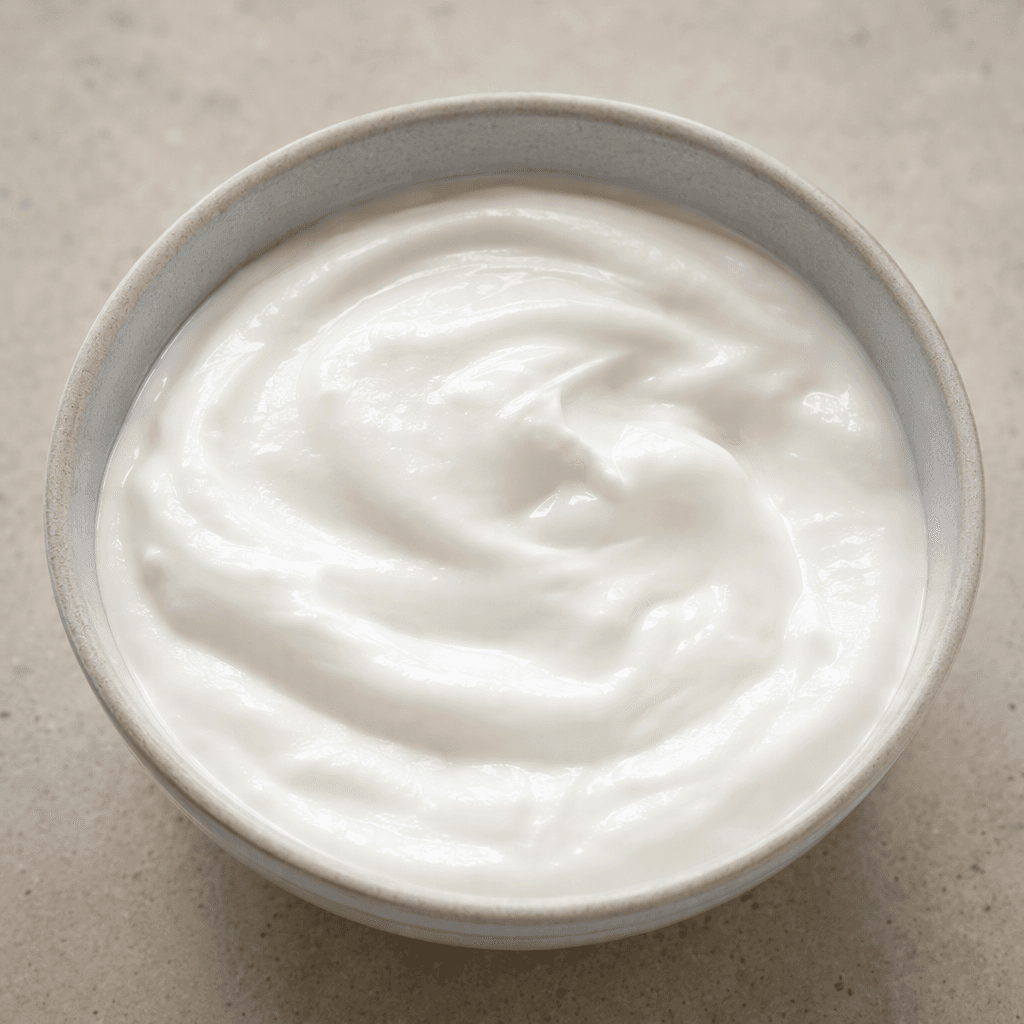
Yogurt Calories
Calcium and probiotic source, low-calorie dairy
In season: Spring · Summer · Autumn · Winter
CALORIES
GI
POTASSIUM
FIBER
Quick answer
1 cup (medium) of Yogurt (245 g) has 149 calories. That works out to 61 calories per 100 g. It contains 11.5 g of carbs, 8.6 g of protein, 8.1 g of fat and 0 g of fiber. Its 1.1 µg of B12 covers 47% of the Daily Value. Its glycemic index is 36 (low), so it raises blood sugar slowly.
What is Yogurt?
Yogurt is made by fermenting milk with bacterial cultures, a method with deep roots across West and Central Asia and a place in food traditions around the world. It is gently tangy, creamy and spoonable, though its thickness varies by style. People eat it at breakfast or as a snack, pair it with fruit or granola, and use it in dips, sauces, soups and marinades.
Plain yogurt offers protein and calcium, along with live cultures in many varieties. It can be a simple way to add a satisfying dairy food to a meal; choose an unsweetened version and add fruit or herbs yourself to suit a lighter breakfast or savoury dish.
Yogurt Nutrition Facts
Selected: 100 g
61
KCAL / 100G
Carbs
4.7g
· 2% DV
Protein
3.5g
· 7% DV
Fat
3.3g
· 4% DV
Fiber
0g
· 0% DV
DV is the share of the daily value covered, on a 2,000 kcal reference diet.
Calories come from: Carbs 30% · Protein 22% · Fat 48%
Yogurt Vitamins & Minerals
Vitamins
B12
0.46µg · 19% DV
B2
0.18mg · 14% DV
Biotin
2.6µg · 9% DV
B5
0.38mg · 8% DV
Minerals
Phosphorus
95mg · 14% DV
Calcium
121mg · 12% DV
Iodine
15µg · 10% DV
Zinc
1mg · 9% DV
How Nutritious Is Yogurt?
Nutrient density
High
How many vitamins, minerals and how much fiber this food carries per calorie. A high score means a lot of nutrition for few calories.
Satiety score
Medium
An EatBetter score computed from fiber, protein and calorie density. A high score means staying full longer on the same calories.
Both scores are calculated per 100 g and do not change with the selected portion. The satiety score is EatBetter's own calculation, not a clinical measure.
Yogurt Glycemic Index
GLYCEMIC INDEX
GLYCEMIC LOAD
Accounts for portion size — a more realistic measure than GI alone.
How to Burn Off Yogurt
To burn the 61 calories in 100 g:
🚶
Walking (5 km/h)
🏃
Running (8 km/h)
🚴
Cycling
🏊
Swimming
Times are calculated with the MET equation for a 70 kg adult. Actual burn varies with your weight, age and pace.
Is Yogurt Processed?
NOVA 2
Minimally Processed
1. Unprocessed
2. Minimally Processed
3. Processed
4. Ultra-Processed
NOVA classifies foods into 4 groups by industrial processing. NOVA 1 (unprocessed) is the healthiest.
Does Yogurt Contain Allergens?
Contains these allergens:
Which Diets Is Yogurt Good For?
Vegan
— Not suitable
Vegetarian
✓ Suitable
Gluten-Free
— Not suitable
Dairy-Free
— Not suitable
Mediterranean
✓ Suitable
Paleo
— Not suitable
Whole30
— Not suitable
DASH
— Not suitable
Keto
— Not suitable
Low FODMAP
— Not suitable
Yogurt Fat Profile
SATURATED
2.1g
MONOUNSATURATED
0.8g
POLYUNSATURATED
0.07g
Omega 6:3 ratio 2.5:1
Below the ideal 4:1 — a good omega balance.
Compare Yogurt
Foods Similar to Yogurt
Frequently Asked Questions About Yogurt
Is yogurt good for you?
Yes, yogurt is a nutritious source of protein and calcium, and varieties with live cultures may support gut health. Plain yogurt is a practical choice when you want to avoid the added sugar common in flavored versions.
Is Greek yogurt healthier than regular yogurt?
Greek yogurt is strained, so it is thicker and often contains more protein per serving than regular yogurt. Neither is automatically healthier; the better choice depends on whether you prefer a thicker texture or a milder, less concentrated yogurt.
How do you make yogurt at home?
To make yogurt at home, stir a small amount of live-culture yogurt into milk that has been heated and allowed to cool until warm. Keep the covered mixture warm until it sets, then refrigerate it to slow fermentation.
Why is there liquid on top of yogurt?
The liquid on top of yogurt is whey, a natural part of the milk that separates as the yogurt sits. Stir it back in for a looser texture, or drain it if you want thicker yogurt.
Can you freeze yogurt?
Yes, yogurt can be frozen, but thawing often makes it grainy or separates the liquid from the solids. Stir it well after thawing and use it in smoothies, sauces, or baking, where the texture change is less noticeable.
How long does yogurt last after opening?
Opened yogurt can generally be kept refrigerated until the date on its package if it is promptly returned to the fridge and handled with a clean spoon. Discard it if you see mold or notice an unusual smell or color.
Does heating yogurt kill its probiotics?
Yes, sufficiently high heat kills many of yogurt’s live cultures. If you want to retain them, stir yogurt into a dish after it has cooled somewhat rather than boiling it; yogurt still contributes flavor and nutrients when cooked.
Can people with lactose intolerance eat yogurt?
Often, yes: some people with lactose intolerance tolerate yogurt better than milk because its cultures help break down lactose. Tolerance varies, so try a small amount; people with a milk allergy should avoid dairy yogurt.
Is plain yogurt better than flavored yogurt?
Plain yogurt usually has less added sugar than flavored yogurt, and you can sweeten it yourself with fruit or a little honey. Compare the ingredient lists, since flavored products vary widely in how much sweetener they contain.
Is yogurt a good snack before bed?
Yes, yogurt can be a convenient evening snack and does not need to be avoided just because it is eaten at night. Choose a portion that feels comfortable; yogurt may aggravate symptoms for people who experience reflux or dairy-related discomfort.
Have another question about Yogurt?
Ask the AI nutrition coach — calories, portions, alternatives and more, answered in seconds in the app.

Scan calories with your camera
Instant AI nutrition analysis

Nutrition data compiled from USDA FoodData Central and scientific sources.