

Ready & Packaged Foods
All →Vegetables & Legumes
All →Desserts & Confectionery
All →Meat & Protein
All →Grains & Bakery
All →Beverages
All →Milk & Dairy
All →

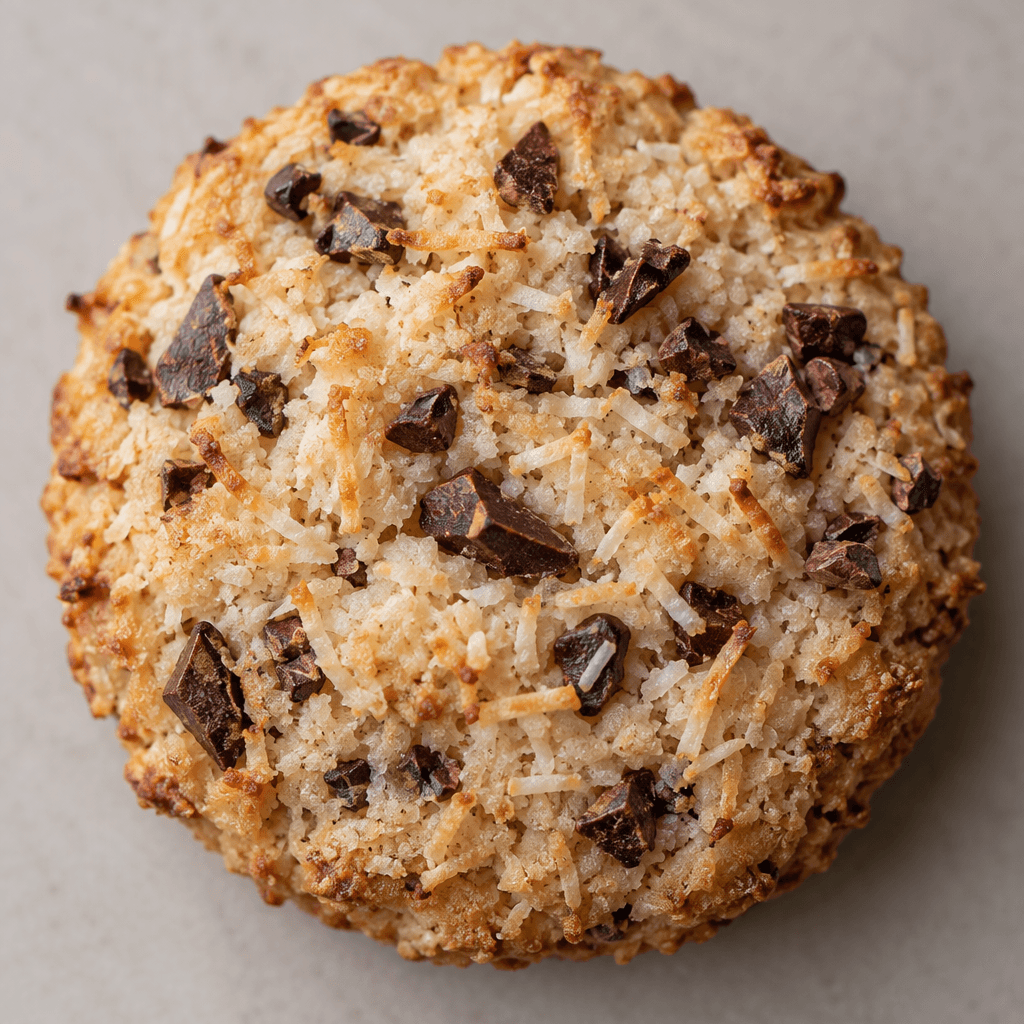
Gluten-free coconut cookie with cacao nibs Calories
Gluten-free, coconut-based, with cacao nibs
CALORIES
GI
POTASSIUM
FIBER
Quick answer
1 piece (medium) of Gluten-free coconut cookie with cacao nibs (22 g) has 111 calories. That works out to 506 calories per 100 g. It contains 9.2 g of carbs, 2.2 g of protein, 7 g of fat and 2.6 g of fiber. Its 0.2 mg of Manganese covers 11% of the Daily Value. Its glycemic index is 52 (medium), so it raises blood sugar at a moderate pace.
What is Gluten-free coconut cookie with cacao nibs?
A gluten-free coconut cookie with cacao nibs is a sweet baked cookie with coconut at its heart and small pieces of cacao mixed through it. Cacao nibs are crushed bits of cacao bean; they bring a pleasantly bitter, chocolate-like note without turning the cookie into a smooth, uniformly chocolatey bake. It is a contemporary cookie style rather than a dish tied to one particular place.
Expect a fragrant coconut flavour, a lightly golden exterior and a flecked, slightly crunchy bite from the nibs. Enjoy it with tea or coffee as a small treat or snack. Coconut makes it relatively energy-dense, while the coconut and cacao contribute fibre. If you’d prefer a lighter snack, have one alongside unsweetened tea or coffee rather than pairing it with another sweet.
Gluten-free coconut cookie with cacao nibs Nutrition Facts
Selected: 100 g
506
KCAL / 100G
Carbs
42g
· 15% DV
Protein
10g
· 20% DV
Fat
32g
· 41% DV
Fiber
12g
· 43% DV
DV is the share of the daily value covered, on a 2,000 kcal reference diet.
Calories come from: Carbs 34% · Protein 8% · Fat 58%
Gluten-free coconut cookie with cacao nibs Vitamins & Minerals
Vitamins
Biotin
3µg · 10% DV
B1
0.08mg · 7% DV
B2
0.09mg · 7% DV
B3
1.1mg · 7% DV
Minerals
Manganese
1mg · 43% DV
Phosphorus
145mg · 21% DV
Magnesium
72mg · 17% DV
Selenium
6.8µg · 12% DV
How Nutritious Is Gluten-free coconut cookie with cacao nibs?
Nutrient density
Low
How many vitamins, minerals and how much fiber this food carries per calorie. A high score means a lot of nutrition for few calories.
Satiety score
Medium
An EatBetter score computed from fiber, protein and calorie density. A high score means staying full longer on the same calories.
Both scores are calculated per 100 g and do not change with the selected portion. The satiety score is EatBetter's own calculation, not a clinical measure.
Gluten-free coconut cookie with cacao nibs Glycemic Index
GLYCEMIC INDEX
GLYCEMIC LOAD
Accounts for portion size — a more realistic measure than GI alone.
How to Burn Off Gluten-free coconut cookie with cacao nibs
To burn the 506 calories in 100 g:
🚶
Walking (5 km/h)
🏃
Running (8 km/h)
🚴
Cycling
🏊
Swimming
Times are calculated with the MET equation for a 70 kg adult. Actual burn varies with your weight, age and pace.
Is Gluten-free coconut cookie with cacao nibs Processed?
NOVA 3
Processed
1. Unprocessed
2. Minimally Processed
3. Processed
4. Ultra-Processed
NOVA classifies foods into 4 groups by industrial processing. NOVA 1 (unprocessed) is the healthiest.
Does Gluten-free coconut cookie with cacao nibs Contain Allergens?
Contains these allergens:
Which Diets Is Gluten-free coconut cookie with cacao nibs Good For?
Vegan
— Not suitable
Vegetarian
✓ Suitable
Gluten-Free
✓ Suitable
Dairy-Free
— Not suitable
Mediterranean
— Not suitable
Paleo
— Not suitable
Whole30
— Not suitable
DASH
— Not suitable
Keto
— Not suitable
Low FODMAP
— Not suitable
Gluten-free coconut cookie with cacao nibs Fat Profile
SATURATED
20.1g
MONOUNSATURATED
4.1g
POLYUNSATURATED
1.4g
Omega 6:3 ratio 24:1
Above the ideal 4:1 (24:1).
Compare Gluten-free coconut cookie with cacao nibs
Foods Similar to Gluten-free coconut cookie with cacao nibs
Frequently Asked Questions About Gluten-free coconut cookie with cacao nibs
What are cacao nibs in a gluten-free coconut cookie with cacao nibs?
Cacao nibs in a gluten-free coconut cookie with cacao nibs are small pieces of crushed cacao beans, not sweetened chocolate chips. They add a crunchy texture and a strong, slightly bitter cocoa flavor to the cookie.
Does a gluten-free coconut cookie with cacao nibs taste like coconut?
Yes, a gluten-free coconut cookie with cacao nibs usually has a noticeable coconut flavor because coconut is a base ingredient. The cacao nibs add a more bitter, roasted note, so the overall taste is less like a plain sweet coconut biscuit.
Are the cacao nibs in a gluten-free coconut cookie with cacao nibs sweet?
No, cacao nibs are generally unsweetened, so a gluten-free coconut cookie with cacao nibs can have little bursts of bitterness. The cookie itself may still taste sweet if its recipe includes a sweetener; the nibs do not tell you how much.
Can I use chocolate chips instead of cacao nibs in a gluten-free coconut cookie with cacao nibs?
Yes, chocolate chips can replace cacao nibs in a gluten-free coconut cookie with cacao nibs, but the result will be sweeter and less crunchy. Chips may soften or melt during baking, while nibs usually keep more of their firm texture.
Why does a gluten-free coconut cookie with cacao nibs crumble?
A gluten-free coconut cookie with cacao nibs can crumble because it lacks the stretchy structure that gluten gives many wheat-based doughs. Let the baked cookies cool fully before moving them; they are often more fragile while warm.
How do you make a gluten-free coconut cookie with cacao nibs at home?
Make a gluten-free coconut cookie with cacao nibs by mixing cacao nibs into a coconut-based cookie dough and baking it until set. Recipes differ in their flour, binder, and sweetener, so follow a tested recipe rather than swapping ingredients in equal amounts.
How should you store a gluten-free coconut cookie with cacao nibs?
Store a gluten-free coconut cookie with cacao nibs in an airtight container after it has cooled completely. Keep it somewhere cool and dry to help preserve its texture; trapped moisture can make the cookie soft.
Can you freeze a gluten-free coconut cookie with cacao nibs?
Yes, you can freeze a gluten-free coconut cookie with cacao nibs once it has cooled. Pack the cookies in an airtight freezer-safe container, separating layers with parchment, then thaw them at room temperature before serving.
What goes well with a gluten-free coconut cookie with cacao nibs?
Coffee, black tea, or a glass of milk pairs well with a gluten-free coconut cookie with cacao nibs. A plain drink complements the coconut and balances the nibs’ intense cocoa flavor without making the snack overly sweet.
Can children eat a gluten-free coconut cookie with cacao nibs?
Yes, children can generally eat a gluten-free coconut cookie with cacao nibs if they have no allergy to its ingredients. The cacao nibs can taste bitter and feel crunchy, so younger children may prefer a softer cookie or one made with chocolate chips.
Have another question about Gluten-free coconut cookie with cacao nibs?
Ask the AI nutrition coach — calories, portions, alternatives and more, answered in seconds in the app.

Scan calories with your camera
Instant AI nutrition analysis

Nutrition data compiled from USDA FoodData Central and scientific sources.