

Ready & Packaged Foods
All →Vegetables & Legumes
All →Desserts & Confectionery
All →Meat & Protein
All →Grains & Bakery
All →Beverages
All →Milk & Dairy
All →

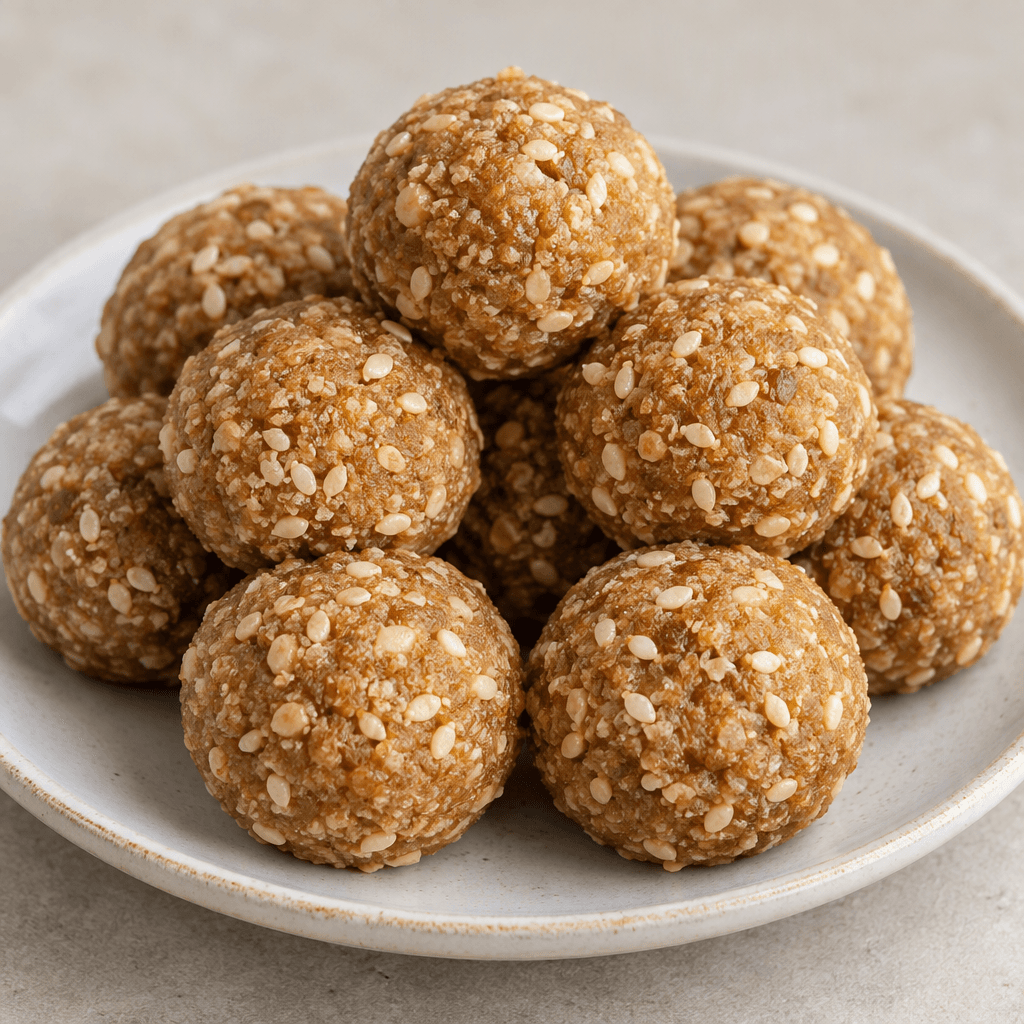
Tahini ball Calories
Energy-boosting sesame paste snack
In season: Spring · Summer · Autumn · Winter
CALORIES
GI
POTASSIUM
FIBER
Quick answer
1 piece (medium) of Tahini ball (25 g) has 118 calories. That works out to 470 calories per 100 g. It contains 9.5 g of carbs, 2.6 g of protein, 7.5 g of fat and 1.4 g of fiber. Its 0.2 mg of Copper covers 22% of the Daily Value. Its glycemic index is 45 (medium), so it raises blood sugar at a moderate pace.
What is Tahini ball?
A tahini ball is a small, usually no-bake sweet made by shaping tahini into bite-sized portions. Recipes vary: tahini may be mixed with dates, honey or grape molasses, and sometimes nuts or seeds. Its sesame flavour is rich and toasty, while the texture is soft and dense; additions can make it chewy or slightly crunchy.
In Turkey, tahini balls are enjoyed as a snack, served with tea or offered to guests, and they also fit easily into lunchboxes. They are energy-dense, with tahini contributing fat and some protein. If you prefer a less sweet bite, choose a version with less added sweetener, or pair one with fresh fruit rather than serving several at once.
Tahini ball Nutrition Facts
Selected: 100 g
470
KCAL / 100G
Carbs
38g
· 14% DV
Protein
10.5g
· 21% DV
Fat
30g
· 38% DV
Fiber
5.5g
· 20% DV
DV is the share of the daily value covered, on a 2,000 kcal reference diet.
Calories come from: Carbs 33% · Protein 9% · Fat 58%
Tahini ball Vitamins & Minerals
Vitamins
B1
0.35mg · 29% DV
Vitamin K
35µg · 29% DV
Biotin
8µg · 27% DV
B6
0.25mg · 15% DV
Minerals
Copper
1mg · 111% DV
Manganese
1mg · 43% DV
Phosphorus
220mg · 31% DV
Magnesium
110mg · 26% DV
How Nutritious Is Tahini ball?
Nutrient density
Medium
How many vitamins, minerals and how much fiber this food carries per calorie. A high score means a lot of nutrition for few calories.
Satiety score
Medium
An EatBetter score computed from fiber, protein and calorie density. A high score means staying full longer on the same calories.
Both scores are calculated per 100 g and do not change with the selected portion. The satiety score is EatBetter's own calculation, not a clinical measure.
Tahini ball Glycemic Index
GLYCEMIC INDEX
GLYCEMIC LOAD
Accounts for portion size — a more realistic measure than GI alone.
How to Burn Off Tahini ball
To burn the 470 calories in 100 g:
🚶
Walking (5 km/h)
🏃
Running (8 km/h)
🚴
Cycling
🏊
Swimming
Times are calculated with the MET equation for a 70 kg adult. Actual burn varies with your weight, age and pace.
Is Tahini ball Processed?
NOVA 2
Minimally Processed
1. Unprocessed
2. Minimally Processed
3. Processed
4. Ultra-Processed
NOVA classifies foods into 4 groups by industrial processing. NOVA 1 (unprocessed) is the healthiest.
Does Tahini ball Contain Allergens?
Contains these allergens:
Which Diets Is Tahini ball Good For?
Vegan
✓ Suitable
Vegetarian
✓ Suitable
Gluten-Free
✓ Suitable
Dairy-Free
— Not suitable
Mediterranean
✓ Suitable
Paleo
— Not suitable
Whole30
— Not suitable
DASH
— Not suitable
Keto
— Not suitable
Low FODMAP
— Not suitable
Tahini ball Fat Profile
SATURATED
4.2g
MONOUNSATURATED
11.5g
POLYUNSATURATED
12.5g
Omega 6:3 ratio 34.7:1
Above the ideal 4:1 (34.7:1).
Compare Tahini ball
Foods Similar to Tahini ball
Frequently Asked Questions About Tahini ball
How do you make tahini balls?
Tahini balls are usually made by mixing tahini with dates or another sticky binder, then shaping the mixture into balls. Many no-bake versions add oats, nuts, or cocoa; the basic homemade ingredients are minimally processed.
Can you make tahini balls without dates?
Yes, tahini balls can be made without dates. Use another sticky ingredient, such as maple syrup or honey, and add dry ingredients gradually until the mixture holds its shape; the texture and sweetness will differ.
Why are my tahini balls too sticky?
Tahini balls are often too sticky when the mixture has more tahini or liquid sweetener than dry ingredients. Mix in oats, ground nuts, or coconut a little at a time, then chill the mixture before shaping.
Do tahini balls need to be refrigerated?
Yes, tahini balls are best kept in an airtight container in the refrigerator, especially when made with moist ingredients such as dates. Chilling also helps them hold their shape; let them sit briefly before serving if they feel firm.
Can you freeze tahini balls?
Yes, tahini balls freeze well. Freeze them separately on a tray first, then transfer them to a sealed container so they do not stick together; thaw them in the refrigerator before eating.
Are tahini balls a healthy snack?
Tahini balls can be a nourishing snack because tahini provides protein, unsaturated fat, and fiber. Recipes vary, though, and added sweeteners or coatings can make them much sweeter, so check what is mixed into the batch.
Can tahini balls be made without baking?
Yes, tahini balls are commonly made without baking. The ingredients are mixed and shaped, then chilled to firm up; this no-bake method keeps preparation simple and avoids heating the tahini.
Are tahini balls safe for children?
Tahini balls can suit children who are not allergic to sesame. Because sesame is a common allergen and some versions are dense or sticky, consider the child’s allergy history and make the texture and size age-appropriate.
What can you serve with tahini balls?
Tahini balls pair well with fresh fruit, plain yogurt, or coffee or tea. Their rich, nutty sweetness works best with a simple accompaniment rather than another very sweet snack.
Are tahini balls good before a workout?
Tahini balls can be a convenient pre-workout snack, as recipes with dates or other sweeteners provide carbohydrates. They are also rich in fat from tahini, so eating them well before exercise may feel more comfortable than having one just beforehand.
Have another question about Tahini ball?
Ask the AI nutrition coach — calories, portions, alternatives and more, answered in seconds in the app.

Scan calories with your camera
Instant AI nutrition analysis

Nutrition data compiled from USDA FoodData Central and scientific sources.