

Ready & Packaged Foods
All →Vegetables & Legumes
All →Desserts & Confectionery
All →Meat & Protein
All →Grains & Bakery
All →Beverages
All →Milk & Dairy
All →

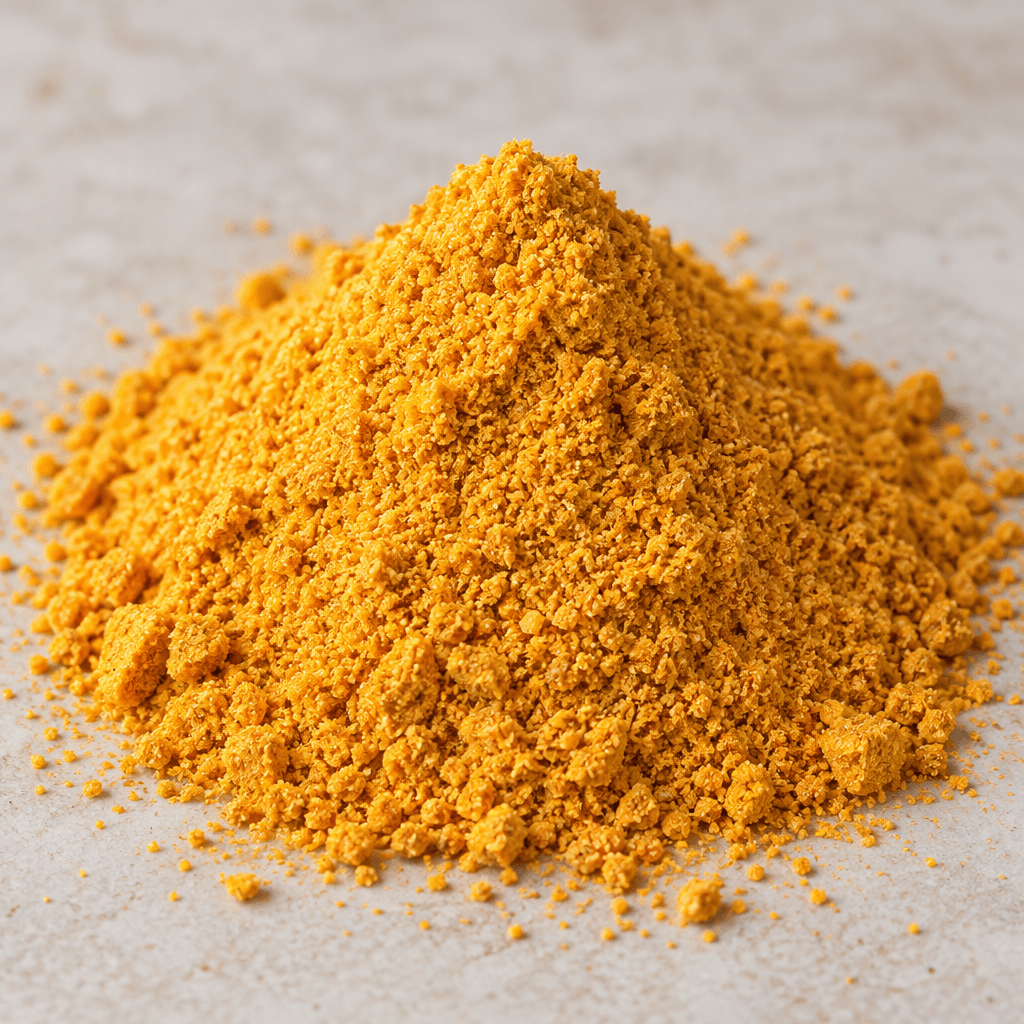
Sea buckthorn flour Calories
Rich in vitamin C and antioxidants, high-fiber flour alternative
In season: Autumn · Winter
CALORIES
GI
POTASSIUM
FIBER
Quick answer
1 cup (medium) of Sea buckthorn flour (120 g) has 384 calories. That works out to 320 calories per 100 g. It contains 72 g of carbs, 13.2 g of protein, 6 g of fat and 21.6 g of fiber. Its 144 mg of Vitamin C covers 160% of the Daily Value. Its glycemic index is 35 (low), so it raises blood sugar slowly.
What is Sea buckthorn flour?
İğde flour is made by drying and grinding the fruit of the oleaster, a tree native to parts of Turkey and surrounding regions. It is not sea buckthorn flour, despite that label sometimes being used for it. The powder is golden to orange, with a mildly sweet, fruity flavour and a slightly grainy texture. In Turkey, it can be stirred into yoghurt or porridge, or blended with other flour for baking; use it sparingly at first, since its flavour is distinctive. It is a fibre-rich alternative to ordinary flour, with 18 g of fibre per 100 g. Pair it with a milder flour in doughs for a gentler taste and more familiar texture.
Sea buckthorn flour Nutrition Facts
Selected: 100 g
320
KCAL / 100G
Carbs
60g
· 22% DV
Protein
11g
· 22% DV
Fat
5g
· 6% DV
Fiber
18g
· 64% DV
DV is the share of the daily value covered, on a 2,000 kcal reference diet.
Calories come from: Carbs 73% · Protein 13% · Fat 14%
Sea buckthorn flour Vitamins & Minerals
Vitamins
Vitamin C
120mg · 133% DV
Vitamin E
2.5mg · 17% DV
B1
0.09mg · 8% DV
B3
1.2mg · 8% DV
Minerals
Phosphorus
110mg · 16% DV
Iron
2mg · 11% DV
Magnesium
45mg · 11% DV
Zinc
1mg · 9% DV
How Nutritious Is Sea buckthorn flour?
Nutrient density
Very high
How many vitamins, minerals and how much fiber this food carries per calorie. A high score means a lot of nutrition for few calories.
Satiety score
Medium
An EatBetter score computed from fiber, protein and calorie density. A high score means staying full longer on the same calories.
Both scores are calculated per 100 g and do not change with the selected portion. The satiety score is EatBetter's own calculation, not a clinical measure.
Sea buckthorn flour Glycemic Index
GLYCEMIC INDEX
GLYCEMIC LOAD
Accounts for portion size — a more realistic measure than GI alone.
How to Burn Off Sea buckthorn flour
To burn the 320 calories in 100 g:
🚶
Walking (5 km/h)
🏃
Running (8 km/h)
🚴
Cycling
🏊
Swimming
Times are calculated with the MET equation for a 70 kg adult. Actual burn varies with your weight, age and pace.
Is Sea buckthorn flour Processed?
NOVA 2
Minimally Processed
1. Unprocessed
2. Minimally Processed
3. Processed
4. Ultra-Processed
NOVA classifies foods into 4 groups by industrial processing. NOVA 1 (unprocessed) is the healthiest.
Does Sea buckthorn flour Contain Allergens?
No known major allergens
Which Diets Is Sea buckthorn flour Good For?
Vegan
✓ Suitable
Vegetarian
✓ Suitable
Gluten-Free
✓ Suitable
Dairy-Free
— Not suitable
Mediterranean
✓ Suitable
Paleo
✓ Suitable
Whole30
— Not suitable
DASH
— Not suitable
Keto
— Not suitable
Low FODMAP
— Not suitable
Sea buckthorn flour Fat Profile
SATURATED
0.7g
MONOUNSATURATED
2.1g
POLYUNSATURATED
1.5g
Omega 6:3 ratio 5:1
Above the ideal 4:1 (5:1).
Compare Sea buckthorn flour
Foods Similar to Sea buckthorn flour
Frequently Asked Questions About Sea buckthorn flour
What is iğde flour made from?
Iğde flour is made by grinding dried iğde fruit, the fruit of Russian olive (Elaeagnus angustifolia), not sea buckthorn. Depending on the maker, the pits may be removed before grinding or the ground flour may be sifted.
Is iğde flour the same as sea buckthorn flour?
No. Iğde flour comes from Russian olive fruit, while sea buckthorn flour comes from sea buckthorn berries; they are different plants and products. The English label “Sea buckthorn flour” does not describe iğde flour accurately.
Can iğde flour replace wheat flour in baking?
Not completely in most bread recipes. Iğde flour does not form gluten, so baked goods made only with it can be dense or crumbly. For a more reliable texture, replace only part of the wheat flour and adjust the liquid if needed.
What does iğde flour taste like?
Iğde flour has a distinctive fruity flavor that can taste mildly sweet. Its aroma and texture vary with how the dried fruit is prepared, whether the pits are removed, and how finely the flour is milled.
Can you add iğde flour to smoothies?
Yes, you can blend iğde flour into a smoothie for fruity flavor and extra thickness. Start with a small amount, since its fiber can make a drink noticeably thicker as it stands.
Does iğde flour contain the fruit pits?
It may or may not. Some makers remove the pits before milling, while others sift the flour afterward, so the texture can differ between products. If avoiding pit fragments matters, choose flour specifically described as pitted or finely sifted.
Can iğde flour be eaten raw?
Only use it without cooking when the product is sold as ready to eat. If that is not stated, add iğde flour to a recipe that will be cooked rather than eating it raw in dough or a drink.
How should you store iğde flour after opening?
Keep opened iğde flour in a tightly sealed container in a cool, dry, dark place. Protect it from moisture, which can cause clumping and spoilage, and follow any storage instructions printed on the package.
Does iğde flour help with digestion?
Its fiber can support regular bowel movements, but a sudden large serving may cause gas or bloating. Increase the amount gradually and drink enough fluids, especially if your usual diet is low in fiber.
Can iğde flour make baked goods taste bitter?
It can give baked goods a strong, slightly tart or bitter edge when used in a large amount, particularly if the flour includes finely ground pit material. Pair it with milder ingredients and use it as a partial flour substitute.
Have another question about Sea buckthorn flour?
Ask the AI nutrition coach — calories, portions, alternatives and more, answered in seconds in the app.

Scan calories with your camera
Instant AI nutrition analysis

Nutrition data compiled from USDA FoodData Central and scientific sources.