

Ready & Packaged Foods
All →Vegetables & Legumes
All →Desserts & Confectionery
All →Meat & Protein
All →Grains & Bakery
All →Beverages
All →Milk & Dairy
All →

Raw frigola Calories
Semolina-based Sardinian pasta; energy-dense, moderate protein
CALORIES
GI
POTASSIUM
FIBER
Quick answer
1 cup (medium) of Raw frigola (160 g) has 571 calories. That works out to 357 calories per 100 g. It contains 116 g of carbs, 19.7 g of protein, 2.4 g of fat and 5.1 g of fiber. Its 100.8 µg of Selenium covers 183% of the Daily Value. Its glycemic index is 50 (medium), so it raises blood sugar at a moderate pace.
What is Raw frigola?
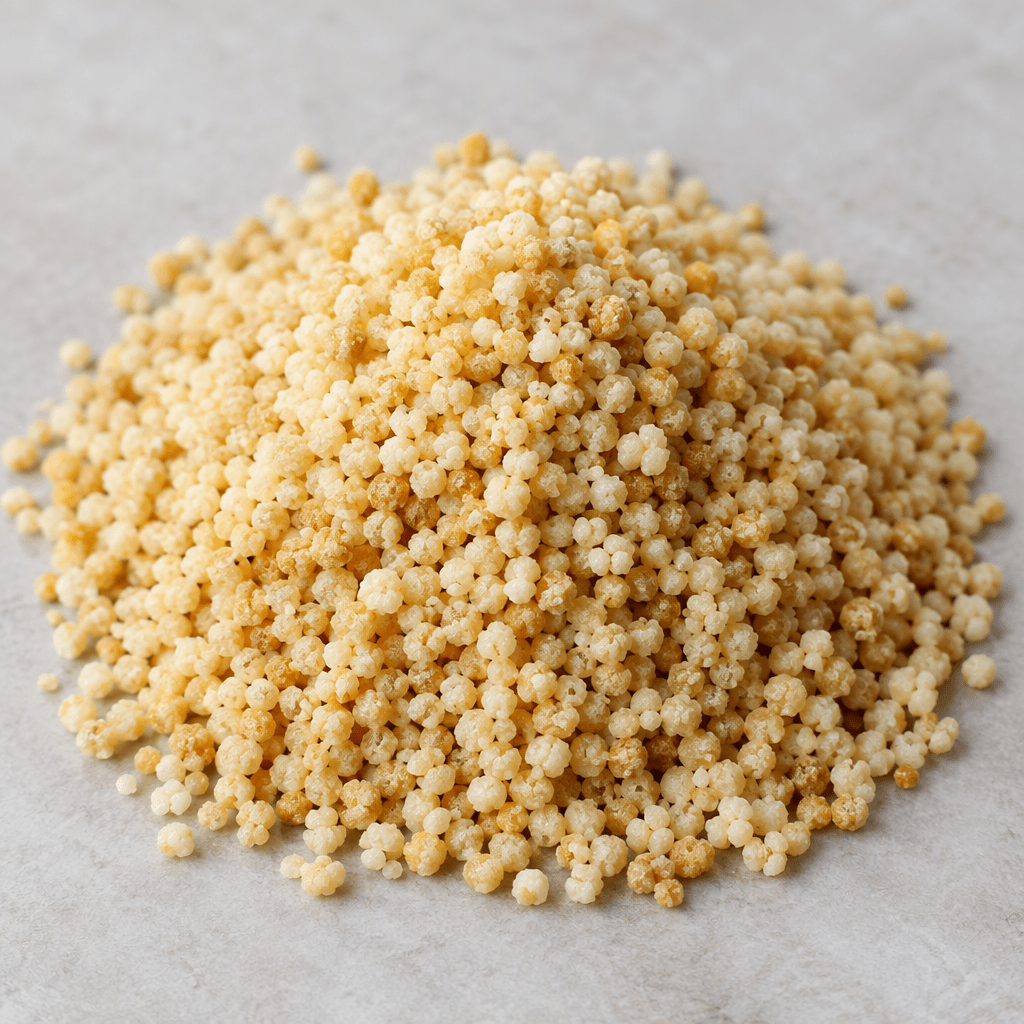
Raw frigola is uncooked Sardinian frigola: tiny, round pasta beads made from semolina and dried. Frigola is commonly toasted before sale, so “raw” here means uncooked, not something to eat straight from the packet. It comes from Sardinia, an Italian island with a distinctive tradition of handmade pasta.
Once cooked, the beads are tender but pleasantly firm, with a mild, wheaty taste. In Sardinia they often go into soups and seafood dishes; elsewhere, use raw frigola much like small pasta—in broth, a vegetable pilaf, or a salad. It is mainly a source of carbohydrates, with a moderate amount of protein. For a lighter meal, cook it with plenty of vegetables and a light stock, and follow the packet’s cooking directions.
Raw frigola Nutrition Facts
Selected: 100 g
357
KCAL / 100G
Carbs
72.5g
· 26% DV
Protein
12.3g
· 25% DV
Fat
1.5g
· 2% DV
Fiber
3.2g
· 11% DV
DV is the share of the daily value covered, on a 2,000 kcal reference diet.
Calories come from: Carbs 82% · Protein 14% · Fat 4%
Raw frigola Vitamins & Minerals
Vitamins
B3
3.6mg · 23% DV
B1
0.16mg · 13% DV
B5
0.45mg · 9% DV
B6
0.12mg · 7% DV
Minerals
Selenium
63µg · 115% DV
Manganese
1mg · 43% DV
Phosphorus
189mg · 27% DV
Magnesium
53mg · 13% DV
How Nutritious Is Raw frigola?
Nutrient density
Low
How many vitamins, minerals and how much fiber this food carries per calorie. A high score means a lot of nutrition for few calories.
Satiety score
Medium
An EatBetter score computed from fiber, protein and calorie density. A high score means staying full longer on the same calories.
Both scores are calculated per 100 g and do not change with the selected portion. The satiety score is EatBetter's own calculation, not a clinical measure.
Raw frigola Glycemic Index
GLYCEMIC INDEX
GLYCEMIC LOAD
Accounts for portion size — a more realistic measure than GI alone.
How to Burn Off Raw frigola
To burn the 357 calories in 100 g:
🚶
Walking (5 km/h)
🏃
Running (8 km/h)
🚴
Cycling
🏊
Swimming
Times are calculated with the MET equation for a 70 kg adult. Actual burn varies with your weight, age and pace.
Is Raw frigola Processed?
NOVA 3
Processed
1. Unprocessed
2. Minimally Processed
3. Processed
4. Ultra-Processed
NOVA classifies foods into 4 groups by industrial processing. NOVA 1 (unprocessed) is the healthiest.
Does Raw frigola Contain Allergens?
Contains these allergens:
Which Diets Is Raw frigola Good For?
Vegan
✓ Suitable
Vegetarian
✓ Suitable
Gluten-Free
— Not suitable
Dairy-Free
— Not suitable
Mediterranean
✓ Suitable
Paleo
— Not suitable
Whole30
— Not suitable
DASH
— Not suitable
Keto
— Not suitable
Low FODMAP
— Not suitable
Raw frigola Fat Profile
SATURATED
0.28g
MONOUNSATURATED
0.19g
POLYUNSATURATED
0.61g
Omega 6:3 ratio 19.3:1
Above the ideal 4:1 (19.3:1).
Compare Raw frigola
Foods Similar to Raw frigola
Frequently Asked Questions About Raw frigola
What is raw frigola?
Raw frigola is a dry, bead-shaped Sardinian pasta made from semolina; it is also commonly called fregola. Its small, uneven grains resemble couscous, but frigola is pasta and is normally cooked before eating.
How do you cook raw frigola?
Cook raw frigola in salted boiling water or simmer it in broth until the grains are tender. For a soup or a saucy seafood dish, add it directly to the pot and let it cook in the surrounding liquid.
Is raw frigola the same as couscous?
No. Both are made from semolina, but frigola is a Sardinian pasta with distinct round beads, often toasted, while couscous is usually finer and lighter. They can sometimes replace each other, but the texture and toasted flavor will differ.
What does frigola taste like?
Frigola has a mild wheat and semolina flavor. Toasted Sardinian frigola develops a nuttier, roasted taste, while the plain dry grains are more neutral; the broth, sauce, or ingredients cooked with it contribute much of the finished dish’s flavor.
Where does frigola come from?
Frigola comes from Sardinia, the Italian island where it is a traditional pasta. Sardinian cooks traditionally roll semolina into small beads and toast them, then use the pasta in soups and seafood dishes.
How is frigola different from fregola sarda?
They are names for the same Sardinian bead-shaped semolina pasta: “fregola sarda” is a common Italian name, while “frigola” is another spelling used for it. The dry product is uncooked pasta; it is not a ready-to-eat grain.
Can you cook raw frigola like risotto?
Yes. Add raw frigola to a pan with sautéed ingredients, then stir in warm stock gradually until the beads are tender, much like a risotto method. This gives the pasta a creamy, broth-coated texture without making it rice.
Should you rinse raw frigola before cooking?
No, rinsing raw frigola is generally unnecessary. Add the dry pasta directly to boiling water or broth; rinsing can wash away surface semolina and is not needed to prepare it for cooking.
Can you eat raw frigola without cooking it?
No, raw frigola is dried pasta, not a ready-to-eat snack. Cook it before eating so the semolina beads soften and become pleasant to chew; follow the package directions because cooking needs can vary by product.
How should you store raw frigola?
Keep raw frigola in a tightly closed container in a cool, dry cupboard. Protect it from moisture and steam, which can make the dry beads clump or lose quality.
Have another question about Raw frigola?
Ask the AI nutrition coach — calories, portions, alternatives and more, answered in seconds in the app.

Scan calories with your camera
Instant AI nutrition analysis

Nutrition data compiled from USDA FoodData Central and scientific sources.