

Ready & Packaged Foods
All →Vegetables & Legumes
All →Desserts & Confectionery
All →Meat & Protein
All →Grains & Bakery
All →Beverages
All →Milk & Dairy
All →

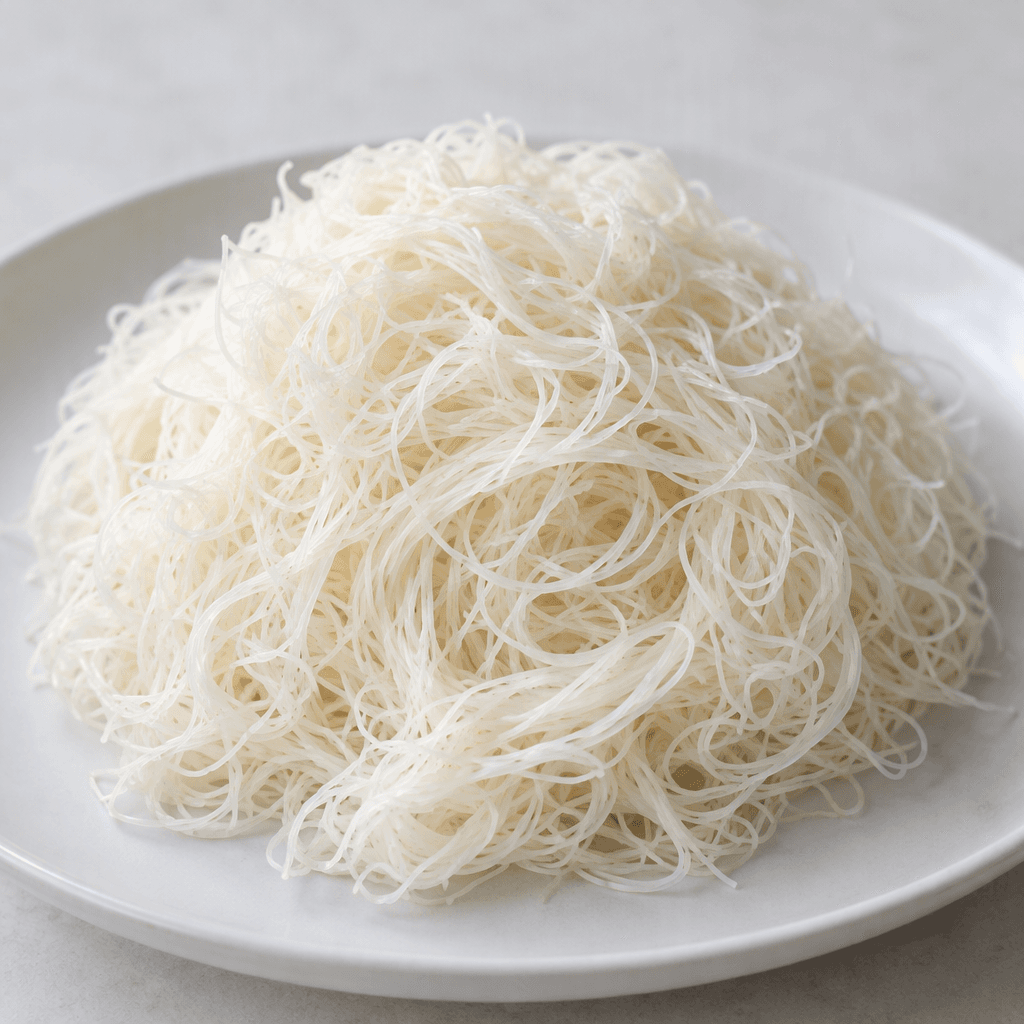
Pismaniye (plain) Calories
Turkish cotton candy, plain, high sugar, low protein
In season: Spring · Summer · Autumn · Winter
CALORIES
GI
POTASSIUM
FIBER
Quick answer
1 piece (medium) of Pismaniye (plain) (30 g) has 126 calories. That works out to 420 calories per 100 g. It contains 25.5 g of carbs, 1.1 g of protein, 3 g of fat and 0.2 g of fiber. Its glycemic index is 70 (high), so it raises blood sugar quickly.
What is Pismaniye (plain)?
Pismaniye (plain) is a Turkish confection, especially associated with İzmit, made by drawing sugar syrup into fine threads and working them with toasted flour and fat. Its airy, floss-like strands melt quickly on the tongue, with pronounced sweetness and a gentle toasted note.
In Turkey, it is commonly offered in small pieces alongside tea, and is also popular as a gift for visits and celebrations. For readers elsewhere, it makes a distinctive sweet bite with coffee or unsweetened tea. It is mostly carbohydrate, with 85 g per 100 g; its concentrated sweetness means a small piece is often plenty. Pairing it with an unsweetened drink keeps the serving simple.
Pismaniye (plain) Nutrition Facts
Selected: 100 g
420
KCAL / 100G
Carbs
85g
· 31% DV
Protein
3.5g
· 7% DV
Fat
10g
· 13% DV
Fiber
0.5g
· 2% DV
DV is the share of the daily value covered, on a 2,000 kcal reference diet.
Calories come from: Carbs 77% · Protein 3% · Fat 20%
Pismaniye (plain) Vitamins & Minerals
Vitamins
B2
0.02mg · 2% DV
B1
0.01mg · 1% DV
B3
0.1mg · 1% DV
B6
0.01mg · 1% DV
Minerals
Phosphorus
20mg · 3% DV
Calcium
10mg · 1% DV
Magnesium
5mg · 1% DV
Sodium
15mg · 1% DV
How Nutritious Is Pismaniye (plain)?
Nutrient density
Low
How many vitamins, minerals and how much fiber this food carries per calorie. A high score means a lot of nutrition for few calories.
Satiety score
Low
An EatBetter score computed from fiber, protein and calorie density. A high score means staying full longer on the same calories.
Both scores are calculated per 100 g and do not change with the selected portion. The satiety score is EatBetter's own calculation, not a clinical measure.
Pismaniye (plain) Glycemic Index
GLYCEMIC INDEX
GLYCEMIC LOAD
Accounts for portion size — a more realistic measure than GI alone.
How to Burn Off Pismaniye (plain)
To burn the 420 calories in 100 g:
🚶
Walking (5 km/h)
🏃
Running (8 km/h)
🚴
Cycling
🏊
Swimming
Times are calculated with the MET equation for a 70 kg adult. Actual burn varies with your weight, age and pace.
Is Pismaniye (plain) Processed?
NOVA 3
Processed
1. Unprocessed
2. Minimally Processed
3. Processed
4. Ultra-Processed
NOVA classifies foods into 4 groups by industrial processing. NOVA 1 (unprocessed) is the healthiest.
Does Pismaniye (plain) Contain Allergens?
No known major allergens
Which Diets Is Pismaniye (plain) Good For?
Vegan
— Not suitable
Vegetarian
✓ Suitable
Gluten-Free
— Not suitable
Dairy-Free
— Not suitable
Mediterranean
— Not suitable
Paleo
— Not suitable
Whole30
— Not suitable
DASH
— Not suitable
Keto
— Not suitable
Low FODMAP
— Not suitable
Pismaniye (plain) Fat Profile
SATURATED
3g
MONOUNSATURATED
4g
POLYUNSATURATED
3g
Compare Pismaniye (plain)
Foods Similar to Pismaniye (plain)
Frequently Asked Questions About Pismaniye (plain)
What is plain pismaniye?
Plain pismaniye is a traditional Turkish sweet made of fine, fluffy sugar strands mixed with a toasted flour-and-fat coating. It is often compared with cotton candy, but its flour-based strands give it a more substantial, slightly crumbly texture.
Is plain pismaniye the same as cotton candy?
No. Cotton candy is spun sugar, while plain pismaniye combines pulled sugar strands with toasted flour and fat. That coating makes pismaniye less airy and more crumbly, and it gives the sweet a mild, toasted taste.
How is plain pismaniye made?
Plain pismaniye is made by repeatedly stretching a sugar mass and folding it into a flour-and-fat mixture until it forms many fine strands. The repeated pulling takes skill, which is why making its characteristic texture by hand is challenging.
What does plain pismaniye taste like?
Plain pismaniye tastes sweet and lightly toasted, with a delicate, melt-away texture rather than the chewy bite of many candies. Its flour coating softens the pure sugar taste, though the overall flavor is still distinctly sugary.
Where does plain pismaniye come from?
Plain pismaniye is a Turkish confection strongly associated with İzmit, in the Kocaeli region. It is now made and sold elsewhere in Turkey too, but İzmit remains the place most commonly linked with this traditional sweet.
How do you eat plain pismaniye?
Eat plain pismaniye by gently pulling off a small tuft rather than squeezing it into a ball. It is commonly served with Turkish coffee or tea, and can also be used as a fluffy topping for ice cream or milk-based desserts.
Why does plain pismaniye fall apart so easily?
Plain pismaniye falls apart because its structure consists of many delicate sugar strands rather than a solid piece. Handle it gently and avoid pressing it down; squeezing breaks the strands and can leave it compressed or clumpy.
How should you store plain pismaniye?
Store plain pismaniye in a sealed package in a cool, dry place. Moisture makes its fine strands stick together and lose their fluffy texture, so keep it away from humid conditions and close the packaging promptly after opening.
Can you make plain pismaniye at home?
Yes, but plain pismaniye is difficult to make at home because the hot sugar must be stretched repeatedly into fine strands. Hot sugar can cause severe burns, so use a reliable recipe, suitable equipment and careful handling.
Can people with diabetes eat plain pismaniye?
People with diabetes should treat plain pismaniye as a sugary sweet, since its main ingredient is sugar and it can raise blood glucose. Whether it fits an individual meal plan depends on their care needs, so follow advice from their diabetes clinician or dietitian.
Have another question about Pismaniye (plain)?
Ask the AI nutrition coach — calories, portions, alternatives and more, answered in seconds in the app.

Scan calories with your camera
Instant AI nutrition analysis

Nutrition data compiled from USDA FoodData Central and scientific sources.