

Ready & Packaged Foods
All →Vegetables & Legumes
All →Desserts & Confectionery
All →Meat & Protein
All →Grains & Bakery
All →Beverages
All →Milk & Dairy
All →

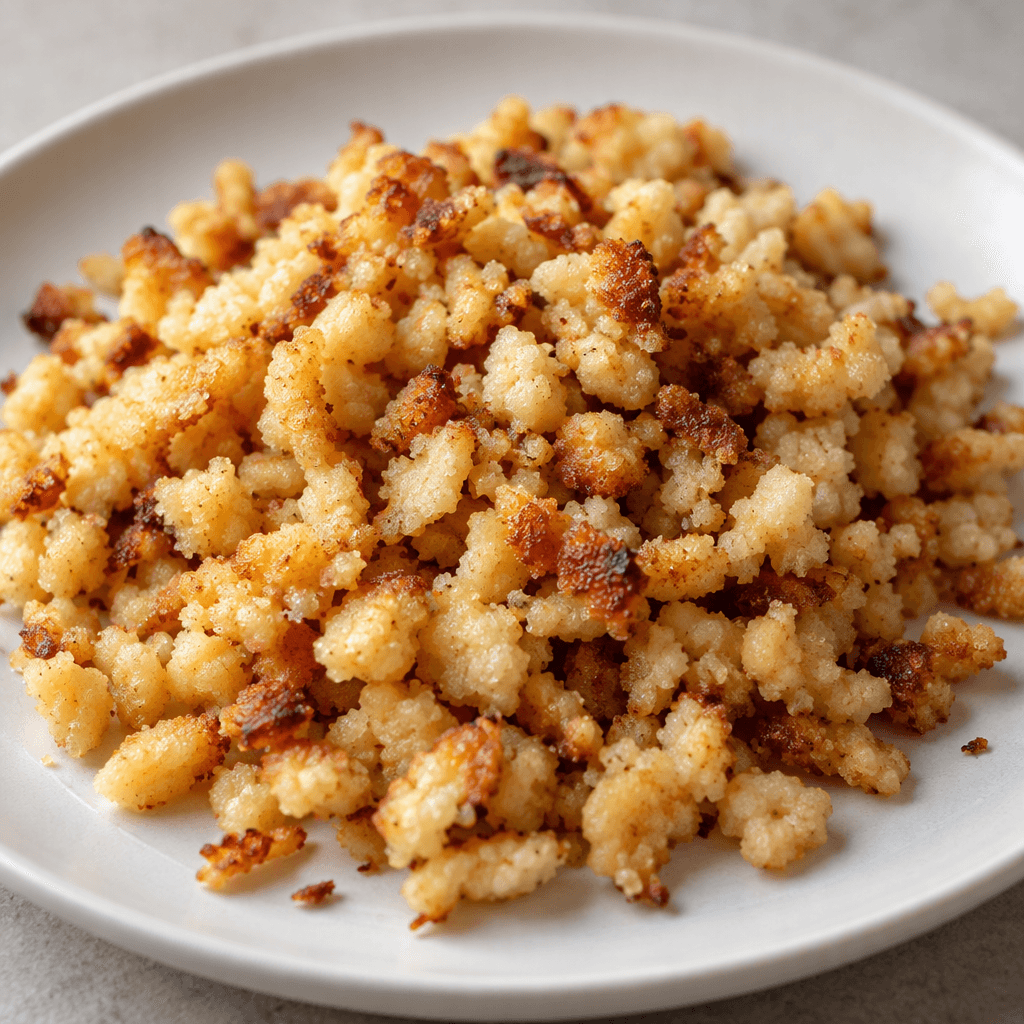
Omaç Calories
Traditional flour-and-butter based regional dish, sometimes prepared with walnuts
CALORIES
GI
POTASSIUM
FIBER
Quick answer
1 serving (medium) of Omaç (180 g) has 562 calories. That works out to 312 calories per 100 g. It contains 62.6 g of carbs, 11.5 g of protein, 30.1 g of fat and 3.8 g of fiber. Its 19.8 µg of Selenium covers 36% of the Daily Value. Its glycemic index is 62 (medium), so it raises blood sugar at a moderate pace.
What is Omaç?
Omaç is a traditional Turkish regional dish made by rubbing a little water into flour to form small, uneven crumbs, then toasting them in butter. Some versions include walnuts, and the exact texture and recipe vary by region.
Served warm, it is crumbly with lightly crisp edges and a rich, buttery taste. In Turkey it may be eaten at breakfast or alongside tea as a simple snack; walnut-topped versions make it more substantial. Flour and butter give it a carbohydrate- and fat-forward profile, with comparatively modest protein and fibre. A small portion pairs well with plain yoghurt or fresh vegetables if you want to balance its richness.
Omaç Nutrition Facts
Selected: 100 g
312
KCAL / 100G
Carbs
34.8g
· 13% DV
Protein
6.4g
· 13% DV
Fat
16.7g
· 21% DV
Fiber
2.1g
· 8% DV
DV is the share of the daily value covered, on a 2,000 kcal reference diet.
Calories come from: Carbs 44% · Protein 8% · Fat 48%
Omaç Vitamins & Minerals
Vitamins
Vitamin A
128µg · 14% DV
B1
0.11mg · 9% DV
B3
1.4mg · 9% DV
B2
0.09mg · 7% DV
Minerals
Selenium
11µg · 20% DV
Iron
2mg · 11% DV
Phosphorus
72mg · 10% DV
Zinc
1mg · 9% DV
How Nutritious Is Omaç?
Nutrient density
Low
How many vitamins, minerals and how much fiber this food carries per calorie. A high score means a lot of nutrition for few calories.
Satiety score
Low
An EatBetter score computed from fiber, protein and calorie density. A high score means staying full longer on the same calories.
Both scores are calculated per 100 g and do not change with the selected portion. The satiety score is EatBetter's own calculation, not a clinical measure.
Omaç Glycemic Index
GLYCEMIC INDEX
GLYCEMIC LOAD
Accounts for portion size — a more realistic measure than GI alone.
How to Burn Off Omaç
To burn the 312 calories in 100 g:
🚶
Walking (5 km/h)
🏃
Running (8 km/h)
🚴
Cycling
🏊
Swimming
Times are calculated with the MET equation for a 70 kg adult. Actual burn varies with your weight, age and pace.
Is Omaç Processed?
NOVA 2
Minimally Processed
1. Unprocessed
2. Minimally Processed
3. Processed
4. Ultra-Processed
NOVA classifies foods into 4 groups by industrial processing. NOVA 1 (unprocessed) is the healthiest.
Does Omaç Contain Allergens?
Contains these allergens:
Which Diets Is Omaç Good For?
Vegan
— Not suitable
Vegetarian
✓ Suitable
Gluten-Free
— Not suitable
Dairy-Free
— Not suitable
Mediterranean
— Not suitable
Paleo
— Not suitable
Whole30
— Not suitable
DASH
— Not suitable
Keto
— Not suitable
Low FODMAP
— Not suitable
Omaç Fat Profile
SATURATED
8.1g
MONOUNSATURATED
5.1g
POLYUNSATURATED
1.3g
Omega 6:3 ratio 24:1
Above the ideal 4:1 (24:1).
Compare Omaç
Foods Similar to Omaç
Frequently Asked Questions About Omaç
What is Omaç?
Omaç is a traditional Turkish dish made from small flour-dough crumbs toasted with butter. It is served as loose, golden crumbs, and some regional recipes add walnuts. The name covers local variations, so ingredients and whether it is sweet or savory can differ.
How is Omaç made?
Omaç is made by rubbing flour with a little water to form small crumbs, then toasting them in butter until cooked and lightly browned. Some versions include walnuts or other regional additions, which are usually stirred in near the end.
Is Omaç a dessert or a savory dish?
Omaç can be either sweet or savory, depending on the regional recipe. The toasted flour-and-butter crumbs form the base; sweet versions may include sugar or walnuts, while savory versions are seasoned with salt and served with suitable accompaniments.
Where does Omaç come from?
Omaç is a traditional dish found in different parts of Anatolia rather than a recipe tied exclusively to one place. Local names and methods vary, so a particular version is best described by the region or family recipe it comes from.
Does Omaç contain walnuts?
Some Omaç recipes contain walnuts, but they are not essential to every version. Walnuts add crunch and a nutty flavor to the buttery crumbs; stir them in toward the end of cooking to keep them from burning.
How is Omaç traditionally served?
Omaç is usually served warm, soon after the crumbs are toasted. Sweet versions can be served with walnuts, while savory Omaç suits regional accompaniments. The serving style depends on the local recipe and whether the dish is prepared sweet or savory.
Is Omaç the same as ovmaç?
Not always. Omaç and ovmaç are sometimes used for similar crumb-based regional dishes, but the names and recipes vary across Turkey. The Omaç described here is the butter-toasted flour-crumb version, which may differ from a local ovmaç recipe.
Can you make Omaç without butter?
Yes, but butter is central to the flavor and traditional texture of this Omaç. You can toast the crumbs with a little neutral cooking oil instead, though the result will taste less buttery and may not match the regional version.
How should leftover Omaç be stored and reheated?
Keep leftover Omaç in a sealed container in the refrigerator. Reheat it briefly in a pan over low heat, stirring gently; a small amount of butter can help restore its texture. Prolonged reheating may make the crumbs dry or hard.
Can Omaç be made with less butter?
Yes. Use a smaller amount of butter and stir the flour crumbs steadily over low heat so they toast without burning. The finished Omaç will be less rich, though it may be drier; adding walnuts is optional and does not replace the butter’s role.
Have another question about Omaç?
Ask the AI nutrition coach — calories, portions, alternatives and more, answered in seconds in the app.

Scan calories with your camera
Instant AI nutrition analysis

Nutrition data compiled from USDA FoodData Central and scientific sources.