

Ready & Packaged Foods
All →Vegetables & Legumes
All →Desserts & Confectionery
All →Meat & Protein
All →Grains & Bakery
All →Beverages
All →Milk & Dairy
All →

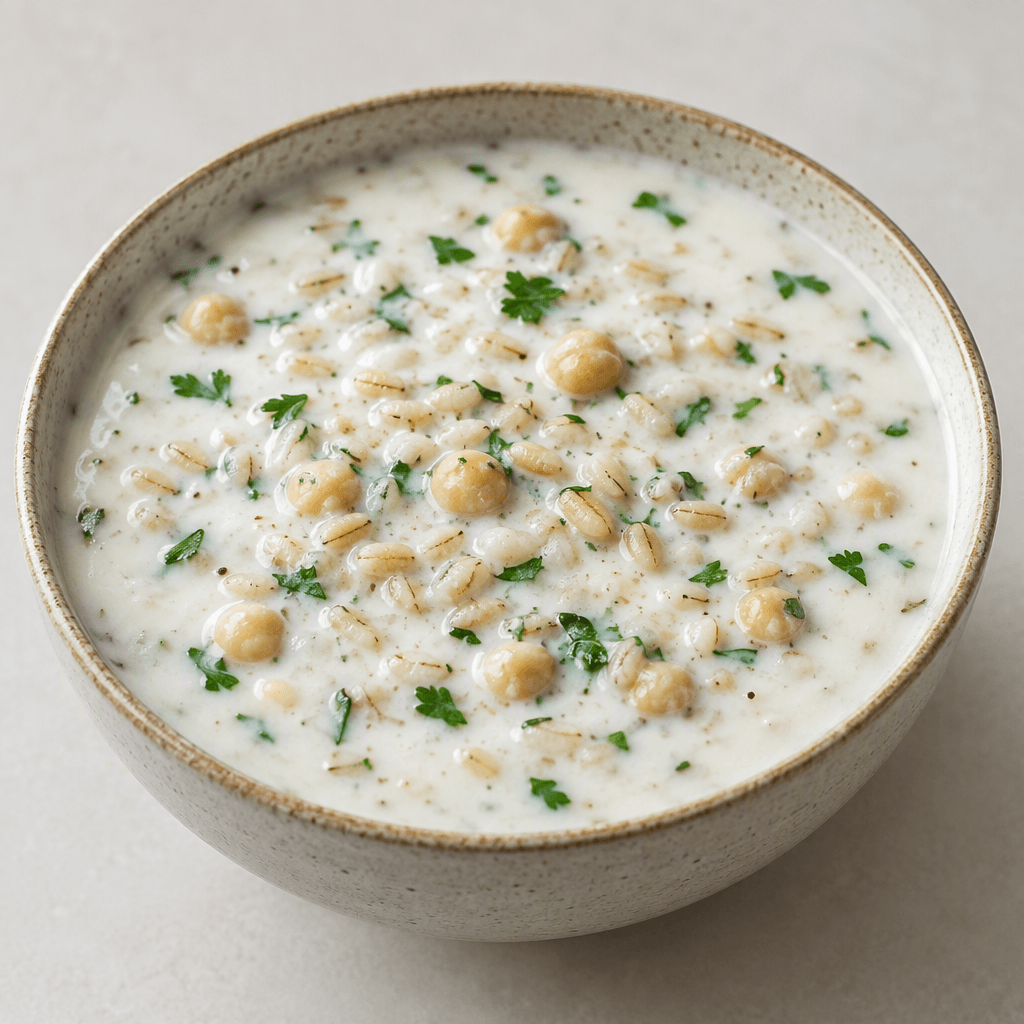
Mehir Calories
Grain, fiber source, complex carbohydrate
In season: Autumn · Winter
CALORIES
GI
POTASSIUM
FIBER
Quick answer
1 cup (medium) of Mehir (150 g) has 510 calories. That works out to 340 calories per 100 g. It contains 102 g of carbs, 17.3 g of protein, 3.8 g of fat and 13.5 g of fiber. Its 1.8 mg of Manganese covers 78% of the Daily Value. Its glycemic index is 50 (medium), so it raises blood sugar at a moderate pace.
What is Mehir?
Mehir is a traditional soup from southeastern Turkey, made with wheat, chickpeas and yoghurt. Recipes vary between households; herbs such as mint may be stirred in or scattered over the top.
The yoghurt brings a gentle tang to the soft, hearty wheat, while chickpeas add a little bite. It is often served chilled in warm weather, though some cooks serve it warm. In its home region it can be a satisfying meal on its own; elsewhere, try it as a light lunch with bread or a crisp salad. Wheat and chickpeas contribute fibre and complex carbohydrates, making the soup substantial. For a lighter bowl, loosen it with extra yoghurt or water rather than adding more grains.
Mehir Nutrition Facts
Selected: 100 g
340
KCAL / 100G
Carbs
68g
· 25% DV
Protein
11.5g
· 23% DV
Fat
2.5g
· 3% DV
Fiber
9g
· 32% DV
DV is the share of the daily value covered, on a 2,000 kcal reference diet.
Calories come from: Carbs 80% · Protein 14% · Fat 6%
Mehir Vitamins & Minerals
Vitamins
B1
0.35mg · 29% DV
B3
3.5mg · 22% DV
B5
0.9mg · 18% DV
B6
0.25mg · 15% DV
Minerals
Phosphorus
320mg · 46% DV
Manganese
1mg · 43% DV
Selenium
20µg · 36% DV
Magnesium
110mg · 26% DV
How Nutritious Is Mehir?
Nutrient density
High
How many vitamins, minerals and how much fiber this food carries per calorie. A high score means a lot of nutrition for few calories.
Satiety score
Medium
An EatBetter score computed from fiber, protein and calorie density. A high score means staying full longer on the same calories.
Both scores are calculated per 100 g and do not change with the selected portion. The satiety score is EatBetter's own calculation, not a clinical measure.
Mehir Glycemic Index
GLYCEMIC INDEX
GLYCEMIC LOAD
Accounts for portion size — a more realistic measure than GI alone.
How to Burn Off Mehir
To burn the 340 calories in 100 g:
🚶
Walking (5 km/h)
🏃
Running (8 km/h)
🚴
Cycling
🏊
Swimming
Times are calculated with the MET equation for a 70 kg adult. Actual burn varies with your weight, age and pace.
Is Mehir Processed?
NOVA 1
Unprocessed
1. Unprocessed
2. Minimally Processed
3. Processed
4. Ultra-Processed
NOVA classifies foods into 4 groups by industrial processing. NOVA 1 (unprocessed) is the healthiest.
Does Mehir Contain Allergens?
No known major allergens
Which Diets Is Mehir Good For?
Vegan
✓ Suitable
Vegetarian
✓ Suitable
Gluten-Free
— Not suitable
Dairy-Free
— Not suitable
Mediterranean
✓ Suitable
Paleo
— Not suitable
Whole30
— Not suitable
DASH
— Not suitable
Keto
— Not suitable
Low FODMAP
— Not suitable
Mehir Fat Profile
SATURATED
0.45g
MONOUNSATURATED
0.35g
POLYUNSATURATED
1.2g
Omega 6:3 ratio 13.8:1
Above the ideal 4:1 (13.8:1).
Compare Mehir
Foods Similar to Mehir
Frequently Asked Questions About Mehir
What is Mehir soup made of?
Mehir is a thick yogurt-based soup made with wheat and chickpeas. Recipes commonly use cracked or hulled wheat and may include herbs such as mint; the exact ingredients and texture vary between regional and family versions.
How do you make Mehir?
Mehir is made by cooking wheat and chickpeas until tender, then combining them with yogurt. To help keep the yogurt smooth, whisk it first and gradually mix in a little hot broth before stirring it into the pot.
Is Mehir served hot or cold?
Mehir can be served chilled or warm, though many versions are cooled before serving, especially in hot weather. Refrigerate it until cold, then stir well; if it thickens too much, loosen it with a little water.
Where does Mehir come from?
Mehir is associated with southeastern Turkish cuisine, including the food traditions of the Diyarbakır area. Similar yogurt-and-grain soups are known by different names across neighboring regions, and their ingredients and preparation can vary.
What kind of wheat is used in Mehir?
Mehir is generally made with cracked or hulled wheat, often sold as yarma or dövme in Turkey. Rinse it before cooking, and allow for differences in cooking time because the grain's size and processing affect how quickly it softens.
What is the difference between Mehir and ayran aşı?
Mehir and ayran aşı are both yogurt-based grain soups, but they are not necessarily the same dish. Their grains, chickpea content, consistency, and regional preparation differ; Mehir is often made particularly thick.
Why does yogurt split in Mehir, and how can you prevent it?
Yogurt can split in Mehir when cold yogurt is added too quickly to a hot pot. Whisk it smooth, temper it with a little hot broth, and add it gradually while stirring; avoid bringing the finished soup to a boil.
What do you serve with Mehir?
Mehir can be served as a meal on its own or alongside bread and a fresh salad. Chilled versions are often finished with dried mint; what accompanies it depends on the regional or household tradition.
How long does Mehir keep in the fridge?
Mehir keeps for about 2–3 days in a covered container in the refrigerator when cooled promptly after cooking. Reheat it gently over low heat and avoid boiling, which can cause the yogurt to separate.
Can you freeze Mehir?
You can freeze Mehir, but the yogurt may separate and turn grainy when thawed. For a better texture, freeze the cooked wheat-and-chickpea base before adding yogurt, then thaw, reheat, and stir in fresh yogurt.
Have another question about Mehir?
Ask the AI nutrition coach — calories, portions, alternatives and more, answered in seconds in the app.

Scan calories with your camera
Instant AI nutrition analysis

Nutrition data compiled from USDA FoodData Central and scientific sources.