

Ready & Packaged Foods
All →Vegetables & Legumes
All →Desserts & Confectionery
All →Meat & Protein
All →Grains & Bakery
All →Beverages
All →Milk & Dairy
All →

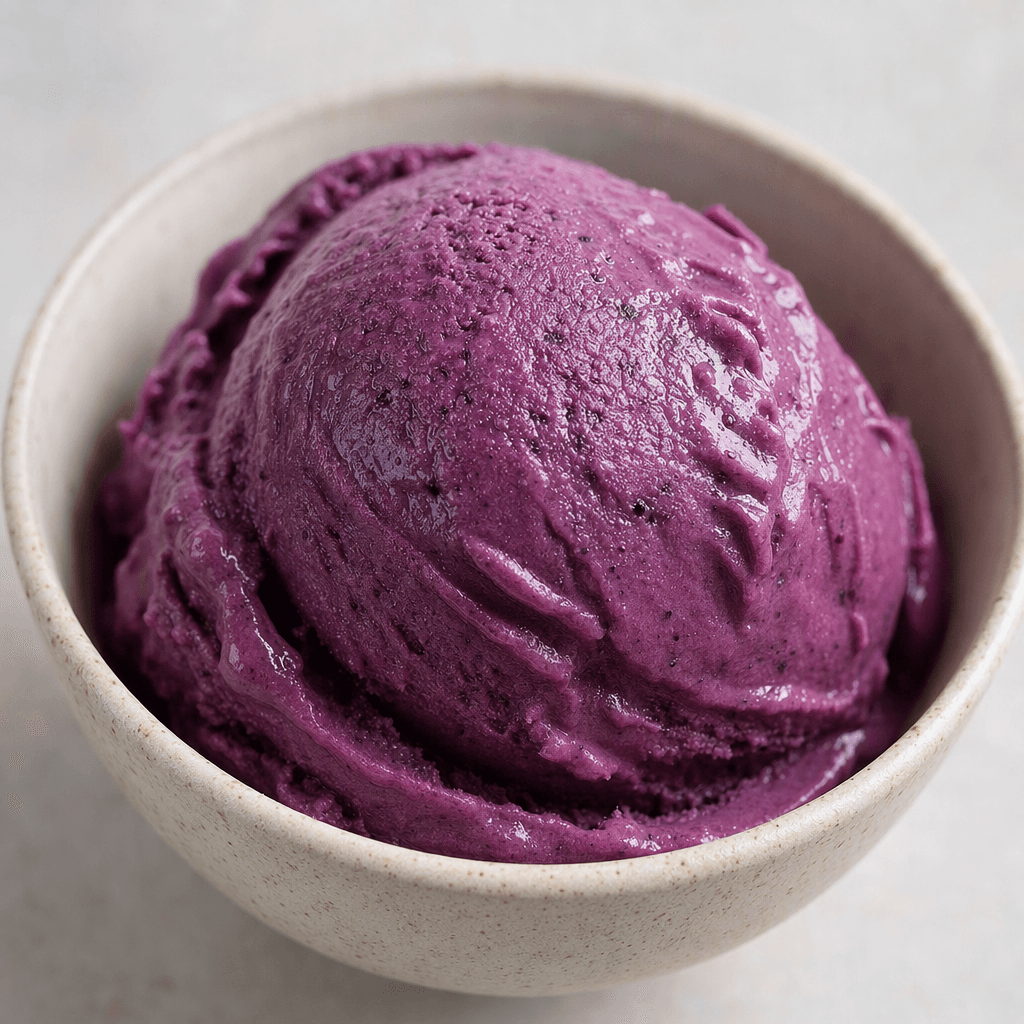
Aronia ice cream Calories
Berry ice cream with antioxidant-rich aronia
CALORIES
GI
POTASSIUM
FIBER
Quick answer
100 g of Aronia ice cream has 185 calories. It contains 27.5 g of carbs, 3.2 g of protein, 7.1 g of fat and 1.8 g of fiber. Its 0.3 µg of B12 covers 13% of the Daily Value. Its glycemic index is 58 (medium), so it raises blood sugar at a moderate pace.
What is Aronia ice cream?
Aronia ice cream combines a dairy-based ice cream with aronia berries or their purée. Aronia, also called chokeberry, is a dark purple fruit with a naturally tart, slightly astringent taste; this is a fruit-flavoured dessert rather than a long-established regional ice cream style.
The texture is smooth and creamy, with the berry’s sharpness balancing the sweetness. It can be served in a bowl or cone, often as a simple dessert or alongside fresh fruit; in Turkey, a small scoop also makes a refreshing summer treat. At 185 calories per 100 g, it is best thought of as a sweet treat rather than a protein-rich snack. Pair a modest scoop with berries or other fresh fruit for a lighter-feeling serving.
Aronia ice cream Nutrition Facts
Selected: 100 g
185
KCAL / 100G
Carbs
27.5g
· 10% DV
Protein
3.2g
· 6% DV
Fat
7.1g
· 9% DV
Fiber
1.8g
· 6% DV
DV is the share of the daily value covered, on a 2,000 kcal reference diet.
Calories come from: Carbs 59% · Protein 7% · Fat 34%
Aronia ice cream Vitamins & Minerals
Vitamins
B12
0.32µg · 13% DV
B2
0.16mg · 12% DV
Vitamin A
68µg · 8% DV
B5
0.34mg · 7% DV
Minerals
Phosphorus
89mg · 13% DV
Calcium
112mg · 11% DV
Iodine
9µg · 6% DV
Selenium
2.6µg · 5% DV
How Nutritious Is Aronia ice cream?
Nutrient density
Low
How many vitamins, minerals and how much fiber this food carries per calorie. A high score means a lot of nutrition for few calories.
Satiety score
Medium
An EatBetter score computed from fiber, protein and calorie density. A high score means staying full longer on the same calories.
Both scores are calculated per 100 g and do not change with the selected portion. The satiety score is EatBetter's own calculation, not a clinical measure.
Aronia ice cream Glycemic Index
GLYCEMIC INDEX
GLYCEMIC LOAD
Accounts for portion size — a more realistic measure than GI alone.
How to Burn Off Aronia ice cream
To burn the 185 calories in 100 g:
🚶
Walking (5 km/h)
🏃
Running (8 km/h)
🚴
Cycling
🏊
Swimming
Times are calculated with the MET equation for a 70 kg adult. Actual burn varies with your weight, age and pace.
Is Aronia ice cream Processed?
NOVA 3
Processed
1. Unprocessed
2. Minimally Processed
3. Processed
4. Ultra-Processed
NOVA classifies foods into 4 groups by industrial processing. NOVA 1 (unprocessed) is the healthiest.
Does Aronia ice cream Contain Allergens?
Contains these allergens:
Which Diets Is Aronia ice cream Good For?
Vegan
— Not suitable
Vegetarian
✓ Suitable
Gluten-Free
✓ Suitable
Dairy-Free
— Not suitable
Mediterranean
— Not suitable
Paleo
— Not suitable
Whole30
— Not suitable
DASH
— Not suitable
Keto
— Not suitable
Low FODMAP
— Not suitable
Aronia ice cream Fat Profile
SATURATED
4.4g
MONOUNSATURATED
1.9g
POLYUNSATURATED
0.3g
Omega 6:3 ratio 5.5:1
Above the ideal 4:1 (5.5:1).
Compare Aronia ice cream
Foods Similar to Aronia ice cream
Frequently Asked Questions About Aronia ice cream
What does aronia ice cream taste like?
Aronia ice cream tastes fruity, creamy, and often pleasantly tart, with a slightly astringent edge from the berries. Its sweetness varies with the recipe, so some versions taste closer to a berry dessert while others have a sharper, more distinctive finish.
How is aronia ice cream made?
Aronia ice cream is made by blending aronia berries or their purée into a dairy base, typically with cream, milk, and a sweetener. The mixture is churned in an ice cream maker or frozen and stirred periodically to help keep the texture smooth.
Is aronia ice cream bitter?
Aronia ice cream is more often tart and a little astringent than truly bitter. If that berry edge is too strong, use cooked aronia purée or pair it with vanilla, banana, or another sweeter fruit when making it at home.
Is aronia ice cream the same as chokeberry ice cream?
Yes. Aronia berries are also commonly called chokeberries, so aronia ice cream and chokeberry ice cream usually refer to the same flavor. The name can vary by region, but the recipe may still differ in its dairy base and level of sweetness.
Can you make aronia ice cream without an ice cream maker?
Yes, you can make aronia ice cream without a machine. Freeze the mixture in a shallow container and stir or whisk it every so often during the first few hours. This breaks up ice crystals and helps the finished dessert feel less icy.
What toppings go well with aronia ice cream?
Chocolate, toasted nuts, fresh berries, and a simple vanilla wafer all pair well with aronia ice cream. Their sweetness or crunch contrasts with aronia’s tart, slightly astringent flavor without masking its distinctive berry taste.
Does aronia ice cream contain real berries?
Some aronia ice cream is made with whole berries or berry purée, while other recipes use aronia juice or flavoring. For a homemade version with a clear fruit flavor, blend aronia berries into a smooth purée before adding them to the dairy base.
How should you store aronia ice cream after opening?
Keep aronia ice cream tightly covered in the freezer to limit air exposure and ice crystals. Pressing parchment or food wrap against the surface can help protect its texture, and serving only the amount you need avoids repeated warming and refreezing.
Is aronia ice cream good for you?
Aronia ice cream provides fruit, but it is still a dessert made with a dairy base and may contain added sugar. A homemade version lets you adjust the sweetness, though it is best enjoyed as a treat rather than as a substitute for whole fruit.
Does freezing aronia ice cream preserve the berries’ antioxidants?
Some antioxidant compounds from aronia may remain in the ice cream, but the amount depends on the berries and how they are prepared. Long heating can affect some compounds, so adding aronia purée without cooking it for an extended time may help preserve more of its original qualities.
Have another question about Aronia ice cream?
Ask the AI nutrition coach — calories, portions, alternatives and more, answered in seconds in the app.

Scan calories with your camera
Instant AI nutrition analysis

Nutrition data compiled from USDA FoodData Central and scientific sources.