

Ready & Packaged Foods
All →Vegetables & Legumes
All →Desserts & Confectionery
All →Meat & Protein
All →Grains & Bakery
All →Beverages
All →Milk & Dairy
All →

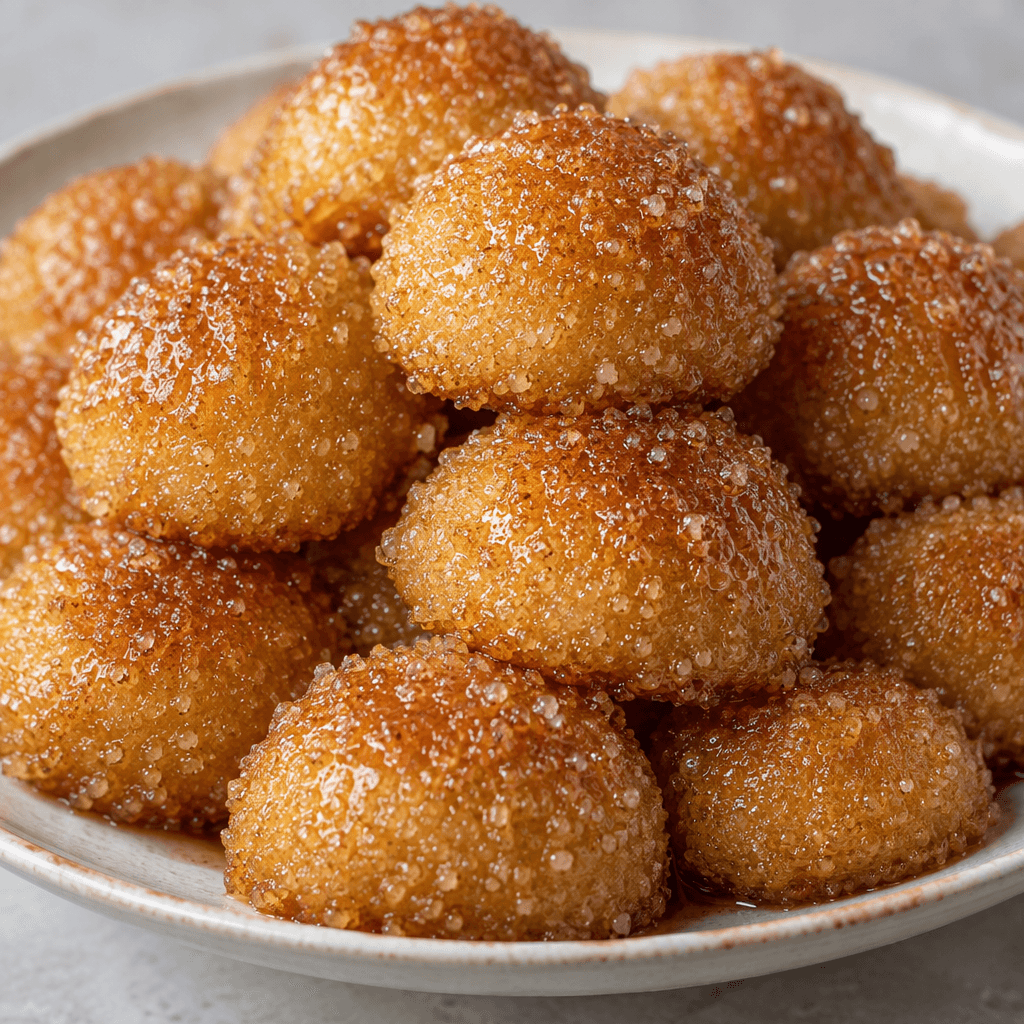
Hira dessert Calories
Syrupy, semolina-based, traditional Turkish dessert
In season: Spring · Summer · Autumn · Winter
CALORIES
GI
POTASSIUM
FIBER
Quick answer
1 piece (medium) of Hira dessert (60 g) has 174 calories. That works out to 290 calories per 100 g. It contains 29.4 g of carbs, 1.9 g of protein, 4.9 g of fat and 0.7 g of fiber. Its 0 mg of Copper covers 5% of the Daily Value. Its glycemic index is 70 (high), so it raises blood sugar quickly.
What is Hira dessert?
Hira dessert is a traditional Turkish sweet, especially associated with Tokat. Its dough is made with semolina and flour, shaped into small rounds, coated in semolina, baked and then soaked in syrup; recipes vary between households.
The grainy coating gives way to a soft centre, while the syrup makes each bite sweet and glossy. In Turkey, it is often served with tea and shared at family gatherings or festive tables. For readers elsewhere, it works well as a small after-dinner treat with unsweetened tea or coffee. It is mainly a source of carbohydrates and energy, with relatively little protein or fibre, so a smaller piece is a practical serving.
Hira dessert Nutrition Facts
Selected: 100 g
290
KCAL / 100G
Carbs
49g
· 18% DV
Protein
3.2g
· 6% DV
Fat
8.2g
· 11% DV
Fiber
1.1g
· 4% DV
DV is the share of the daily value covered, on a 2,000 kcal reference diet.
Calories come from: Carbs 69% · Protein 5% · Fat 26%
Hira dessert Vitamins & Minerals
Vitamins
B1
0.05mg · 4% DV
B5
0.18mg · 4% DV
Biotin
1.2µg · 4% DV
Vitamin E
0.6mg · 4% DV
Minerals
Iron
1mg · 6% DV
Phosphorus
40mg · 6% DV
Selenium
2.5µg · 5% DV
Calcium
35mg · 4% DV
How Nutritious Is Hira dessert?
Nutrient density
Low
How many vitamins, minerals and how much fiber this food carries per calorie. A high score means a lot of nutrition for few calories.
Satiety score
Low
An EatBetter score computed from fiber, protein and calorie density. A high score means staying full longer on the same calories.
Both scores are calculated per 100 g and do not change with the selected portion. The satiety score is EatBetter's own calculation, not a clinical measure.
Hira dessert Glycemic Index
GLYCEMIC INDEX
GLYCEMIC LOAD
Accounts for portion size — a more realistic measure than GI alone.
How to Burn Off Hira dessert
To burn the 290 calories in 100 g:
🚶
Walking (5 km/h)
🏃
Running (8 km/h)
🚴
Cycling
🏊
Swimming
Times are calculated with the MET equation for a 70 kg adult. Actual burn varies with your weight, age and pace.
Is Hira dessert Processed?
NOVA 3
Processed
1. Unprocessed
2. Minimally Processed
3. Processed
4. Ultra-Processed
NOVA classifies foods into 4 groups by industrial processing. NOVA 1 (unprocessed) is the healthiest.
Does Hira dessert Contain Allergens?
Contains these allergens:
Which Diets Is Hira dessert Good For?
Vegan
— Not suitable
Vegetarian
— Not suitable
Gluten-Free
— Not suitable
Dairy-Free
— Not suitable
Mediterranean
✓ Suitable
Paleo
— Not suitable
Whole30
— Not suitable
DASH
— Not suitable
Keto
— Not suitable
Low FODMAP
— Not suitable
Hira dessert Fat Profile
SATURATED
2.6g
MONOUNSATURATED
3.1g
POLYUNSATURATED
1.1g
Omega 6:3 ratio 27.5:1
Above the ideal 4:1 (27.5:1).
Compare Hira dessert
Foods Similar to Hira dessert
Frequently Asked Questions About Hira dessert
What is Hira dessert?
Hira dessert is a traditional Turkish semolina-and-syrup sweet, usually shaped into small, round pieces. The dough is coated in semolina, baked, and then soaked with syrup, giving it a grainy outside and a tender center.
How do you make Hira dessert?
To make Hira dessert, mix semolina with ingredients such as flour, yogurt, egg, and oil to form a soft dough. Shape it into small balls, coat them in semolina, bake until golden, and pour syrup over the hot pastries.
Where does Hira dessert come from?
Hira dessert is associated with Tokat, a province in northern Türkiye. It is a home-style syrup pastry rather than a layered or sliced cake, and family recipes can vary in dough proportions and shaping.
Is Hira dessert the same as revani?
No, Hira dessert is not the same as revani. Hira is shaped into individual semolina-coated balls before baking, while revani is generally baked as a semolina cake and cut into pieces before it is soaked in syrup.
Why is Hira dessert coated in semolina?
The semolina coating gives Hira dessert its characteristic grainy exterior and helps distinguish it from smooth dough pastries. Roll each shaped piece in semolina before baking so the coating adheres evenly.
Is Hira dessert baked or fried?
Hira dessert is baked, not traditionally fried. Its rounded pieces are arranged on a baking tray, cooked until golden, and then covered with syrup; frying would produce a different texture from the familiar pastry.
Should the syrup for Hira dessert be hot or cold?
The syrup is usually cold when poured over freshly baked, hot Hira dessert. This temperature contrast helps the pastries absorb the syrup; let them rest afterward so it can soak through the centers.
Why does Hira dessert turn out dry or hard?
Hira dessert can become dry or hard if the dough contains too much flour or the pastries stay in the oven too long. Keep the dough soft, shape modest-sized pieces, and remove them once they are golden.
Can you make Hira dessert ahead of time?
Yes, you can make Hira dessert ahead because the baked pastries need time to absorb their syrup. Prepare it early enough to cool and rest before serving, and keep it covered so the exposed surfaces do not dry out.
What is Hira dessert served with?
Hira dessert is usually served on its own in small portions, often with Turkish tea or coffee. Its syrupy sweetness pairs well with an unsweetened drink, and the pieces can be arranged together on a dessert plate.
Have another question about Hira dessert?
Ask the AI nutrition coach — calories, portions, alternatives and more, answered in seconds in the app.

Scan calories with your camera
Instant AI nutrition analysis

Nutrition data compiled from USDA FoodData Central and scientific sources.