

Ready & Packaged Foods
All →Vegetables & Legumes
All →Desserts & Confectionery
All →Meat & Protein
All →Grains & Bakery
All →Beverages
All →Milk & Dairy
All →

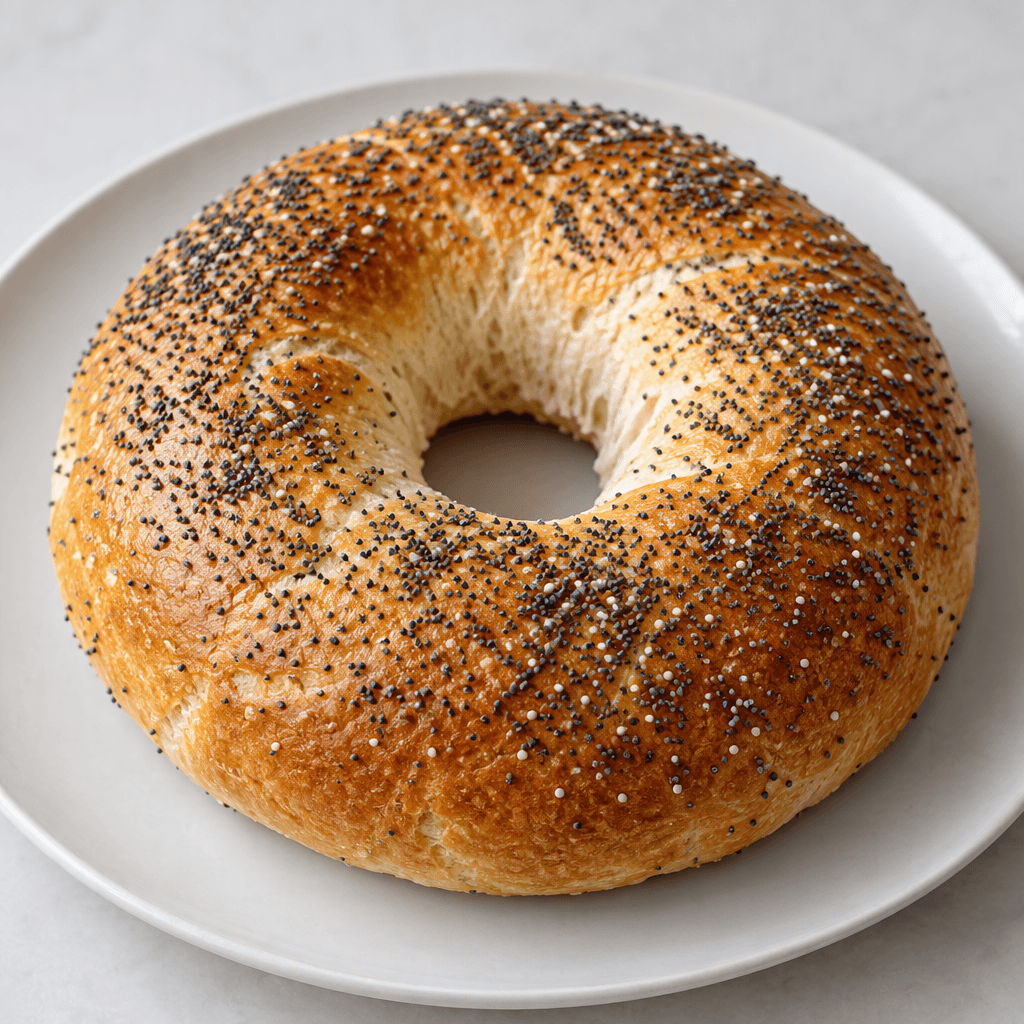
Poppy seed bagel Calories
Poppy seed bagel
In season: Spring · Summer · Autumn · Winter
CALORIES
GI
POTASSIUM
FIBER
Quick answer
100 g of Poppy seed bagel has 270 calories. It contains 53 g of carbs, 9.5 g of protein, 3.5 g of fat and 2.5 g of fiber. Its 12 µg of Selenium covers 22% of the Daily Value. Its glycemic index is 72 (high), so it raises blood sugar quickly.
Poppy seed bagel Nutrition Facts
Selected: 100 g
270
KCAL / 100G
Carbs
53g
· 19% DV
Protein
9.5g
· 19% DV
Fat
3.5g
· 4% DV
Fiber
2.5g
· 9% DV
DV is the share of the daily value covered, on a 2,000 kcal reference diet.
Calories come from: Carbs 75% · Protein 13% · Fat 12%
Poppy seed bagel Vitamins & Minerals
Vitamins
B1
0.25mg · 21% DV
B3
2.6mg · 16% DV
B2
0.18mg · 14% DV
Folate
35µg · 9% DV
Minerals
Selenium
12µg · 22% DV
Sodium
480mg · 21% DV
Iron
2mg · 11% DV
Phosphorus
80mg · 11% DV
How Nutritious Is Poppy seed bagel?
Nutrient density
Low
How many vitamins, minerals and how much fiber this food carries per calorie. A high score means a lot of nutrition for few calories.
Satiety score
Medium
An EatBetter score computed from fiber, protein and calorie density. A high score means staying full longer on the same calories.
Both scores are calculated per 100 g and do not change with the selected portion. The satiety score is EatBetter's own calculation, not a clinical measure.
Poppy seed bagel Glycemic Index
GLYCEMIC INDEX
GLYCEMIC LOAD
Accounts for portion size — a more realistic measure than GI alone.
How to Burn Off Poppy seed bagel
To burn the 270 calories in 100 g:
🚶
Walking (5 km/h)
🏃
Running (8 km/h)
🚴
Cycling
🏊
Swimming
Times are calculated with the MET equation for a 70 kg adult. Actual burn varies with your weight, age and pace.
Is Poppy seed bagel Processed?
NOVA 3
Processed
1. Unprocessed
2. Minimally Processed
3. Processed
4. Ultra-Processed
NOVA classifies foods into 4 groups by industrial processing. NOVA 1 (unprocessed) is the healthiest.
Does Poppy seed bagel Contain Allergens?
Contains these allergens:
Which Diets Is Poppy seed bagel Good For?
Vegan
— Not suitable
Vegetarian
✓ Suitable
Gluten-Free
— Not suitable
Dairy-Free
— Not suitable
Mediterranean
— Not suitable
Paleo
— Not suitable
Whole30
— Not suitable
DASH
— Not suitable
Keto
— Not suitable
Low FODMAP
— Not suitable
Poppy seed bagel Fat Profile
SATURATED
0.7g
MONOUNSATURATED
1.1g
POLYUNSATURATED
1.2g
Omega 6:3 ratio 10:1
Above the ideal 4:1 (10:1).
Compare Poppy seed bagel
Foods Similar to Poppy seed bagel
Frequently Asked Questions About Poppy seed bagel
What is the best way to keep a poppy seed bagel fresh?
Keep it in an airtight bag or container at room temperature for short-term storage. For longer storage, slice it first and freeze it to help prevent staling.
Can a poppy seed bagel be frozen?
Yes. Freeze it sliced, then toast or warm the slices straight from frozen when needed.
Should a poppy seed bagel be toasted?
Toasting brings out a crisp texture and a nuttier aroma without fundamentally changing its nutrition. Avoid over-toasting, as it can make the bagel dry or burnt-tasting.
What makes a balanced breakfast with a poppy seed bagel?
Pair it with a protein-rich food such as eggs, yogurt, cottage cheese, or cheese for a more satisfying meal. Adding vegetables such as tomatoes, cucumber, or leafy greens also improves variety.
How can I make a poppy seed bagel meal gentler on blood sugar?
Eating it with protein, fat, and fibre can slow digestion compared with eating it on its own. Eggs, avocado, cheese, or plain yogurt are practical pairings.
Is a poppy seed bagel good before a workout?
It can be a convenient carbohydrate-based option before exercise. If you are prone to stomach discomfort, choose a simple topping rather than a heavy, high-fat filling and allow enough time to digest.
Does eating a poppy seed bagel at night cause weight gain?
Eating a bagel at night does not by itself cause weight gain; overall eating patterns and portion habits matter more. Pairing it with protein may help it feel more satisfying if you need an evening snack.
How does a poppy seed bagel compare with a whole-grain bagel?
Whole-grain bagels usually contain more intact grain components, giving them a heartier texture and often more fibre. Check the ingredient list to see whether whole-grain flour is listed first.
Who should be careful with poppy seed bagels?
People with coeliac disease or a wheat or gluten allergy should avoid them. Because sesame is listed as an allergen, people with sesame allergy should also check the label and any cross-contact statement carefully.
Can poppy seeds make a drug test positive?
Poppy seeds can contain tiny natural opiate residues, and very large intakes have occasionally affected highly sensitive drug tests. Anyone facing testing should follow the testing organisation’s guidance and seek professional advice if concerned.
Have another question about Poppy seed bagel?
Ask the AI nutrition coach — calories, portions, alternatives and more, answered in seconds in the app.

Scan calories with your camera
Instant AI nutrition analysis

Nutrition data compiled from USDA FoodData Central and scientific sources.