

Ready & Packaged Foods
All →Vegetables & Legumes
All →Desserts & Confectionery
All →Meat & Protein
All →Grains & Bakery
All →Beverages
All →Milk & Dairy
All →

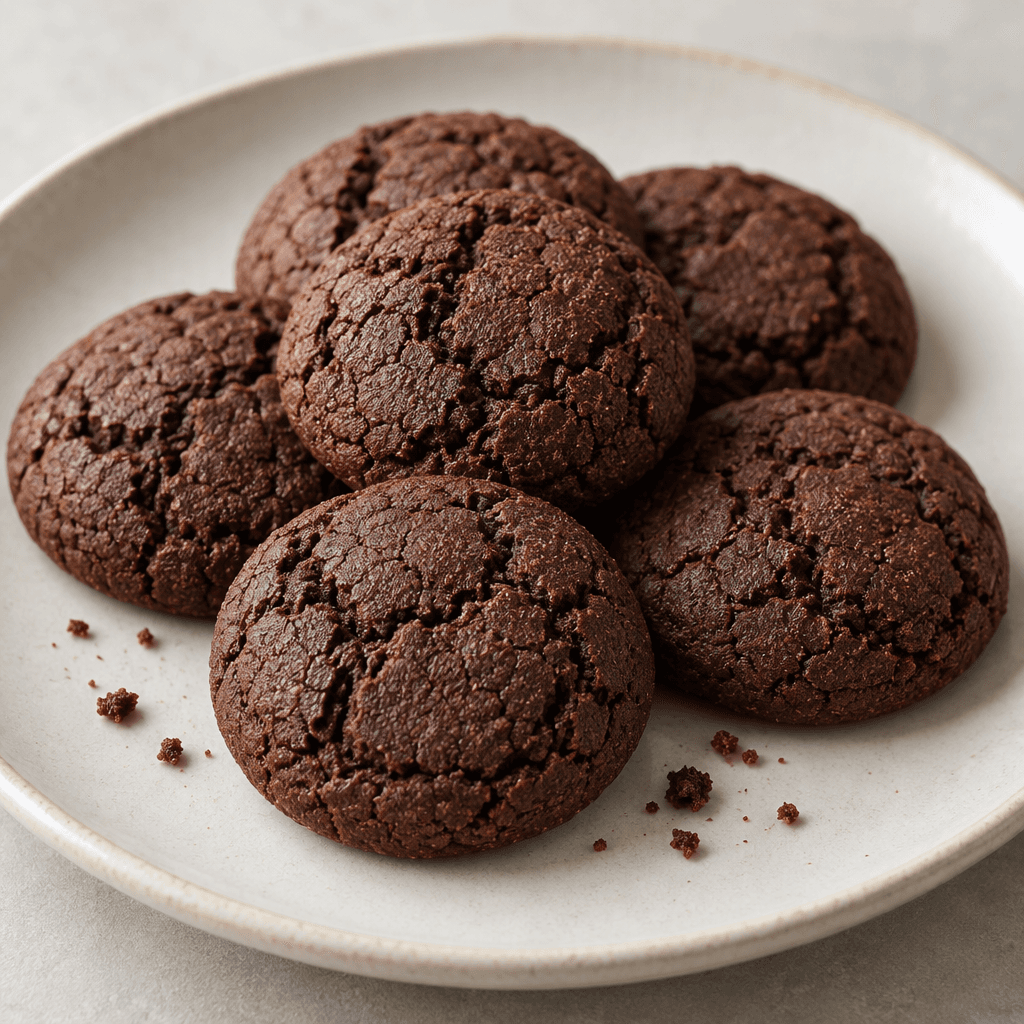
Gluten-free sugar-free cocoa cookie Calories
Gluten-free, sugar-free, cocoa, low carb, high fiber
In season: Spring · Summer · Autumn · Winter
CALORIES
GI
POTASSIUM
FIBER
Quick answer
1 piece (medium) of Gluten-free sugar-free cocoa cookie (25 g) has 98 calories. That works out to 390 calories per 100 g. It contains 9.5 g of carbs, 2 g of protein, 5 g of fat and 3 g of fiber. Its 0.1 mg of Copper covers 7% of the Daily Value. Its glycemic index is 35 (low), so it raises blood sugar slowly.
What is Gluten-free sugar-free cocoa cookie?
A gluten-free sugar-free cocoa cookie is a cocoa-flavoured biscuit made without wheat flour or sugar. Recipes vary: they may use nut-based or other gluten-free flours, and sweetness can come from ingredients other than sugar. It is a modern adaptation of the familiar cookie rather than a dish tied to one particular regional tradition, with homemade and packaged versions alike. The cocoa gives it a gently bitter, chocolate-like flavour; its texture can range from crisp to tender depending on the recipe. It works as a small snack with tea or coffee, or as an option alongside other treats for people avoiding gluten or sugar. It is relatively high in fibre, though sugar-free does not mean carbohydrate-free. Pair it with an unsweetened drink, and check the ingredients if you have specific dietary needs.
Gluten-free sugar-free cocoa cookie Nutrition Facts
Selected: 100 g
390
KCAL / 100G
Carbs
38g
· 14% DV
Protein
8g
· 16% DV
Fat
20g
· 26% DV
Fiber
12g
· 43% DV
DV is the share of the daily value covered, on a 2,000 kcal reference diet.
Calories come from: Carbs 42% · Protein 9% · Fat 49%
Gluten-free sugar-free cocoa cookie Vitamins & Minerals
Vitamins
B2
0.15mg · 12% DV
B3
1.2mg · 8% DV
B1
0.08mg · 7% DV
B5
0.35mg · 7% DV
Minerals
Magnesium
70mg · 17% DV
Phosphorus
110mg · 16% DV
Iron
2mg · 11% DV
Zinc
1mg · 9% DV
How Nutritious Is Gluten-free sugar-free cocoa cookie?
Nutrient density
Medium
How many vitamins, minerals and how much fiber this food carries per calorie. A high score means a lot of nutrition for few calories.
Satiety score
Medium
An EatBetter score computed from fiber, protein and calorie density. A high score means staying full longer on the same calories.
Both scores are calculated per 100 g and do not change with the selected portion. The satiety score is EatBetter's own calculation, not a clinical measure.
Gluten-free sugar-free cocoa cookie Glycemic Index
GLYCEMIC INDEX
GLYCEMIC LOAD
Accounts for portion size — a more realistic measure than GI alone.
How to Burn Off Gluten-free sugar-free cocoa cookie
To burn the 390 calories in 100 g:
🚶
Walking (5 km/h)
🏃
Running (8 km/h)
🚴
Cycling
🏊
Swimming
Times are calculated with the MET equation for a 70 kg adult. Actual burn varies with your weight, age and pace.
Is Gluten-free sugar-free cocoa cookie Processed?
NOVA 3
Processed
1. Unprocessed
2. Minimally Processed
3. Processed
4. Ultra-Processed
NOVA classifies foods into 4 groups by industrial processing. NOVA 1 (unprocessed) is the healthiest.
Does Gluten-free sugar-free cocoa cookie Contain Allergens?
No known major allergens
Which Diets Is Gluten-free sugar-free cocoa cookie Good For?
Vegan
✓ Suitable
Vegetarian
✓ Suitable
Gluten-Free
✓ Suitable
Dairy-Free
— Not suitable
Mediterranean
✓ Suitable
Paleo
— Not suitable
Whole30
— Not suitable
DASH
— Not suitable
Keto
— Not suitable
Low FODMAP
— Not suitable
Gluten-free sugar-free cocoa cookie Fat Profile
SATURATED
7.5g
MONOUNSATURATED
7.2g
POLYUNSATURATED
3.5g
Omega 6:3 ratio 30:1
Above the ideal 4:1 (30:1).
Compare Gluten-free sugar-free cocoa cookie
Foods Similar to Gluten-free sugar-free cocoa cookie
Frequently Asked Questions About Gluten-free sugar-free cocoa cookie
Are gluten-free sugar-free cocoa cookies safe for people with celiac disease?
Only when they are made and packaged to prevent gluten cross-contact. A gluten-free recipe is not enough if shared equipment or surfaces are used. People with celiac disease should choose products with reliable gluten-free labeling and avoid loose cookies with uncertain handling.
What sweetener is used in a gluten-free sugar-free cocoa cookie?
There is no single standard sweetener. Recipes and packaged cookies may use erythritol, stevia, or other sugar substitutes, and the choice affects both sweetness and texture. Check the ingredient list for the particular cookie rather than assuming it contains one specific sweetener.
Can a gluten-free sugar-free cocoa cookie raise blood sugar?
Yes. Sugar-free does not mean carbohydrate-free: flour and other starch-based ingredients can still affect blood glucose. The response also depends on the sweetener and portion. If you have diabetes, fit the cookie into your individual meal plan.
How do you make a gluten-free sugar-free cocoa cookie at home?
Mix a gluten-free flour blend with cocoa, a sugar substitute, fat, and an egg or plant-based binder; chill the dough, shape it, and bake. Gluten-free flours absorb liquid differently, so adjust the dough gradually rather than adding extra flour all at once.
Why does gluten-free sugar-free cocoa cookie dough crumble?
Without gluten, the dough has less elasticity and can break apart, especially if it is dry. Chill it before shaping and keep the recipe’s binder, such as egg or a suitable plant-based alternative. Add liquid a little at a time if the dough still cracks.
Can you freeze gluten-free sugar-free cocoa cookies?
Yes. Let the cookies cool completely, then freeze them in an airtight container with baking paper between layers. Thaw at room temperature; a brief return to the oven can help restore crispness if the cookies soften.
How should you store a gluten-free sugar-free cocoa cookie?
Once completely cool, keep the cookies in an airtight container in a cool, dry place. Moisture can soften them, so store them away from humid foods. Use a clean container, particularly for homemade cookies, to keep them fresh.
Can you make a gluten-free sugar-free cocoa cookie without eggs?
Yes. A recipe can use a plant-based binder such as ground flax mixed with water or applesauce instead of egg. The result may be softer or more crumbly, so choose a recipe designed for egg-free baking rather than swapping ingredients without adjusting the mixture.
Why can a gluten-free sugar-free cocoa cookie taste bitter?
Unsweetened cocoa is naturally bitter, and some sugar substitutes can leave a lingering or cooling aftertaste. Vanilla and a small pinch of salt can round out the flavor. Add any extra sweetener gradually, since some substitutes become unpleasant when overused.
What goes well with a gluten-free sugar-free cocoa cookie?
Coffee, tea, or a glass of milk pairs well with the cocoa flavor. For a more filling snack, have the cookie with plain yogurt or another protein-containing food; this adds a contrasting texture and makes it less like eating a sweet on its own.
Have another question about Gluten-free sugar-free cocoa cookie?
Ask the AI nutrition coach — calories, portions, alternatives and more, answered in seconds in the app.

Scan calories with your camera
Instant AI nutrition analysis

Nutrition data compiled from USDA FoodData Central and scientific sources.