

Ready & Packaged Foods
All →Vegetables & Legumes
All →Desserts & Confectionery
All →Meat & Protein
All →Grains & Bakery
All →Beverages
All →Milk & Dairy
All →

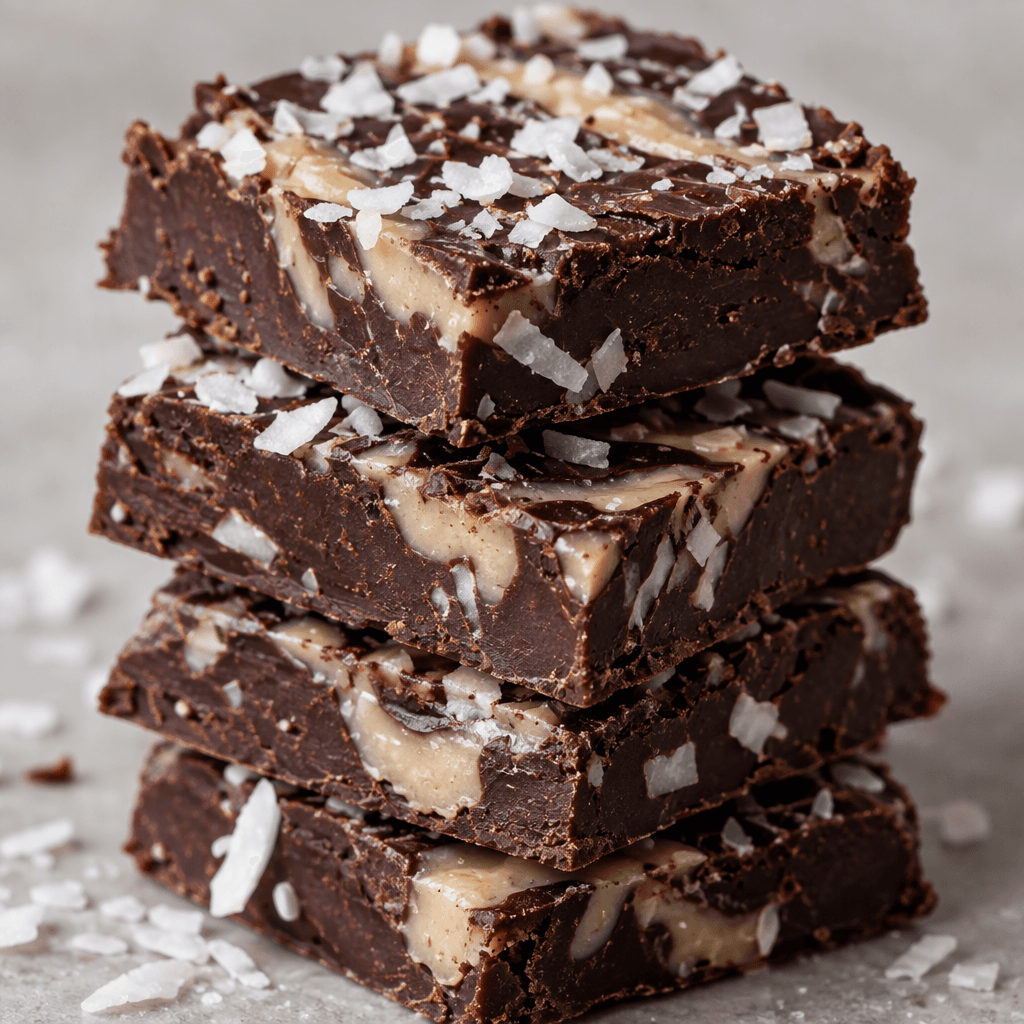
Coconut tahini cocoa chocolate Calories
Energy-dense cocoa chocolate with tahini and coconut
CALORIES
GI
POTASSIUM
FIBER
Quick answer
1 piece (small) of Coconut tahini cocoa chocolate (12 g) has 71 calories. That works out to 592 calories per 100 g. It contains 3.8 g of carbs, 1.1 g of protein, 5.7 g of fat and 1 g of fiber. Its 0.1 mg of Copper covers 11% of the Daily Value. Its glycemic index is 32 (low), so it raises blood sugar slowly.
What is Coconut tahini cocoa chocolate?
Coconut tahini cocoa chocolate brings together cocoa or chocolate with sesame tahini and coconut. It is a sweet confection built around these rich, distinctive flavours rather than a dish tied to one particular region; recipes may vary in how much coconut or tahini they use.
Depending on how it is made, it can be firm and snappable or softer, with tahini lending a creamy, savoury edge and coconut adding a chewy, gently sweet note. Enjoy it as a small treat with coffee or tea, or break it into pieces for a dessert board alongside fresh fruit. It is energy-dense, with much of its richness coming from fat; tahini contributes some protein, while the coconut adds fibre. A small piece is satisfying, especially if you prefer a less-sweet pairing such as plain tea.
Coconut tahini cocoa chocolate Nutrition Facts
Selected: 100 g
592
KCAL / 100G
Carbs
31.4g
· 11% DV
Protein
9.1g
· 18% DV
Fat
47.8g
· 61% DV
Fiber
8.6g
· 31% DV
DV is the share of the daily value covered, on a 2,000 kcal reference diet.
Calories come from: Carbs 21% · Protein 6% · Fat 73%
Coconut tahini cocoa chocolate Vitamins & Minerals
Vitamins
B1
0.19mg · 16% DV
Biotin
4µg · 13% DV
B3
1.8mg · 11% DV
B6
0.18mg · 11% DV
Minerals
Copper
1mg · 111% DV
Manganese
1mg · 43% DV
Magnesium
168mg · 40% DV
Phosphorus
255mg · 36% DV
How Nutritious Is Coconut tahini cocoa chocolate?
Nutrient density
Medium
How many vitamins, minerals and how much fiber this food carries per calorie. A high score means a lot of nutrition for few calories.
Satiety score
Medium
An EatBetter score computed from fiber, protein and calorie density. A high score means staying full longer on the same calories.
Both scores are calculated per 100 g and do not change with the selected portion. The satiety score is EatBetter's own calculation, not a clinical measure.
Coconut tahini cocoa chocolate Glycemic Index
GLYCEMIC INDEX
GLYCEMIC LOAD
Accounts for portion size — a more realistic measure than GI alone.
How to Burn Off Coconut tahini cocoa chocolate
To burn the 592 calories in 100 g:
🚶
Walking (5 km/h)
🏃
Running (8 km/h)
🚴
Cycling
🏊
Swimming
Times are calculated with the MET equation for a 70 kg adult. Actual burn varies with your weight, age and pace.
Is Coconut tahini cocoa chocolate Processed?
NOVA 3
Processed
1. Unprocessed
2. Minimally Processed
3. Processed
4. Ultra-Processed
NOVA classifies foods into 4 groups by industrial processing. NOVA 1 (unprocessed) is the healthiest.
Does Coconut tahini cocoa chocolate Contain Allergens?
Contains these allergens:
Which Diets Is Coconut tahini cocoa chocolate Good For?
Vegan
— Not suitable
Vegetarian
✓ Suitable
Gluten-Free
✓ Suitable
Dairy-Free
— Not suitable
Mediterranean
✓ Suitable
Paleo
— Not suitable
Whole30
— Not suitable
DASH
— Not suitable
Keto
— Not suitable
Low FODMAP
— Not suitable
Coconut tahini cocoa chocolate Fat Profile
SATURATED
24.6g
MONOUNSATURATED
15.1g
POLYUNSATURATED
11.2g
Omega 6:3 ratio 90:1
Above the ideal 4:1 (90:1).
Compare Coconut tahini cocoa chocolate
Foods Similar to Coconut tahini cocoa chocolate
Frequently Asked Questions About Coconut tahini cocoa chocolate
How do you make coconut tahini cocoa chocolate at home?
Make coconut tahini cocoa chocolate by stirring tahini and shredded coconut into melted chocolate, then letting the mixture set in a lined dish or mould. For a cocoa-based version, combine cocoa with tahini and a sweetener; chill until firm.
What is in coconut tahini cocoa chocolate?
Coconut tahini cocoa chocolate combines cocoa or chocolate with tahini, made from sesame seeds, and coconut. Recipes may also include a sweetener or other additions, so the exact ingredients vary; homemade versions can be adjusted to taste.
What does coconut tahini cocoa chocolate taste like?
Coconut tahini cocoa chocolate tastes rich and cocoa-forward, with tahini adding a roasted, slightly bitter sesame note. Coconut brings sweetness and fragrance. The kind of chocolate or sweetener used makes the finished treat more bitter or more dessert-like.
How should you store coconut tahini cocoa chocolate?
Store coconut tahini cocoa chocolate in an airtight container in a cool, dry place. If your kitchen is warm, refrigerate it to keep it firm. Let a piece sit briefly at room temperature before eating so its flavor and texture soften.
Why does coconut tahini cocoa chocolate turn oily or separate?
Coconut tahini cocoa chocolate can look oily when the natural oils in tahini rise to the surface. Stir tahini thoroughly before using it and mix it into the chocolate gradually. Overheating the mixture can also encourage separation or a grainy texture.
How is coconut tahini cocoa chocolate different from regular chocolate?
Coconut tahini cocoa chocolate has sesame and coconut flavors that regular chocolate does not, and tahini gives it a fuller, softer texture. Depending on the recipe, coconut may also add a little chew or crunch alongside the cocoa.
What goes well with coconut tahini cocoa chocolate?
Coconut tahini cocoa chocolate pairs well with coffee, sliced banana, apple, or plain yogurt. Its roasted sesame and cocoa flavors also work with toasted bread or a bowl of porridge when you want to use it as a small sweet topping.
Does coconut tahini cocoa chocolate raise blood sugar?
Yes, coconut tahini cocoa chocolate can raise blood sugar, especially when it contains added sugar. Tahini and coconut do not cancel out the chocolate's carbohydrates. If you have diabetes, fit it into your individual meal plan with advice from your healthcare professional.
Does coconut tahini cocoa chocolate contain caffeine?
Yes, coconut tahini cocoa chocolate contains some caffeine because cocoa naturally contains caffeine, as well as theobromine. The amount varies with the cocoa and chocolate used, so a piece may matter if you are particularly sensitive to stimulants.
Can you freeze coconut tahini cocoa chocolate?
Yes, you can freeze coconut tahini cocoa chocolate in a tightly sealed container. Thaw it in the refrigerator before serving to reduce condensation on the surface, and avoid repeatedly thawing and refreezing it, which can affect its texture.
Have another question about Coconut tahini cocoa chocolate?
Ask the AI nutrition coach — calories, portions, alternatives and more, answered in seconds in the app.

Scan calories with your camera
Instant AI nutrition analysis

Nutrition data compiled from USDA FoodData Central and scientific sources.