

Ready & Packaged Foods
All →Vegetables & Legumes
All →Desserts & Confectionery
All →Meat & Protein
All →Grains & Bakery
All →Beverages
All →Milk & Dairy
All →

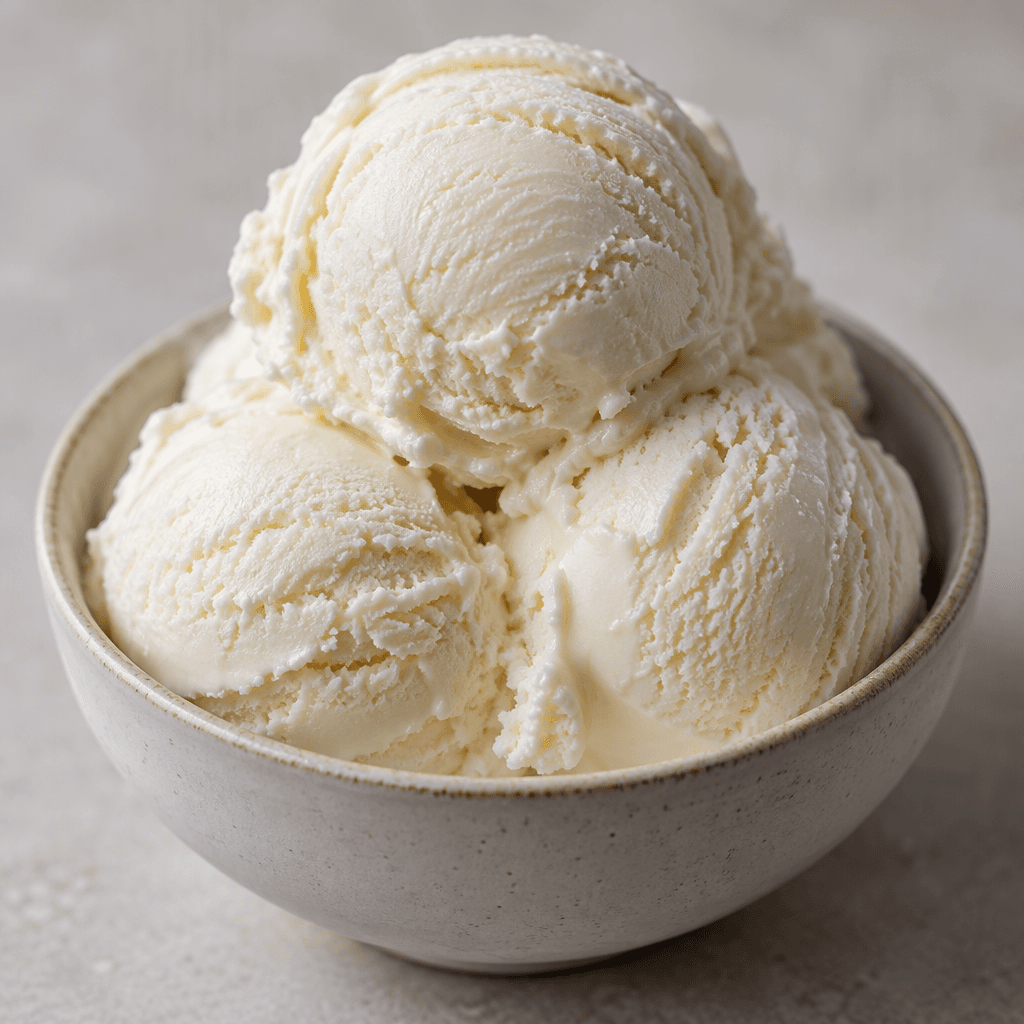
Buffalo milk ice cream Calories
Rich, creamy ice cream made with buffalo milk
CALORIES
GI
POTASSIUM
FIBER
Quick answer
100 g of Buffalo milk ice cream has 230 calories. It contains 24 g of carbs, 4.2 g of protein, 13 g of fat and 0 g of fiber. Its 0.5 µg of B12 covers 19% of the Daily Value. Its glycemic index is 57 (medium), so it raises blood sugar at a moderate pace.
What is Buffalo milk ice cream?
Buffalo milk ice cream is made with buffalo milk rather than cow’s milk. It is enjoyed in Turkey and elsewhere, and the milk’s richness gives it a dense, smooth texture and a pale, creamy colour. Recipes and sweetness vary, but it is usually served as a simple frozen dessert.
Enjoy it in a cone or bowl, or alongside fresh fruit, nuts or a slice of cake. Its rich, milky flavour also works well on its own, without elaborate toppings. It is a source of energy from fat and carbohydrate, while protein is relatively modest: a 100 g serving has 230 calories and 4.2 g of protein. For a lighter serving, choose a smaller scoop and pair it with fruit rather than syrup or extra toppings.
Buffalo milk ice cream Nutrition Facts
Selected: 100 g
230
KCAL / 100G
Carbs
24g
· 9% DV
Protein
4.2g
· 8% DV
Fat
13g
· 17% DV
Fiber
0g
· 0% DV
DV is the share of the daily value covered, on a 2,000 kcal reference diet.
Calories come from: Carbs 42% · Protein 7% · Fat 51%
Buffalo milk ice cream Vitamins & Minerals
Vitamins
B12
0.45µg · 19% DV
B2
0.22mg · 17% DV
Vitamin A
110µg · 12% DV
B5
0.45mg · 9% DV
Minerals
Phosphorus
115mg · 16% DV
Calcium
150mg · 15% DV
Zinc
1mg · 9% DV
Iodine
12µg · 8% DV
How Nutritious Is Buffalo milk ice cream?
Nutrient density
Low
How many vitamins, minerals and how much fiber this food carries per calorie. A high score means a lot of nutrition for few calories.
Satiety score
Low
An EatBetter score computed from fiber, protein and calorie density. A high score means staying full longer on the same calories.
Both scores are calculated per 100 g and do not change with the selected portion. The satiety score is EatBetter's own calculation, not a clinical measure.
Buffalo milk ice cream Glycemic Index
GLYCEMIC INDEX
GLYCEMIC LOAD
Accounts for portion size — a more realistic measure than GI alone.
How to Burn Off Buffalo milk ice cream
To burn the 230 calories in 100 g:
🚶
Walking (5 km/h)
🏃
Running (8 km/h)
🚴
Cycling
🏊
Swimming
Times are calculated with the MET equation for a 70 kg adult. Actual burn varies with your weight, age and pace.
Is Buffalo milk ice cream Processed?
NOVA 3
Processed
1. Unprocessed
2. Minimally Processed
3. Processed
4. Ultra-Processed
NOVA classifies foods into 4 groups by industrial processing. NOVA 1 (unprocessed) is the healthiest.
Does Buffalo milk ice cream Contain Allergens?
Contains these allergens:
Which Diets Is Buffalo milk ice cream Good For?
Vegan
— Not suitable
Vegetarian
✓ Suitable
Gluten-Free
✓ Suitable
Dairy-Free
— Not suitable
Mediterranean
— Not suitable
Paleo
— Not suitable
Whole30
— Not suitable
DASH
— Not suitable
Keto
— Not suitable
Low FODMAP
— Not suitable
Buffalo milk ice cream Fat Profile
SATURATED
8.1g
MONOUNSATURATED
3.4g
POLYUNSATURATED
0.4g
Omega 6:3 ratio 4:1
Below the ideal 4:1 — a good omega balance.
Compare Buffalo milk ice cream
Foods Similar to Buffalo milk ice cream
Frequently Asked Questions About Buffalo milk ice cream
What is buffalo milk ice cream?
Buffalo milk ice cream is ice cream made with milk from water buffalo rather than, or alongside, cow’s milk. It is often rich and creamy, though its ingredients and texture vary by recipe and producer.
Does buffalo milk ice cream taste different from cow’s milk ice cream?
Yes, it often has a fuller, creamier taste than ice cream made with cow’s milk. The difference depends on the recipe and how much buffalo milk is used; added flavors such as chocolate or fruit can make it less noticeable.
Is buffalo milk ice cream the same as gelato?
No, buffalo milk ice cream is defined by the milk used, while gelato is a style of frozen dessert. Buffalo milk can be used in a gelato recipe, but not every buffalo milk ice cream is gelato.
Why is buffalo milk ice cream so creamy?
Buffalo milk can contain more fat and milk solids than cow’s milk, which can give the finished ice cream a rich, creamy mouthfeel. The recipe and the amount of air incorporated during churning also affect its texture.
How is buffalo milk ice cream made?
Buffalo milk is combined with ingredients such as sugar and, depending on the recipe, stabilizers or flavorings. The mixture is chilled and churned while freezing; churning helps control ice crystals and gives the ice cream a smoother texture.
Is buffalo milk ice cream healthier than regular ice cream?
No, buffalo milk does not automatically make ice cream a healthier choice. It can make the dessert richer, but the overall nutritional profile still depends on the amount of sugar, fat, and other ingredients in the recipe.
Does buffalo milk ice cream contain lactose?
Yes, buffalo milk ice cream contains lactose, the naturally occurring sugar in milk. Using buffalo milk does not make the ice cream lactose-free, so people who are sensitive to lactose may still have symptoms.
Is buffalo milk ice cream the same as kulfi?
No, buffalo milk ice cream is not automatically kulfi. Kulfi is a traditional South Asian frozen dessert made by slowly reducing milk and freezing it, usually without churning; buffalo milk may be used in some versions.
How should you store buffalo milk ice cream?
Keep buffalo milk ice cream covered in a sealed container in the freezer, away from temperature changes. Return it to the freezer promptly after serving, and avoid refreezing portions that have melted, since repeated thawing can make it icy.
Does buffalo milk ice cream melt more slowly than regular ice cream?
Not necessarily. Buffalo milk’s richness may affect the texture, but melting speed also depends on the recipe, how much air is incorporated, and serving temperature. A buffalo milk label alone cannot predict how quickly a scoop will melt.
Have another question about Buffalo milk ice cream?
Ask the AI nutrition coach — calories, portions, alternatives and more, answered in seconds in the app.

Scan calories with your camera
Instant AI nutrition analysis

Nutrition data compiled from USDA FoodData Central and scientific sources.