

Ready & Packaged Foods
All →Vegetables & Legumes
All →Desserts & Confectionery
All →Meat & Protein
All →Grains & Bakery
All →Beverages
All →Milk & Dairy
All →

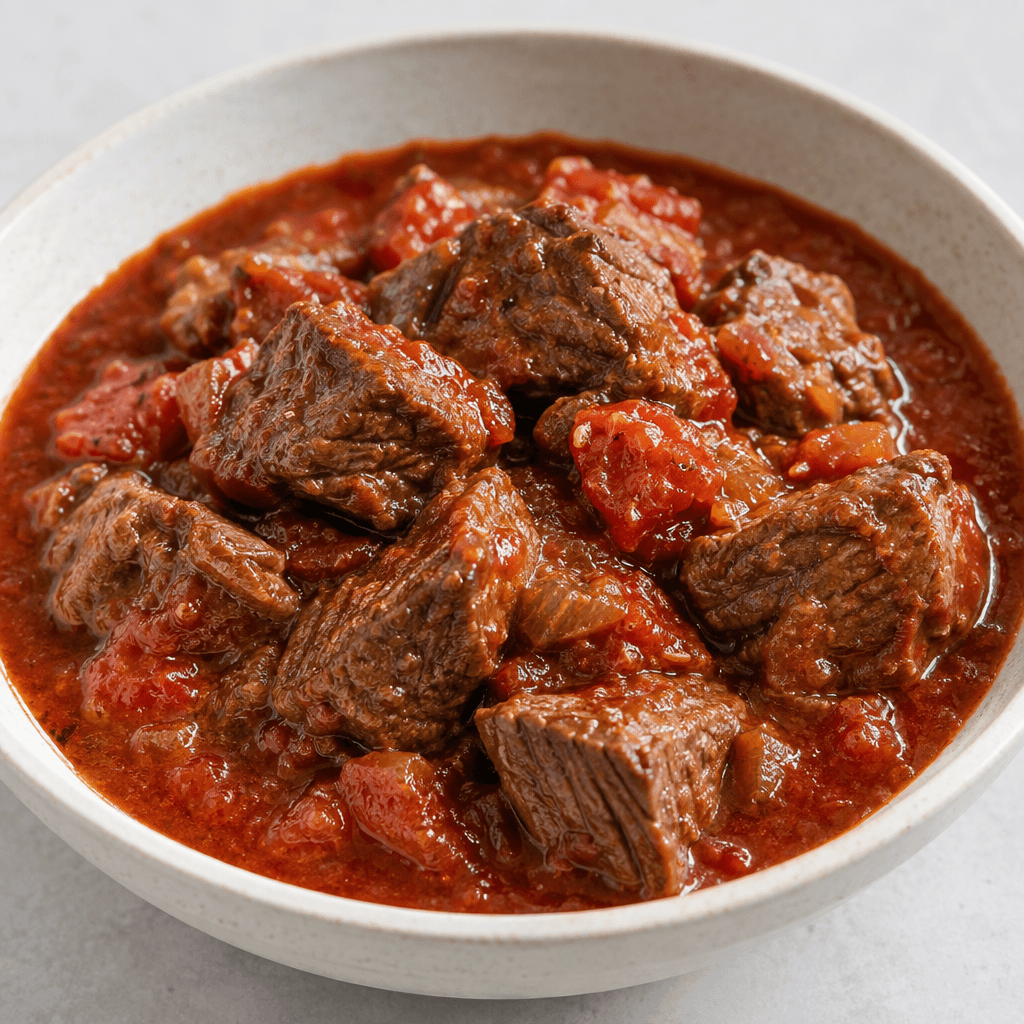
Beef Stewed with Tomatoes Calories
Rich in iron and protein, enhanced with tomatoes
In season: Spring · Summer · Autumn · Winter
CALORIES
GI
POTASSIUM
FIBER
Quick answer
1 serving (medium) of Beef Stewed with Tomatoes (180 g) has 216 calories. That works out to 120 calories per 100 g. It contains 5.8 g of carbs, 27.9 g of protein, 9.4 g of fat and 1.4 g of fiber. Its 2.5 µg of B12 covers 105% of the Daily Value. Its glycemic index is 35 (low), so it raises blood sugar slowly.
Beef Stewed with Tomatoes Nutrition Facts
Selected: 100 g
120
KCAL / 100G
Carbs
3.2g
· 1% DV
Protein
15.5g
· 31% DV
Fat
5.2g
· 7% DV
Fiber
0.8g
· 3% DV
DV is the share of the daily value covered, on a 2,000 kcal reference diet.
Calories come from: Carbs 11% · Protein 51% · Fat 38%
Beef Stewed with Tomatoes Vitamins & Minerals
Vitamins
B12
1.4µg · 58% DV
B3
3.9mg · 24% DV
B6
0.22mg · 13% DV
B5
0.6mg · 12% DV
Minerals
Zinc
4mg · 36% DV
Phosphorus
160mg · 23% DV
Selenium
7.8µg · 14% DV
Iron
2mg · 11% DV
How Nutritious Is Beef Stewed with Tomatoes?
Nutrient density
High
How many vitamins, minerals and how much fiber this food carries per calorie. A high score means a lot of nutrition for few calories.
Satiety score
Medium
An EatBetter score computed from fiber, protein and calorie density. A high score means staying full longer on the same calories.
Both scores are calculated per 100 g and do not change with the selected portion. The satiety score is EatBetter's own calculation, not a clinical measure.
Beef Stewed with Tomatoes Glycemic Index
GLYCEMIC INDEX
GLYCEMIC LOAD
Accounts for portion size — a more realistic measure than GI alone.
How to Burn Off Beef Stewed with Tomatoes
To burn the 120 calories in 100 g:
🚶
Walking (5 km/h)
🏃
Running (8 km/h)
🚴
Cycling
🏊
Swimming
Times are calculated with the MET equation for a 70 kg adult. Actual burn varies with your weight, age and pace.
Is Beef Stewed with Tomatoes Processed?
NOVA 2
Minimally Processed
1. Unprocessed
2. Minimally Processed
3. Processed
4. Ultra-Processed
NOVA classifies foods into 4 groups by industrial processing. NOVA 1 (unprocessed) is the healthiest.
Does Beef Stewed with Tomatoes Contain Allergens?
No known major allergens
Which Diets Is Beef Stewed with Tomatoes Good For?
Vegan
— Not suitable
Vegetarian
— Not suitable
Gluten-Free
✓ Suitable
Dairy-Free
— Not suitable
Mediterranean
✓ Suitable
Paleo
✓ Suitable
Whole30
— Not suitable
DASH
— Not suitable
Keto
✓ Suitable
Low FODMAP
— Not suitable
Beef Stewed with Tomatoes Fat Profile
SATURATED
2.1g
MONOUNSATURATED
2g
POLYUNSATURATED
0.15g
Omega 6:3 ratio 2.3:1
Below the ideal 4:1 — a good omega balance.
Compare Beef Stewed with Tomatoes
Foods Similar to Beef Stewed with Tomatoes
Frequently Asked Questions About Beef Stewed with Tomatoes
Does beef stewed with tomatoes taste better the next day?
Often yes. Resting overnight lets the beef, tomato, and seasoning flavors meld, so the dish can taste more rounded the next day if it has been chilled properly.
How long does beef stewed with tomatoes keep in the fridge?
If cooled promptly and refrigerated, it is usually best eaten within 3 to 4 days. Reheat until it is steaming hot all the way through.
Can beef stewed with tomatoes be frozen?
Yes, it freezes well in airtight portions. Thaw in the fridge when possible and reheat only the amount you plan to eat for better texture and food safety.
When should tomatoes be added so the beef stays tender?
Usually after the beef has browned and released some moisture. Adding acidic ingredients too early can slow tenderizing in some cuts.
What goes well with beef stewed with tomatoes for a more balanced meal?
It pairs well with salad, yogurt, or cooked vegetables for more variety and fullness. If you need a heartier meal, rice, bulgur, or potatoes are common additions.
Is beef stewed with tomatoes a good post-workout meal?
It can be, because it provides protein in a savory, easy-to-eat form. After harder training, adding a carbohydrate side may help recovery more than eating it alone.
Is it okay to eat beef stewed with tomatoes at night?
For many people yes, but tolerance varies. Tomato acidity and a richer or spicier preparation may bother people with reflux or a sensitive stomach late in the evening.
Does beef stewed with tomatoes help with weight loss?
No single dish causes weight loss on its own. Its protein content may help with fullness, but overall calorie intake and eating pattern matter more.
How is beef stewed with tomatoes different from plain sautéed beef?
The tomato version is usually juicier and more acidic, with a softer, saucier texture. It also contains some carbohydrates from the tomatoes, unlike a plain meat-only sauté.
Who should be careful with beef stewed with tomatoes?
People with gout, kidney disease, reflux, or a need to limit sodium may need to watch portion size and recipe style. Restaurant or heavily seasoned versions can be much higher in salt and fat than a simple homemade one.
Have another question about Beef Stewed with Tomatoes?
Ask the AI nutrition coach — calories, portions, alternatives and more, answered in seconds in the app.

Scan calories with your camera
Instant AI nutrition analysis

Nutrition data compiled from USDA FoodData Central and scientific sources.