

Ready & Packaged Foods
All →Vegetables & Legumes
All →Desserts & Confectionery
All →Meat & Protein
All →Grains & Bakery
All →Beverages
All →Milk & Dairy
All →

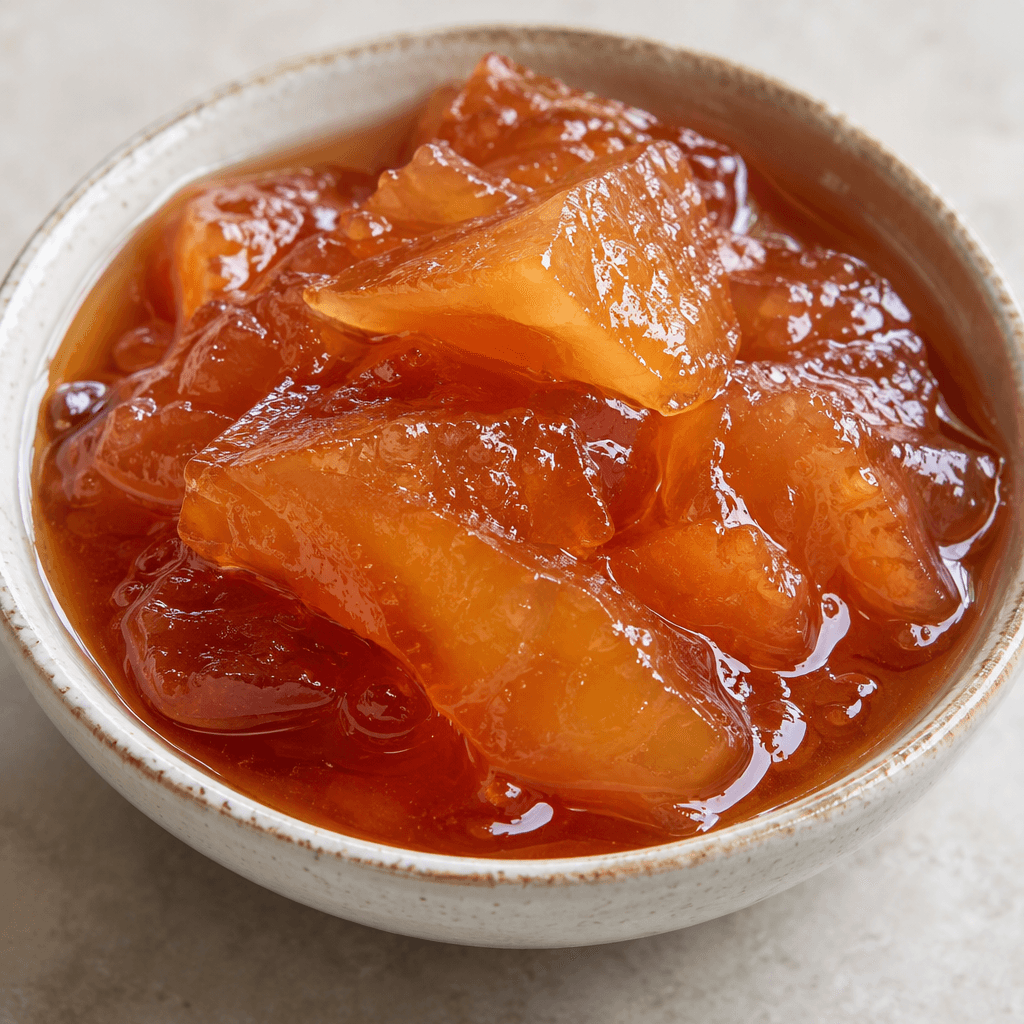
Quince Jam Calories
Sweet, quince-flavored breakfast jam
In season: Autumn · Winter
CALORIES
GI
POTASSIUM
FIBER
Quick answer
1 tablespoon (medium) of Quince Jam (20 g) has 49 calories. That works out to 245 calories per 100 g. It contains 12.4 g of carbs, 0.1 g of protein, 0 g of fat and 0.2 g of fiber. Its glycemic index is 65 (high), so it raises blood sugar quickly.
What is Quince Jam?
Quince Jam is a fruit preserve made by cooking quince until soft, then mashing or puréeing it with sugar until thick. Quince has a fragrant, gently tart character that becomes mellow and richly fruity as it cooks; the finished spread may be smooth or retain a little texture. It is enjoyed in Turkey and in other regions where quince is grown.
Spread it on toast or warm bread at breakfast, serve it with tea, or use a spoonful in pastries and desserts. It is mostly carbohydrate, with very little protein or fat. Its sweetness can be quite concentrated, so a thin layer alongside plain yogurt or a less-sweet breakfast makes a balanced pairing.
Quince Jam Nutrition Facts
Selected: 100 g
245
KCAL / 100G
Carbs
62g
· 23% DV
Protein
0.3g
· 1% DV
Fat
0.1g
· 0% DV
Fiber
1.2g
· 4% DV
DV is the share of the daily value covered, on a 2,000 kcal reference diet.
Calories come from: Carbs 99% · Protein 0% · Fat 1%
Quince Jam Vitamins & Minerals
Vitamins
Vitamin C
3mg · 3% DV
B2
0.02mg · 2% DV
B1
0.01mg · 1% DV
B3
0.1mg · 1% DV
Minerals
Calcium
10mg · 1% DV
Magnesium
5mg · 1% DV
Phosphorus
7mg · 1% DV
Potassium ⭐
40mg · 1% DV
How Nutritious Is Quince Jam?
Nutrient density
Low
How many vitamins, minerals and how much fiber this food carries per calorie. A high score means a lot of nutrition for few calories.
Satiety score
Low
An EatBetter score computed from fiber, protein and calorie density. A high score means staying full longer on the same calories.
Both scores are calculated per 100 g and do not change with the selected portion. The satiety score is EatBetter's own calculation, not a clinical measure.
Quince Jam Glycemic Index
GLYCEMIC INDEX
GLYCEMIC LOAD
Accounts for portion size — a more realistic measure than GI alone.
How to Burn Off Quince Jam
To burn the 245 calories in 100 g:
🚶
Walking (5 km/h)
🏃
Running (8 km/h)
🚴
Cycling
🏊
Swimming
Times are calculated with the MET equation for a 70 kg adult. Actual burn varies with your weight, age and pace.
Is Quince Jam Processed?
NOVA 3
Processed
1. Unprocessed
2. Minimally Processed
3. Processed
4. Ultra-Processed
NOVA classifies foods into 4 groups by industrial processing. NOVA 1 (unprocessed) is the healthiest.
Does Quince Jam Contain Allergens?
No known major allergens
Which Diets Is Quince Jam Good For?
Vegan
✓ Suitable
Vegetarian
✓ Suitable
Gluten-Free
— Not suitable
Dairy-Free
— Not suitable
Mediterranean
✓ Suitable
Paleo
— Not suitable
Whole30
— Not suitable
DASH
— Not suitable
Keto
— Not suitable
Low FODMAP
— Not suitable
Quince Jam Fat Profile
SATURATED
0.01g
MONOUNSATURATED
0.01g
POLYUNSATURATED
0.01g
Compare Quince Jam
Foods Similar to Quince Jam
Frequently Asked Questions About Quince Jam
What does quince jam taste like?
Quince jam tastes fragrant and sweet, with a gentle tartness and a floral, apple-and-pear-like fruitiness. Its flavor becomes deeper and more caramel-like after cooking, while the texture can range from smooth and spreadable to thick and slightly firm.
How do you make quince jam?
Quince jam is made by cooking chopped quince until soft, then mashing or blending it and simmering it with sugar until thick. Keep the seeds separate in a small cloth bag if you use them; they contain pectin that can help the jam set.
What is the difference between quince jam and quince paste?
Quince jam is usually soft enough to spread, while quince paste is cooked much longer until it becomes dense and sliceable. Quince paste is often called membrillo and is traditionally served in slices, especially alongside cheese.
Why does quince jam turn red?
Quince jam can turn pink or deep red as the fruit cooks and its natural pigments change. Longer, gentle cooking often deepens the color; the seeds may also help the jam set. Redness alone is not a sign that the jam has spoiled.
What can you eat quince jam with?
Quince jam goes well with toast, porridge, yogurt, and baked goods. Its sweetness also pairs especially well with sharp or creamy cheeses, so you can serve it on a cheese board or spread a little into a grilled cheese sandwich.
Why is my quince jam not setting?
Quince jam may stay runny if it has not simmered long enough for excess water to evaporate or for the fruit’s pectin to work. Continue cooking it gently and test a small spoonful on a chilled plate; it will thicken further as it cools.
Do you peel quince when making quince jam?
You can peel quince for a smoother jam, but the peel contains pectin and contributes flavor. For a rustic version, cook the fruit with the peel and blend it thoroughly; for a very smooth finish, strain the cooked mixture before simmering it with sugar.
How should you store quince jam after opening?
Store opened quince jam in a tightly closed, clean jar in the refrigerator, and use a clean spoon each time. Its shelf life depends on how it was prepared and handled; discard it if you see mold or notice bubbling, an off smell, or an unusual appearance.
Can you use quince jam in baking?
Yes, quince jam works well as a filling or glaze in baking. Spread a thin layer between cake layers, fill thumbprint cookies, or brush it over a tart; warm it gently first if you want a looser glaze that spreads easily.
Can you make quince jam without sugar?
Yes, you can cook quince into a spread without adding sugar, but it will taste less sweet and may not keep as long as conventional quince jam. Refrigerate it and use it sooner; lemon juice can brighten the fruit’s flavor but does not replace sugar’s preserving effect.
Have another question about Quince Jam?
Ask the AI nutrition coach — calories, portions, alternatives and more, answered in seconds in the app.

Scan calories with your camera
Instant AI nutrition analysis

Nutrition data compiled from USDA FoodData Central and scientific sources.