

Ready & Packaged Foods
All →Vegetables & Legumes
All →Desserts & Confectionery
All →Meat & Protein
All →Grains & Bakery
All →Beverages
All →Milk & Dairy
All →

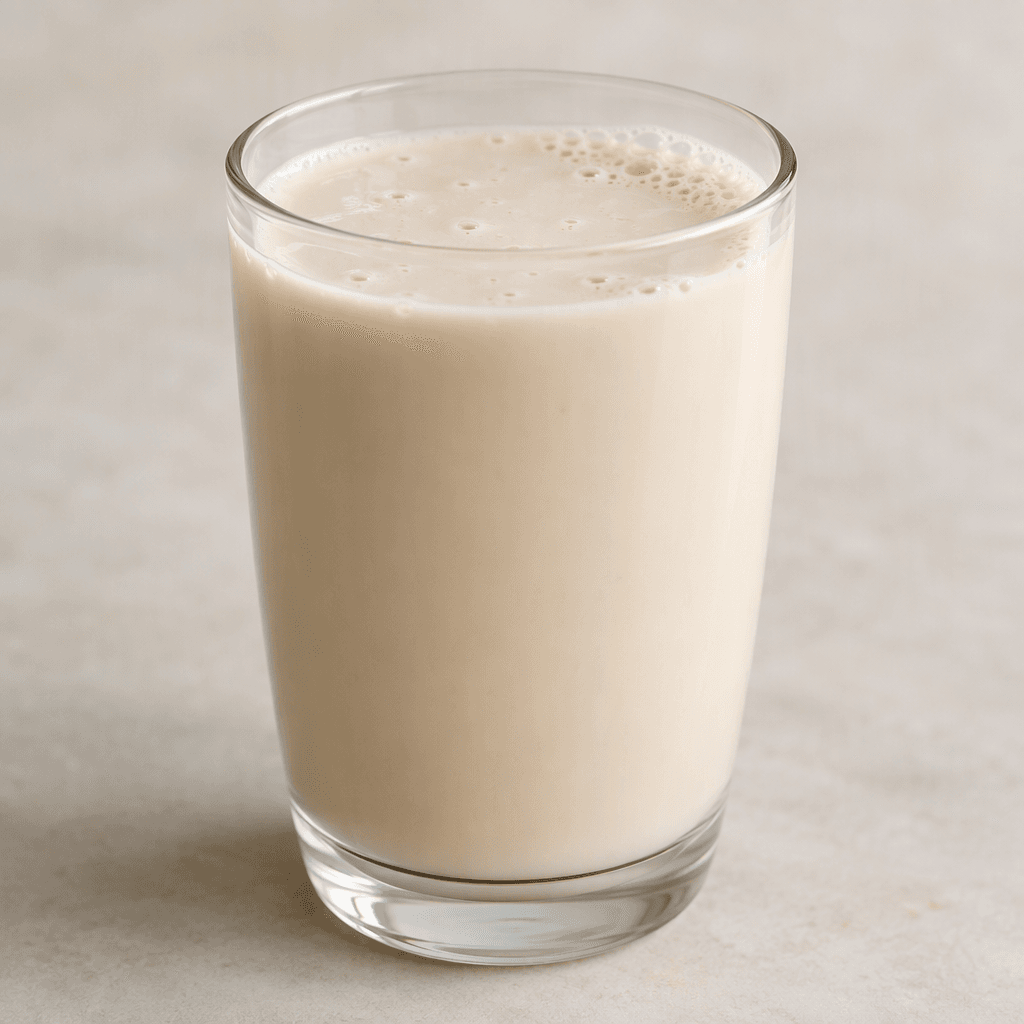
Oat Milk Calories
Plant-based milk alternative, low fat, contains fiber
In season: Spring · Summer · Autumn · Winter
CALORIES
GI
POTASSIUM
FIBER
Quick answer
1 cup (medium) of Oat Milk (240 g) has 103 calories. That works out to 43 calories per 100 g. It contains 16.8 g of carbs, 2.4 g of protein, 2.4 g of fat and 1.9 g of fiber. Its 288 mg of Calcium covers 29% of the Daily Value. Its glycemic index is 60 (medium), so it raises blood sugar at a moderate pace.
What is Oat Milk?
Oat Milk is a plant-based drink made by blending oats with water and straining the mixture. Its smooth, pourable texture and mild, cereal-like flavour make it an easy stand-in for dairy milk in many everyday uses, though brands vary in thickness and sweetness.
It is commonly poured over breakfast cereal, blended into smoothies or added to coffee; barista-style versions are designed to foam for café drinks. Oat Milk is low in fat and contains a little fibre, but it provides relatively little protein compared with dairy milk. For a lighter, less sweet option, check the label for added sugar.
Oat Milk Nutrition Facts
Selected: 100 g
43
KCAL / 100G
Carbs
7g
· 3% DV
Protein
1g
· 2% DV
Fat
1g
· 1% DV
Fiber
0.8g
· 3% DV
DV is the share of the daily value covered, on a 2,000 kcal reference diet.
Calories come from: Carbs 68% · Protein 10% · Fat 22%

Log this food in EatBetter
100,000+ people use it
- Get your daily calorie target
- Snap your meal, log it in seconds
- See every vitamin and mineral

📸 Scan the code to get the app free.

Oat Milk Vitamins & Minerals
Vitamins
B5
0.2mg · 4% DV
Biotin
0.7µg · 2% DV
B2
0.03mg · 2% DV
B1
0.02mg · 2% DV
Minerals
Calcium
120mg · 12% DV
Potassium ⭐
120mg · 4% DV
Manganese
0mg · 0% DV
Copper
0mg · 0% DV
How Nutritious Is Oat Milk?
Nutrient density
Medium
How many vitamins, minerals and how much fiber this food carries per calorie. A high score means a lot of nutrition for few calories.
Satiety score
Medium
An EatBetter score computed from fiber, protein and calorie density. A high score means staying full longer on the same calories.
Both scores are calculated per 100 g and do not change with the selected portion. The satiety score is EatBetter's own calculation, not a clinical measure.
Oat Milk Glycemic Index
GLYCEMIC INDEX
GLYCEMIC LOAD
Accounts for portion size — a more realistic measure than GI alone.
How to Burn Off Oat Milk
To burn the 43 calories in 100 g:
🚶
Walking (5 km/h)
🏃
Running (8 km/h)
🚴
Cycling
🏊
Swimming
Times are calculated with the MET equation for a 70 kg adult. Actual burn varies with your weight, age and pace.
Is Oat Milk Processed?
NOVA 3
Processed
1. Unprocessed
2. Minimally Processed
3. Processed
4. Ultra-Processed
NOVA classifies foods into 4 groups by industrial processing. NOVA 1 (unprocessed) is the healthiest.
Does Oat Milk Contain Allergens?
No known major allergens
Which Diets Is Oat Milk Good For?
Vegan
✓ Suitable
Vegetarian
✓ Suitable
Gluten-Free
✓ Suitable
Dairy-Free
— Not suitable
Mediterranean
✓ Suitable
Paleo
— Not suitable
Whole30
— Not suitable
DASH
— Not suitable
Keto
— Not suitable
Low FODMAP
— Not suitable
Oat Milk Fat Profile
SATURATED
0.2g
MONOUNSATURATED
0.3g
POLYUNSATURATED
0.5g
Omega 6:3 ratio 18:1
Above the ideal 4:1 (18:1).
Compare Oat Milk
Foods Similar to Oat Milk
Frequently Asked Questions About Oat Milk
What is oat milk made of?
Oat milk is made by blending oats with water and straining the mixture. Store-bought versions may also contain oil, salt, stabilizers, or added vitamins and minerals to adjust texture, taste, and nutrition.
Can you make oat milk at home?
Yes, you can make oat milk by briefly blending oats with cold water and straining the mixture. Blend only until combined; processing it for too long can make the drink slimy. Avoid pressing the pulp through the strainer.
Does oat milk work in coffee?
Yes, oat milk works well in coffee, and its mild sweetness pairs naturally with espresso. Add it gradually to hot coffee because some products can separate. Barista-style oat milk is designed to handle heat and usually blends more smoothly.
Does oat milk froth for lattes?
Yes, oat milk can froth, but the foam’s texture and stability vary by product. Barista-style versions are generally formulated to steam and foam more reliably. Heating oat milk too much can make the foam collapse.
What is the difference between oat milk and cow’s milk?
Oat milk is made from plants, while cow’s milk is an animal product, so their tastes and nutrient profiles differ. Oat milk typically provides less protein than cow’s milk and should not be treated as an equivalent protein source.
Is oat milk sweetened?
Some oat milk is sweetened, while other products have no added sugar. Even unsweetened versions can taste sweet because processing converts some oat starch into sugars, so check the product’s ingredients if you want to avoid added sweeteners.
How long does oat milk last after opening?
Keep opened oat milk refrigerated and follow the storage instructions on its carton. Shelf-stable oat milk can be kept at room temperature while unopened, but it needs refrigeration after opening. Discard it if its smell, texture, or taste changes.
Can you cook with oat milk?
Yes, oat milk can replace dairy milk in many recipes, including pancakes, soups, and baked goods. Its mild sweetness may affect savory dishes, and its thinner texture can change the result, so start with a recipe that suits plant milk.
Can oat milk be frozen?
Yes, oat milk can be frozen, but its texture may become grainy or separate after thawing. Freeze it in a sealed container with room for expansion, thaw it in the refrigerator, and shake or blend it before using in cooking or smoothies.
Is oat milk safe for babies?
No, oat milk should not replace breast milk or infant formula, which are formulated to meet a baby’s nutritional needs. For older children, whether it fits their diet depends on their overall nutrition; ask your child’s clinician for individual guidance.
Have another question about Oat Milk?
Ask the AI nutrition coach — calories, portions, alternatives and more, answered in seconds in the app.

Scan calories with your camera
Instant AI nutrition analysis

Nutrition data compiled from USDA FoodData Central and scientific sources.