

Ready & Packaged Foods
All →Vegetables & Legumes
All →Desserts & Confectionery
All →Meat & Protein
All →Grains & Bakery
All →Beverages
All →Milk & Dairy
All →

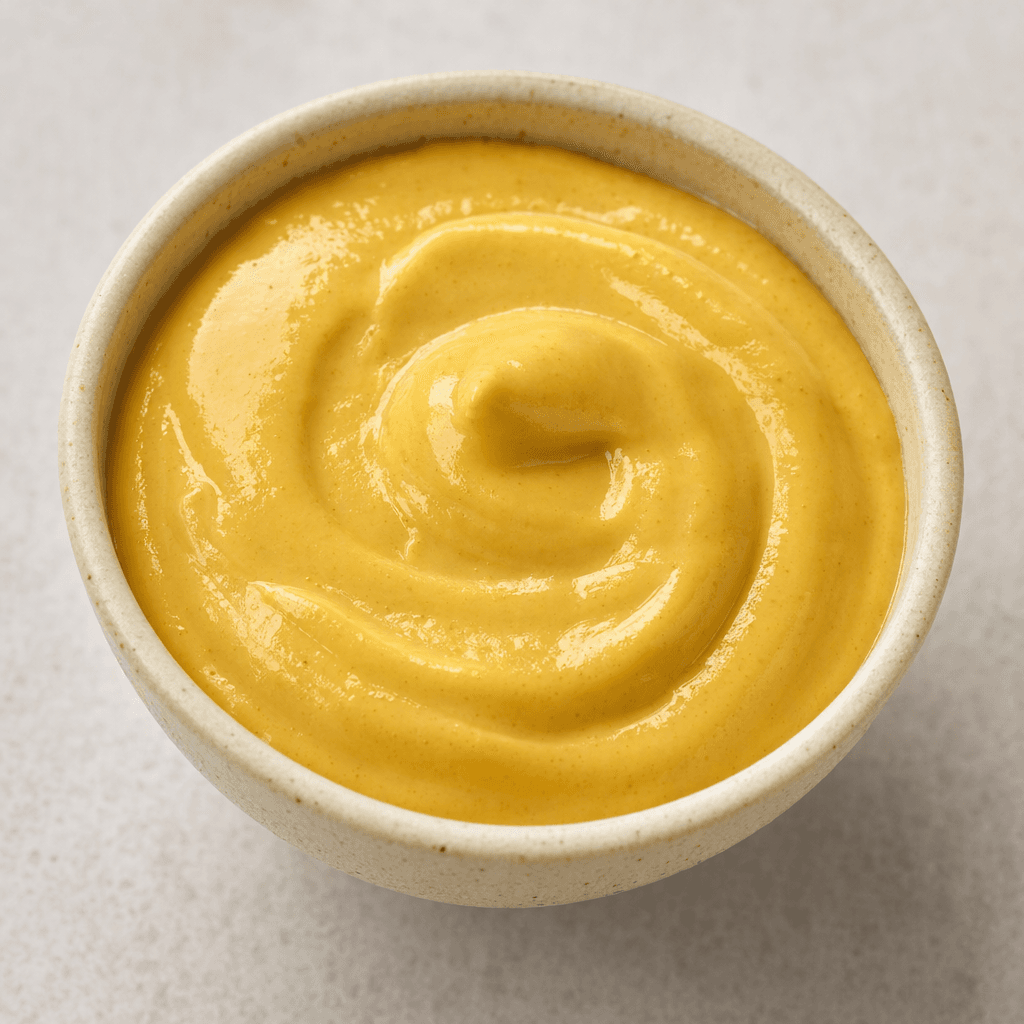
Mustard (Calve) Calories
Low calorie, spicy, vegan, gluten-free
In season: Spring · Summer · Autumn · Winter
CALORIES · 100 G
GI
POTASSIUM · 100 G
FIBER · 100 G
Quick answer
1 tablespoon (medium) of Mustard (Calve) (15 g) has 13 calories. That works out to 85 calories per 100 g. It contains 1.1 g of carbs, 0.7 g of protein, 0.7 g of fat and 0.5 g of fiber. Its glycemic index is 35 (low), so it raises blood sugar slowly.
Mustard (Calve) Nutrition Facts
Selected: 1 tablespoon (medium) · 15 g
13
KCAL / 15G
Carbs
1.1g
· 0% DV
Protein
0.7g
· 1% DV
Fat
0.7g
· 1% DV
Fiber
0.5g
· 2% DV
DV is the share of the daily value covered, on a 2,000 kcal reference diet.
Calories come from: Carbs 33% · Protein 21% · Fat 46%
Mustard (Calve) nutrition facts table · 1 tablespoon (medium) (15 g)
| Nutrient | Amount | % DV |
|---|---|---|
| Calories | 13 kcal | |
| Total fat | 0.7 g | 1% |
| Saturated fat | 0.05 g | 0% |
| Trans fat | 0 g | |
| Sodium | 195 mg | 8% |
| Total carbohydrate | 1.1 g | 0% |
| Fiber | 0.5 g | 2% |
| Protein | 0.7 g | 1% |
Calories: Calories measure energy. Average daily need is 2,000 kcal. Excess calories are stored as fat, too few cause weight loss.
Carbs: Your body's primary energy source. The brain runs exclusively on carbs. Daily need: 275g.
Protein: Essential for muscle repair and cell growth. Daily need: 50g. Keeps you full and boosts metabolism.
Fat: Needed for hormone production and vitamin absorption. Daily need: 78g. Limit saturated fats, choose unsaturated.
Fiber: Critical for digestive health and satiety. Daily need: 28g. Stabilizes blood sugar, lowers cholesterol.

Log this food in EatBetter
100,000+ people use it
- Get your daily calorie target
- Snap your meal, log it in seconds
- See every vitamin and mineral

📸 Scan the code to get the app free.

How Many Calories in 1 Tablespoon of Mustard (Calve)?
| Serving | Amount | Calories |
|---|---|---|
| 1 tablespoon (medium) | 15 g | 13 kcal |
| 1 teaspoon (small) | 5 g | 4 kcal |
| 1 pack (mini) | 10 g | 9 kcal |
| 1 serving (medium) | 20 g | 17 kcal |
| 2 tablespoon (large) | 30 g | 26 kcal |
| 100 g | 100 g | 85 kcal |
| 1 can (large) | 100 g | 85 kcal |
| 1 bottle (jumbo) | 250 g | 213 kcal |
Calculated from 85 calories per 100 g.
Frequently Asked Questions About Mustard (Calve)
What is Calve mustard used for?
Calve mustard is used to add a tangy kick to sandwiches, burgers, hot dogs, and meat dishes. Stir a little into a dressing or sauce, or serve it straight from the bottle as a condiment.
Is Calve mustard spicy?
Calve mustard has a sharp, tangy mustard flavor, but it is generally not as fiery as chilli-based sauces. Its strength can vary by product, so start with a small amount if you prefer milder condiments.
What is Calve mustard made of?
Mustard seed is the defining ingredient; mustard condiments commonly also contain vinegar, water, salt, and seasonings. Calve’s exact recipe can vary by product and market, so use the ingredient list on your bottle for the specific formula.
Does Calve mustard need to be refrigerated after opening?
Yes, refrigerate Calve mustard after opening and keep the cap tightly closed. Use a clean utensil or squeeze it without letting the nozzle touch food to help maintain its quality.
Can you cook with Calve mustard?
Yes, Calve mustard can be added to marinades, pan sauces, and baked dishes. Prolonged cooking can soften its sharp flavor, so stir it in near the end if you want the mustard taste to stand out.
Can Calve mustard go bad?
Yes, Calve mustard can lose quality and eventually spoil. Discard it if you see mold, notice an unusual smell or color, or find its taste has changed markedly; follow the bottle’s storage and date instructions.
How is Calve mustard different from Dijon mustard?
Calve mustard and Dijon mustard are not necessarily the same style. Dijon is a French mustard with a distinctive sharp flavor, while Calve sells its own mustard products; check the product name and description to identify the variety.
What can I mix with Calve mustard to make a sauce?
Mix Calve mustard with mayonnaise for a sandwich spread, or with olive oil and vinegar for a quick dressing. Yogurt also makes a tangy dip; add the mustard gradually and taste as you go.
Can Calve mustard replace Dijon mustard in a recipe?
Yes, Calve mustard can replace Dijon in many dressings, sandwiches, and marinades, but the flavor may differ. Start with the same amount called for, then adjust to taste because the products may vary in sharpness and texture.
Does Calve mustard help with weight loss?
No, Calve mustard does not cause weight loss on its own. A small amount can add flavor in place of a richer sauce, but weight change comes from eating patterns over time, not from one condiment.
Mustard (Calve) Vitamins & Minerals
Vitamins
Biotin
0.3µg · 1% DV
B1
0.01mg · 1% DV
B6
0.01mg · 1% DV
B3
0.06mg · 0% DV
Minerals
Sodium
195mg · 8% DV
Manganese
0.05mg · 2% DV
Phosphorus
11mg · 2% DV
Magnesium
6mg · 1% DV
Potassium ⭐
17mg · 1% DV
Mustard (Calve) Glycemic Index
GLYCEMIC INDEX
GLYCEMIC LOAD
Accounts for portion size — a more realistic measure than GI alone.
How to Burn Off Mustard (Calve)
To burn the 13 calories in 1 tablespoon (medium) (15 g):
🚶
Walking (5 km/h)
🏃
Running (8 km/h)
🚴
Cycling
🏊
Swimming
Times are calculated with the MET equation for a 70 kg adult. Actual burn varies with your weight, age and pace.
What is Mustard (Calve)?
Calve mustard is a ready-to-use condiment made from ground mustard seeds, usually sharpened with vinegar and seasonings. The seed variety and grind affect its colour and heat, but this smooth, punchy style is meant to be spooned straight onto food or stirred into a sauce.
Its tangy, peppery bite works well in sandwiches, burgers and hot dogs, and it is also a familiar addition to dressings and marinades. In Turkey, you might serve it with toast or eggs at breakfast, or use a little in a sandwich or alongside grilled meat. It is a relatively low-calorie, plant-based way to add flavour; 100 g provides 85 kcal. For a milder, lighter dip, mix a small amount with yoghurt or lemon juice.
How Nutritious Is Mustard (Calve)?
Nutrient density
Medium
How many vitamins, minerals and how much fiber this food carries per calorie. A high score means a lot of nutrition for few calories.
Satiety score
Medium
An EatBetter score computed from fiber, protein and calorie density. A high score means staying full longer on the same calories.
Both scores are calculated per 100 g and do not change with the selected portion. The satiety score is EatBetter's own calculation, not a clinical measure.
Is Mustard (Calve) Processed?
NOVA 3
Processed
1. Unprocessed
2. Minimally Processed
3. Processed
4. Ultra-Processed
NOVA classifies foods into 4 groups by industrial processing. NOVA 1 (unprocessed) is the healthiest.
Does Mustard (Calve) Contain Allergens?
No known major allergens
Which Diets Is Mustard (Calve) Good For?
Vegan
✓ Suitable
Vegetarian
✓ Suitable
Gluten-Free
✓ Suitable
Dairy-Free
— Not suitable
Mediterranean
✓ Suitable
Paleo
— Not suitable
Whole30
— Not suitable
DASH
— Not suitable
Keto
✓ Suitable
Low FODMAP
— Not suitable
Mustard (Calve) Fat Profile
SATURATED
0.05g
MONOUNSATURATED
0.32g
POLYUNSATURATED
0.18g
Omega 6:3 ratio 3.5:1
Below the ideal 4:1 — a good omega balance.
Compare Mustard (Calve)
Foods Similar to Mustard (Calve)
🌱
Whole Grain Mustard
66 kcal
🥄
Dijon Mustard
135 kcal
🌱
Yellow Mustard
66 kcal
🌱
Dijon mustard (unsweetened)
66 kcal
🌶️🥄
Spicy Mustard
85 kcal
🌭
Kühne Mustard
70 kcal
🌭
Sweet mustard
170 kcal
🌭
Tat Mustard
70 kcal
🌾🥣
Wholegrain Dijon Mustard
135 kcal
🌭
Tat Mustard (No Preservatives)
85 kcal
🌶️
Hot Mustard
90 kcal
🟡
Pınar Wholegrain Mustard
151 kcal
Have another question about Mustard (Calve)?
Ask the AI nutrition coach — calories, portions, alternatives and more, answered in seconds in the app.

Scan calories with your camera
Instant AI nutrition analysis

Nutrition data compiled from USDA FoodData Central and scientific sources.