

Ready & Packaged Foods
All →Vegetables & Legumes
All →Desserts & Confectionery
All →Meat & Protein
All →Grains & Bakery
All →Beverages
All →Milk & Dairy
All →

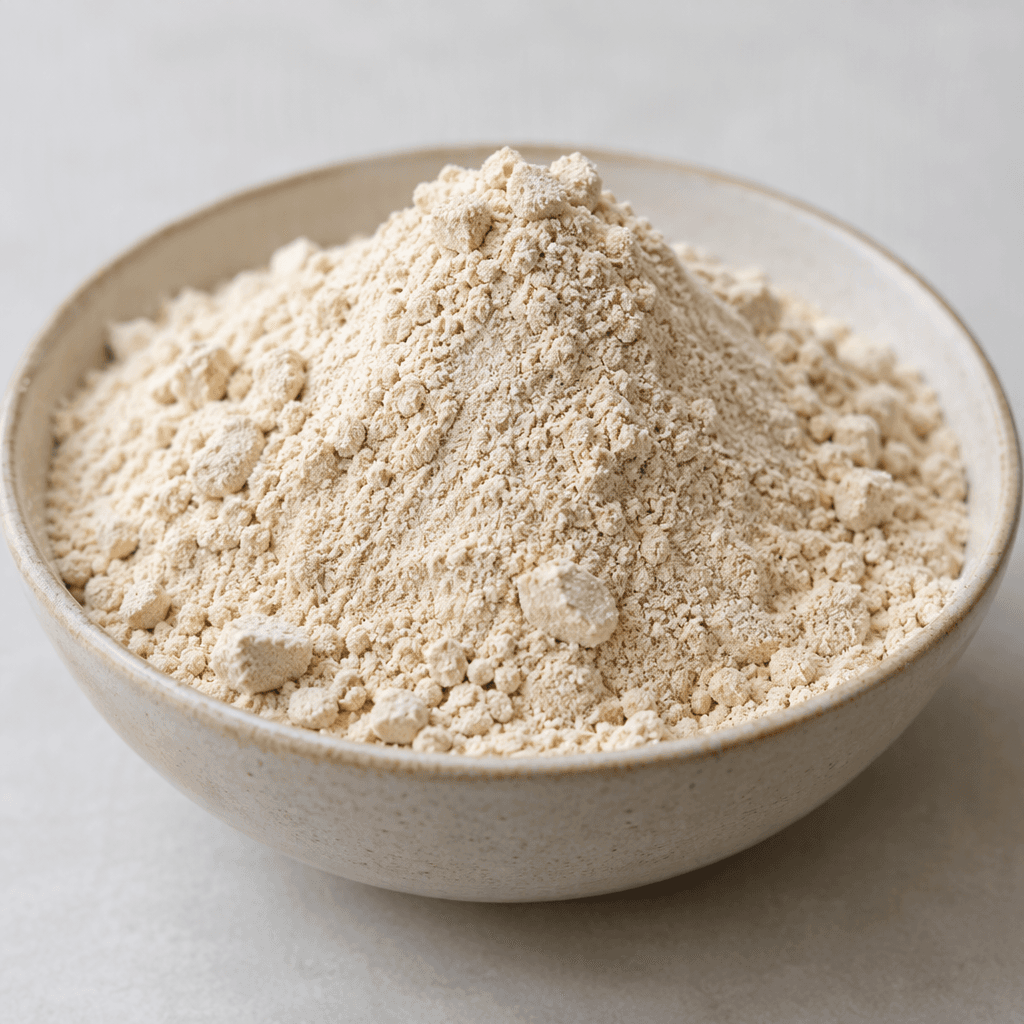
Meal powder Calories
Convenient, balanced nutrition, contains protein, fiber, vitamins and minerals
CALORIES
GI
POTASSIUM
FIBER
Quick answer
1 serving (medium) of Meal powder (50 g) has 200 calories. That works out to 400 calories per 100 g. It contains 20 g of carbs, 10 g of protein, 6.5 g of fat and 3.5 g of fiber. Its 25 µg of Biotin covers 83% of the Daily Value. Its glycemic index is 35 (low), so it raises blood sugar slowly.
What is Meal powder?
Meal powder is a dry mix designed to be combined with liquid for a quick, portionable meal. Formulas vary by product, but this one is described as providing protein, fibre, vitamins and minerals. Its fine, flour-like texture can turn into a smooth drink when mixed, though a little clumping may occur if it is not stirred well.
People use meal powder when breakfast needs to be quick, while travelling, or between work and other commitments. Prepare it according to the pack directions, using water or milk, and add fruit if you want a more substantial snack. It offers a convenient source of protein and fibre, but works best as one practical option among varied meals rather than as an automatic substitute for every meal.
Meal powder Nutrition Facts
Selected: 100 g
400
KCAL / 100G
Carbs
40g
· 15% DV
Protein
20g
· 40% DV
Fat
13g
· 17% DV
Fiber
7g
· 25% DV
DV is the share of the daily value covered, on a 2,000 kcal reference diet.
Calories come from: Carbs 45% · Protein 22% · Fat 33%
Meal powder Vitamins & Minerals
Vitamins
Biotin
50µg · 167% DV
B5
6mg · 120% DV
B2
1.4mg · 108% DV
B12
2.5µg · 104% DV
Minerals
Copper
1mg · 111% DV
Phosphorus
400mg · 57% DV
Zinc
6mg · 55% DV
Selenium
30µg · 55% DV
How Nutritious Is Meal powder?
Nutrient density
High
How many vitamins, minerals and how much fiber this food carries per calorie. A high score means a lot of nutrition for few calories.
Satiety score
High
An EatBetter score computed from fiber, protein and calorie density. A high score means staying full longer on the same calories.
Both scores are calculated per 100 g and do not change with the selected portion. The satiety score is EatBetter's own calculation, not a clinical measure.
Meal powder Glycemic Index
GLYCEMIC INDEX
GLYCEMIC LOAD
Accounts for portion size — a more realistic measure than GI alone.
How to Burn Off Meal powder
To burn the 400 calories in 100 g:
🚶
Walking (5 km/h)
🏃
Running (8 km/h)
🚴
Cycling
🏊
Swimming
Times are calculated with the MET equation for a 70 kg adult. Actual burn varies with your weight, age and pace.
Is Meal powder Processed?
NOVA 3
Processed
1. Unprocessed
2. Minimally Processed
3. Processed
4. Ultra-Processed
NOVA classifies foods into 4 groups by industrial processing. NOVA 1 (unprocessed) is the healthiest.
Does Meal powder Contain Allergens?
Contains these allergens:
Which Diets Is Meal powder Good For?
Vegan
— Not suitable
Vegetarian
✓ Suitable
Gluten-Free
— Not suitable
Dairy-Free
— Not suitable
Mediterranean
✓ Suitable
Paleo
— Not suitable
Whole30
— Not suitable
DASH
— Not suitable
Keto
— Not suitable
Low FODMAP
— Not suitable
Meal powder Fat Profile
SATURATED
2.5g
MONOUNSATURATED
5.5g
POLYUNSATURATED
4.5g
Omega 6:3 ratio 2.8:1
Below the ideal 4:1 — a good omega balance.
Compare Meal powder
Foods Similar to Meal powder
Frequently Asked Questions About Meal powder
What is meal powder used for?
Meal powder is mixed with a liquid to make a quick drink, often as a convenient meal when preparing food is difficult. Some products are designed as meal replacements, while others are not nutritionally complete enough to serve that purpose.
Can meal powder replace a meal?
Meal powder can replace a meal if it is specifically formulated and labelled as a meal replacement. A protein supplement or other powder may not provide the range of nutrients needed for that use, so check the product’s directions.
Does meal powder help with weight loss?
Meal powder does not cause weight loss by itself. Replacing a meal with it may help if it reduces your overall food intake, but adding it on top of your usual meals can increase rather than reduce your intake.
What is the difference between meal powder and protein powder?
Meal powder is intended to provide more than protein, often including carbohydrates, fats, fibre, vitamins and minerals. Protein powder mainly adds protein and generally should not be treated as a balanced meal replacement.
Is meal powder better mixed with water or milk?
Either can work if the product directions allow it. Water keeps the preparation simple, while milk changes its flavour and adds nutrients; choose a suitable alternative if you avoid dairy or have a milk allergy.
How do you make meal powder without lumps?
Put the liquid in your shaker first, add the meal powder gradually, then shake well. A blender also works; if small lumps remain, let the mixture sit briefly and shake it again before drinking.
Can you make meal powder at home?
Yes, you can blend ingredients such as oats, seeds, nuts and powdered milk to make a convenient homemade mix. It may not have the same nutrient balance as a product designed to replace a complete meal.
How many times a day can you use meal powder?
The recommended frequency depends on the product and your eating pattern; follow its serving directions rather than assuming every powder is suitable for repeated meal replacement. Ask a doctor or dietitian before routinely replacing several meals, especially if you have a medical condition.
Can you heat meal powder or mix it into hot drinks?
Some meal powders can be mixed into warm foods, but boiling liquid may affect texture and cause clumping. Follow the product directions, add the powder gradually, and avoid heating a prepared drink unless the manufacturer says it is suitable.
How long does prepared meal powder last in the fridge?
Drink prepared meal powder promptly when possible, especially if you mixed it with milk or another perishable liquid. Refrigerate leftovers in a sealed container and follow the product’s storage instructions; do not leave a prepared drink sitting out for long.
Have another question about Meal powder?
Ask the AI nutrition coach — calories, portions, alternatives and more, answered in seconds in the app.

Scan calories with your camera
Instant AI nutrition analysis

Nutrition data compiled from USDA FoodData Central and scientific sources.