

Ready & Packaged Foods
All →Vegetables & Legumes
All →Desserts & Confectionery
All →Meat & Protein
All →Grains & Bakery
All →Beverages
All →Milk & Dairy
All →

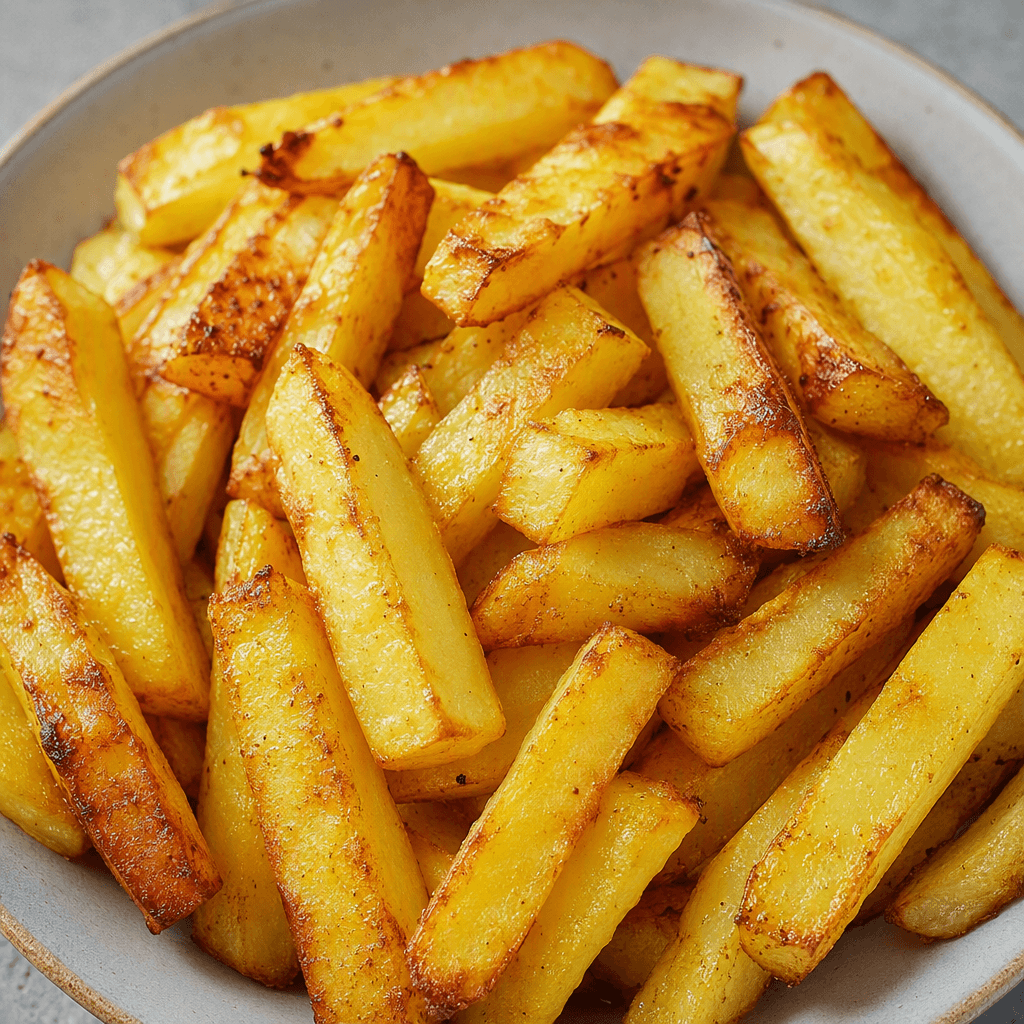
French Fries Calories
Deep-fried potatoes, high in calories and fat, popular snack
In season: Spring · Summer · Autumn · Winter
CALORIES
GI
POTASSIUM
FIBER
Quick answer
100 g of French Fries has 312 calories. It contains 41.4 g of carbs, 3.4 g of protein, 15 g of fat and 3.8 g of fiber. Its 579 mg of Potassium covers 17% of the Daily Value. Its glycemic index is 75 (high), so it raises blood sugar quickly.
What is French Fries?
French fries are potato batons fried until crisp outside and tender within. They are closely associated with Belgian and French food traditions, although their precise origins are debated. Today they are enjoyed around the world, from takeaway counters to home kitchens.
They are commonly served hot as a side with burgers, fish, or other casual meals, and often dipped in ketchup or mayonnaise. In Turkey, patates kızartması is also a familiar choice alongside köfte or as a snack to share. French fries provide mostly carbohydrates and fat, with relatively little protein; a 100 g portion has 15 g of fat. For a lighter meal, bake the potatoes with a little oil and serve them with salad or a protein-rich main.
French Fries Nutrition Facts
Selected: 100 g
312
KCAL / 100G
Carbs
41.4g
· 15% DV
Protein
3.4g
· 7% DV
Fat
15g
· 19% DV
Fiber
3.8g
· 14% DV
DV is the share of the daily value covered, on a 2,000 kcal reference diet.
Calories come from: Carbs 53% · Protein 4% · Fat 43%
French Fries Vitamins & Minerals
Vitamins
B6
0.25mg · 15% DV
Vitamin E
1.7mg · 11% DV
B3
1.6mg · 10% DV
B1
0.09mg · 8% DV
Minerals
Potassium ⭐
579mg · 17% DV
Sodium
210mg · 9% DV
Phosphorus
57mg · 8% DV
Iron
1mg · 6% DV
How Nutritious Is French Fries?
Nutrient density
Low
How many vitamins, minerals and how much fiber this food carries per calorie. A high score means a lot of nutrition for few calories.
Satiety score
Low
An EatBetter score computed from fiber, protein and calorie density. A high score means staying full longer on the same calories.
Both scores are calculated per 100 g and do not change with the selected portion. The satiety score is EatBetter's own calculation, not a clinical measure.
French Fries Glycemic Index
GLYCEMIC INDEX
GLYCEMIC LOAD
Accounts for portion size — a more realistic measure than GI alone.
How to Burn Off French Fries
To burn the 312 calories in 100 g:
🚶
Walking (5 km/h)
🏃
Running (8 km/h)
🚴
Cycling
🏊
Swimming
Times are calculated with the MET equation for a 70 kg adult. Actual burn varies with your weight, age and pace.
Is French Fries Processed?
NOVA 3
Processed
1. Unprocessed
2. Minimally Processed
3. Processed
4. Ultra-Processed
NOVA classifies foods into 4 groups by industrial processing. NOVA 1 (unprocessed) is the healthiest.
Does French Fries Contain Allergens?
No known major allergens
Which Diets Is French Fries Good For?
Vegan
✓ Suitable
Vegetarian
✓ Suitable
Gluten-Free
— Not suitable
Dairy-Free
— Not suitable
Mediterranean
— Not suitable
Paleo
— Not suitable
Whole30
— Not suitable
DASH
— Not suitable
Keto
— Not suitable
Low FODMAP
— Not suitable
French Fries Fat Profile
SATURATED
2.3g
MONOUNSATURATED
6g
POLYUNSATURATED
3g
Omega 6:3 ratio 67.5:1
Above the ideal 4:1 (67.5:1).
Compare French Fries
Foods Similar to French Fries
Frequently Asked Questions About French Fries
Why are French fries called French fries?
The name does not prove that French fries originated in France. Their origin is disputed, with both Belgium and France associated with the dish; one explanation is that “French” refers to the French-style method of cutting food into strips.
What potatoes are best for French fries?
Starchy potatoes, such as russets, are usually best for French fries because they develop a crisp outside and fluffy center. Waxy potatoes contain more moisture and tend to hold their shape, but they may not turn out as crisp.
How do you make French fries crispy at home?
For crisp French fries, cut the potatoes evenly, rinse off excess surface starch, and dry them thoroughly before cooking. Fry in uncrowded batches so the oil stays hot, then season the fries soon after they come out.
Why do French fries get soggy?
French fries often turn soggy when they are crowded during cooking, cooked in oil that is not hot enough, or left in a pile after frying. Spread them out on a rack so steam can escape instead of softening the crust.
Should you soak potatoes before making French fries?
Yes, soaking cut potatoes in cold water can remove some surface starch and help French fries brown more evenly. Drain and dry them very well before cooking; water on the potatoes can cause hot oil to splatter.
Are French fries actually from Belgium?
Belgium is strongly associated with French fries, but their exact origin is debated and France also claims a history of fried potatoes. There is no universally accepted proof that settles which country first made them.
What is the difference between French fries and British chips?
French fries are usually thinner and crispier, while British chips are typically thicker, with a soft, fluffy middle. The terms also vary by country: in the UK, “chips” usually means the potato side dish, not thin packaged crisps.
Can you make French fries in an air fryer?
Yes, an air fryer can cook French fries with much less added oil than deep-frying. Dry the cut potatoes, lightly coat them with oil, and leave space in the basket; shake it during cooking so the fries brown more evenly.
What sauces go well with French fries?
Ketchup is a classic partner for French fries, while mayonnaise is especially popular in Belgium and the Netherlands. You can also serve them with aioli, gravy, or vinegar; the best choice depends on the style of fries and the meal.
Can you freeze homemade French fries?
Yes, homemade French fries freeze best after the cut potatoes have been briefly blanched and dried. Freeze them in a single layer before transferring them to a container, then cook from frozen so they do not become waterlogged as they thaw.
Have another question about French Fries?
Ask the AI nutrition coach — calories, portions, alternatives and more, answered in seconds in the app.

Scan calories with your camera
Instant AI nutrition analysis

Nutrition data compiled from USDA FoodData Central and scientific sources.