

Ready & Packaged Foods
All →Vegetables & Legumes
All →Desserts & Confectionery
All →Meat & Protein
All →Grains & Bakery
All →Beverages
All →Milk & Dairy
All →

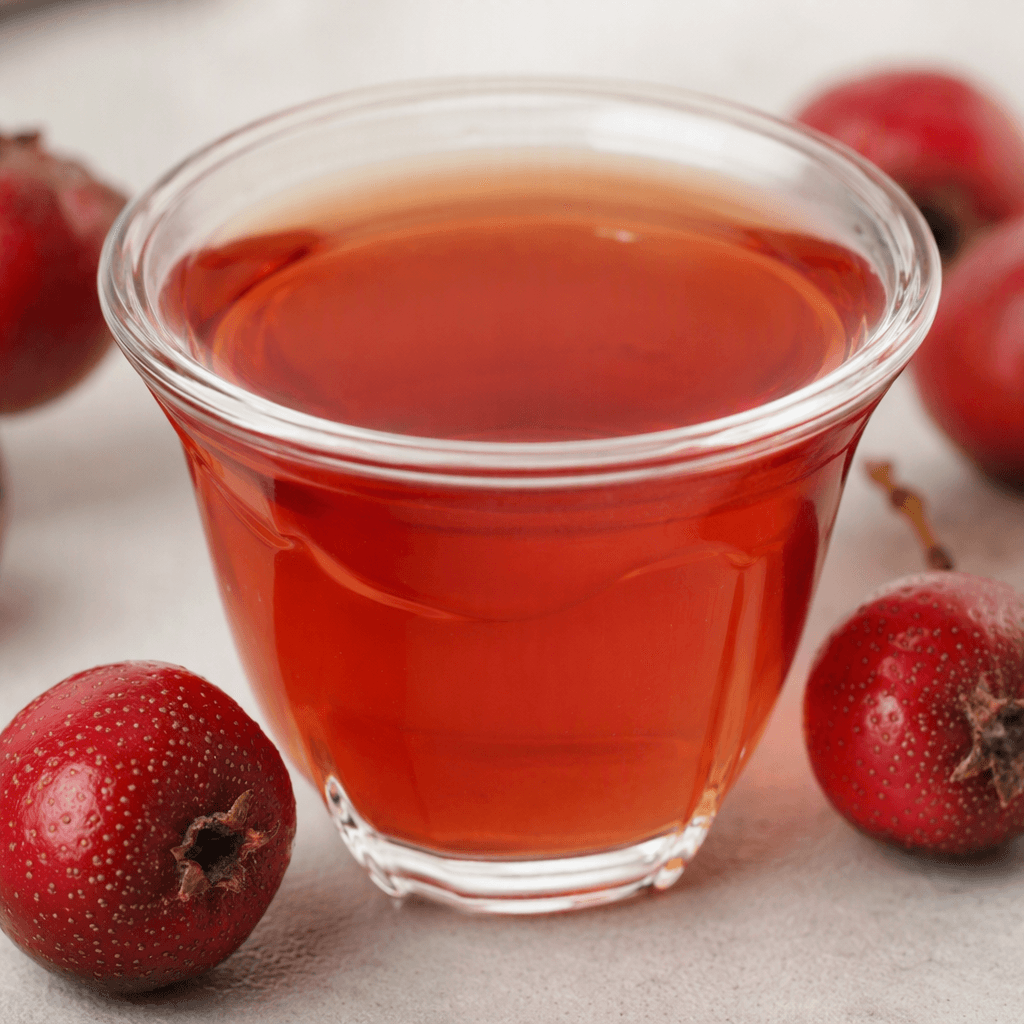
Hawthorn Vinegar Calories
Naturally fermented, low calorie, antioxidant source
In season: Autumn · Winter
CALORIES
GI
POTASSIUM
FIBER
Quick answer
1 tablespoon (medium) of Hawthorn Vinegar (15 g) has 3 calories. That works out to 18 calories per 100 g. It contains 0.1 g of carbs, 0 g of protein, 0 g of fat and 0 g of fiber. Its glycemic index is 5 (low), so it raises blood sugar slowly.
What is Hawthorn Vinegar?
Hawthorn Vinegar is made by fermenting hawthorn fruit into a clear, thin vinegar, often ranging in colour from ruby red to amber. Its sharp acidity is balanced by a faint fruity, slightly tart flavour.
It can be used in salad dressings, marinades and pickling, or diluted with water; in Turkey, where hawthorn grows, it is also made at home. Elsewhere, treat it like other fruit vinegars rather than a sweet drink. It is mostly water and contributes little energy—18 calories per 100 g. For an easy dressing, whisk a small splash with olive oil, or dilute it well if you prefer to drink it.
Hawthorn Vinegar Nutrition Facts
Selected: 100 g
18
KCAL / 100G
Carbs
0.6g
· 0% DV
Protein
0.1g
· 0% DV
Fat
0g
· 0% DV
Fiber
0.1g
· 0% DV
DV is the share of the daily value covered, on a 2,000 kcal reference diet.
Calories come from: Carbs 86% · Protein 14% · Fat 0%
Hawthorn Vinegar Vitamins & Minerals
Vitamins
Vitamin C
1.5mg · 2% DV
B1
0.01mg · 1% DV
B2
0.01mg · 1% DV
B6
0.01mg · 1% DV
Minerals
Calcium
8mg · 1% DV
Iron
0mg · 0% DV
Magnesium
2mg · 0% DV
Zinc
0mg · 0% DV
How Nutritious Is Hawthorn Vinegar?
Nutrient density
Low
How many vitamins, minerals and how much fiber this food carries per calorie. A high score means a lot of nutrition for few calories.
Satiety score
Medium
An EatBetter score computed from fiber, protein and calorie density. A high score means staying full longer on the same calories.
Both scores are calculated per 100 g and do not change with the selected portion. The satiety score is EatBetter's own calculation, not a clinical measure.
Hawthorn Vinegar Glycemic Index
GLYCEMIC INDEX
GLYCEMIC LOAD
Accounts for portion size — a more realistic measure than GI alone.
How to Burn Off Hawthorn Vinegar
To burn the 18 calories in 100 g:
🚶
Walking (5 km/h)
🏃
Running (8 km/h)
🚴
Cycling
🏊
Swimming
Times are calculated with the MET equation for a 70 kg adult. Actual burn varies with your weight, age and pace.
Is Hawthorn Vinegar Processed?
NOVA 3
Processed
1. Unprocessed
2. Minimally Processed
3. Processed
4. Ultra-Processed
NOVA classifies foods into 4 groups by industrial processing. NOVA 1 (unprocessed) is the healthiest.
Does Hawthorn Vinegar Contain Allergens?
No known major allergens
Which Diets Is Hawthorn Vinegar Good For?
Vegan
✓ Suitable
Vegetarian
✓ Suitable
Gluten-Free
✓ Suitable
Dairy-Free
— Not suitable
Mediterranean
✓ Suitable
Paleo
✓ Suitable
Whole30
— Not suitable
DASH
— Not suitable
Keto
— Not suitable
Low FODMAP
— Not suitable
Hawthorn Vinegar Fat Profile
SATURATED
0g
MONOUNSATURATED
0g
POLYUNSATURATED
0g
Compare Hawthorn Vinegar
Foods Similar to Hawthorn Vinegar
Frequently Asked Questions About Hawthorn Vinegar
What is hawthorn vinegar used for?
Hawthorn vinegar is used to add a tart, fruity note to salad dressings, marinades, and other dishes. Some people dilute it in water as a drink, but it is not a proven treatment for heart or blood-pressure conditions.
How do you drink hawthorn vinegar?
If you choose to drink hawthorn vinegar, dilute it in a glass of water rather than drinking it straight. Its acidity can irritate the throat or stomach, and drinking it with a meal may be more comfortable.
Does hawthorn vinegar help you lose weight?
Hawthorn vinegar does not cause weight loss on its own. Adding it to water or meals has no established fat-burning effect; lasting weight change comes from broader eating and activity habits, not a particular vinegar.
How is hawthorn vinegar made?
Hawthorn vinegar is made by fermenting hawthorn berries in water. For a homemade batch, use clean fruit and a clean jar, cover the opening with a breathable cloth, and discard the mixture if mold develops during fermentation.
Does hawthorn vinegar lower blood pressure?
Hawthorn vinegar has not been shown reliably to lower blood pressure, so it should not replace prescribed treatment. If you take blood-pressure or heart medication, ask your healthcare professional before using hawthorn products regularly.
What does hawthorn vinegar taste like?
Hawthorn vinegar tastes tart with a mild fruity character. Its flavor works well in vinaigrettes and vegetable marinades; mix it with oil or dilute it in a recipe if you find the acidity too sharp.
Can hawthorn vinegar be used instead of apple cider vinegar?
Hawthorn vinegar can replace apple cider vinegar in many dressings and marinades, but the flavor will change. It brings a more berry-like note, so use it where that fruitiness suits the dish rather than expecting an identical result.
Can you take hawthorn vinegar on an empty stomach?
You do not need to take hawthorn vinegar on an empty stomach. Its acidity may aggravate reflux or an already sensitive stomach; if you use it, dilute it and consider having it with food.
How should hawthorn vinegar be stored after opening?
Keep hawthorn vinegar tightly closed in a cool place away from direct sunlight. Use clean utensils when pouring it, and discard homemade vinegar if you notice mold, an unpleasant odor, or an unusual change in appearance.
Can hawthorn vinegar damage your teeth?
Yes, frequent exposure to hawthorn vinegar can contribute to enamel erosion because it is acidic. Avoid swishing it around your mouth, dilute it if drinking, and rinse with plain water afterward rather than brushing immediately.
Have another question about Hawthorn Vinegar?
Ask the AI nutrition coach — calories, portions, alternatives and more, answered in seconds in the app.

Scan calories with your camera
Instant AI nutrition analysis

Nutrition data compiled from USDA FoodData Central and scientific sources.