

Ready & Packaged Foods
All →Vegetables & Legumes
All →Desserts & Confectionery
All →Meat & Protein
All →Grains & Bakery
All →Beverages
All →Milk & Dairy
All →

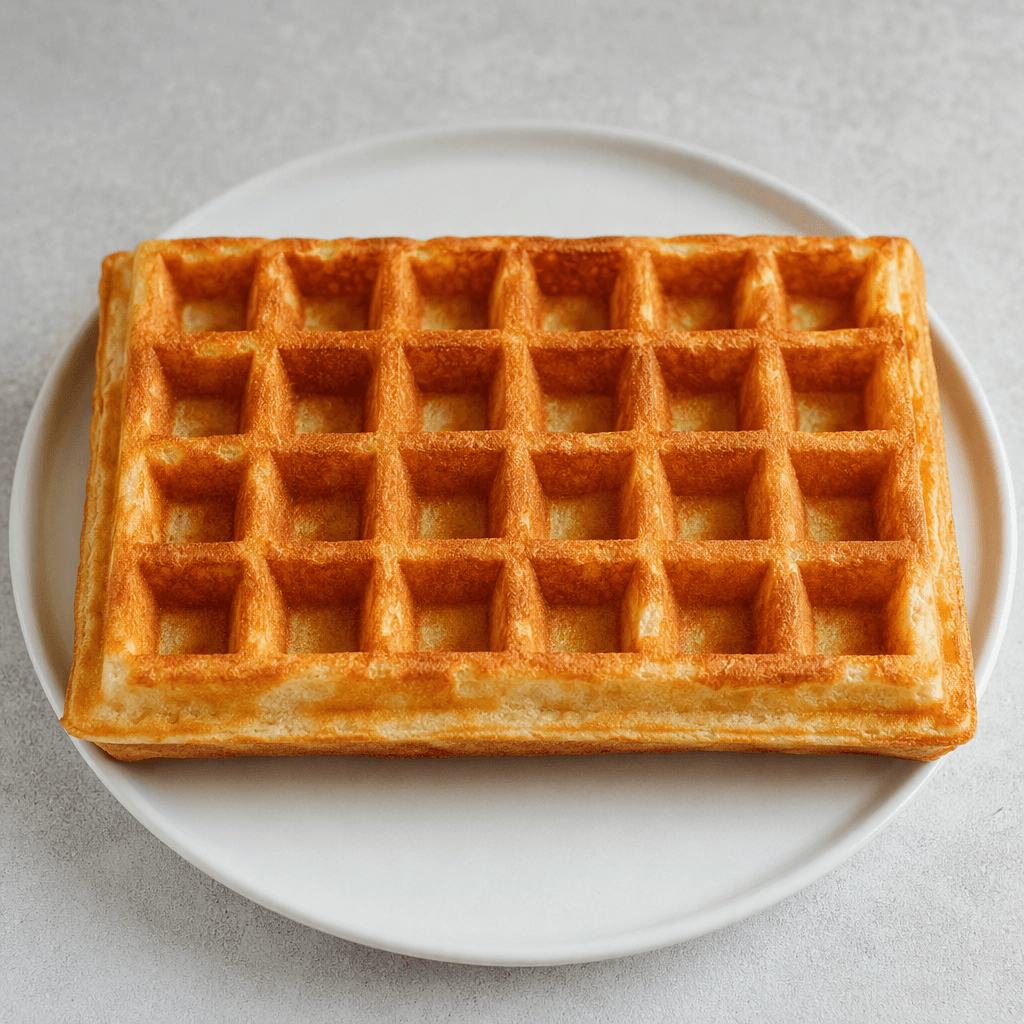
Waffle Calories
Sweet baked pastry, commonly eaten for breakfast or dessert
In season: Spring · Summer · Autumn · Winter
CALORIES
GI
POTASSIUM
FIBER
Quick answer
1 piece (medium) of Waffle (70 g) has 204 calories. That works out to 291 calories per 100 g. It contains 23.9 g of carbs, 4.6 g of protein, 9.9 g of fat and 0.8 g of fiber. Its 294 mg of Sodium covers 13% of the Daily Value. Its glycemic index is 76 (high), so it raises blood sugar quickly.
What is Waffle?
A waffle is a sweet griddled pastry made by cooking a flour-based batter, usually with eggs and milk, in an iron that gives it a crisp grid and deep pockets. It is especially associated with Belgium, though recipes and shapes vary widely.
In Belgium and elsewhere, waffles may be served warm for breakfast or as a snack or dessert, topped with fruit, chocolate, cream, or simply a little sugar. They are mainly a source of carbohydrates and fat, with relatively little fibre. For a lighter serving, add fresh fruit and keep richer toppings modest; coffee or tea makes an easy accompaniment.
Waffle Nutrition Facts
Selected: 100 g
291
KCAL / 100G
Carbs
34.2g
· 12% DV
Protein
6.5g
· 13% DV
Fat
14.2g
· 18% DV
Fiber
1.2g
· 4% DV
DV is the share of the daily value covered, on a 2,000 kcal reference diet.
Calories come from: Carbs 47% · Protein 9% · Fat 44%
Waffle Vitamins & Minerals
Vitamins
B2
0.22mg · 17% DV
B1
0.18mg · 15% DV
Biotin
4.5µg · 15% DV
B5
0.5mg · 10% DV
Minerals
Sodium
420mg · 18% DV
Phosphorus
120mg · 17% DV
Selenium
7.2µg · 13% DV
Calcium
110mg · 11% DV
How Nutritious Is Waffle?
Nutrient density
Low
How many vitamins, minerals and how much fiber this food carries per calorie. A high score means a lot of nutrition for few calories.
Satiety score
Low
An EatBetter score computed from fiber, protein and calorie density. A high score means staying full longer on the same calories.
Both scores are calculated per 100 g and do not change with the selected portion. The satiety score is EatBetter's own calculation, not a clinical measure.
Waffle Glycemic Index
GLYCEMIC INDEX
GLYCEMIC LOAD
Accounts for portion size — a more realistic measure than GI alone.
How to Burn Off Waffle
To burn the 291 calories in 100 g:
🚶
Walking (5 km/h)
🏃
Running (8 km/h)
🚴
Cycling
🏊
Swimming
Times are calculated with the MET equation for a 70 kg adult. Actual burn varies with your weight, age and pace.
Is Waffle Processed?
NOVA 3
Processed
1. Unprocessed
2. Minimally Processed
3. Processed
4. Ultra-Processed
NOVA classifies foods into 4 groups by industrial processing. NOVA 1 (unprocessed) is the healthiest.
Does Waffle Contain Allergens?
Contains these allergens:
Which Diets Is Waffle Good For?
Vegan
— Not suitable
Vegetarian
— Not suitable
Gluten-Free
— Not suitable
Dairy-Free
— Not suitable
Mediterranean
— Not suitable
Paleo
— Not suitable
Whole30
— Not suitable
DASH
— Not suitable
Keto
— Not suitable
Low FODMAP
— Not suitable
Waffle Fat Profile
SATURATED
4.1g
MONOUNSATURATED
5.3g
POLYUNSATURATED
1.3g
Omega 6:3 ratio 30:1
Above the ideal 4:1 (30:1).
Compare Waffle
Foods Similar to Waffle
Frequently Asked Questions About Waffle
How do you make waffles from scratch?
Make waffles by whisking flour, milk, eggs, baking powder, and melted butter into a batter, then cooking it in a preheated waffle iron. Mix just until combined to avoid tough waffles, and lightly grease the plates if the manufacturer recommends it.
Why are my waffles sticking to the waffle iron?
Waffles usually stick when the iron is not hot enough, its plates are not properly greased, or the lid is opened before the waffle has set. Let the iron preheat fully and cook until the waffle releases easily instead of pulling it off early.
How do you make waffles crispy?
For crisp waffles, preheat the waffle iron thoroughly and cook until the surface is deeply golden and steam has mostly stopped escaping. Set cooked waffles on a wire rack rather than stacking them; trapped steam softens their crisp edges.
Can you make waffle batter the night before?
Yes, you can refrigerate waffle batter overnight in a covered container, but waffles may rise less because baking powder gradually loses strength after mixing. Stir the batter gently before cooking, and add a little milk if it has thickened too much.
Can you freeze waffles?
Yes, cooked waffles freeze well. Cool them completely, freeze them in a single layer, then transfer them to a sealed freezer bag. Reheat straight from frozen in a toaster or oven to bring back some of their crisp texture.
What is the difference between Belgian waffles and regular waffles?
Belgian waffles are typically thicker, with deeper pockets and a lighter interior; some traditional recipes use yeast. Other waffles are often thinner and may have smaller grid patterns. The names are used loosely, so recipes and waffle irons can vary.
What are the best toppings for waffles?
Fruit, yogurt, nuts, syrup, and chocolate are popular waffle toppings. Berries and sliced bananas pair well with the crisp pockets, while savory toppings such as eggs or cheese can make a waffle into a meal. Add wet toppings just before serving.
Can you make waffles without a waffle iron?
Yes, cook waffle batter in a lightly greased, heavy skillet over medium-low heat, flipping it once the underside is set. It will taste similar but will not have the waffle's signature grid or deep pockets; the texture is closer to a thick pancake.
How do you reheat waffles without making them soggy?
Reheat waffles in a toaster or oven so excess moisture can escape and the edges regain some crispness. Avoid stacking them while hot. A microwave warms waffles quickly, but tends to leave them soft rather than crisp.
Are waffles a healthy breakfast?
Waffles can be part of breakfast, but sweet toppings such as syrup, whipped cream, and chocolate can make the meal high in added sugar. Pairing a waffle with fruit, yogurt, or eggs can make breakfast more filling and balanced.
Have another question about Waffle?
Ask the AI nutrition coach — calories, portions, alternatives and more, answered in seconds in the app.

Scan calories with your camera
Instant AI nutrition analysis

Nutrition data compiled from USDA FoodData Central and scientific sources.