

Ready & Packaged Foods
All →Vegetables & Legumes
All →Desserts & Confectionery
All →Meat & Protein
All →Grains & Bakery
All →Beverages
All →Milk & Dairy
All →

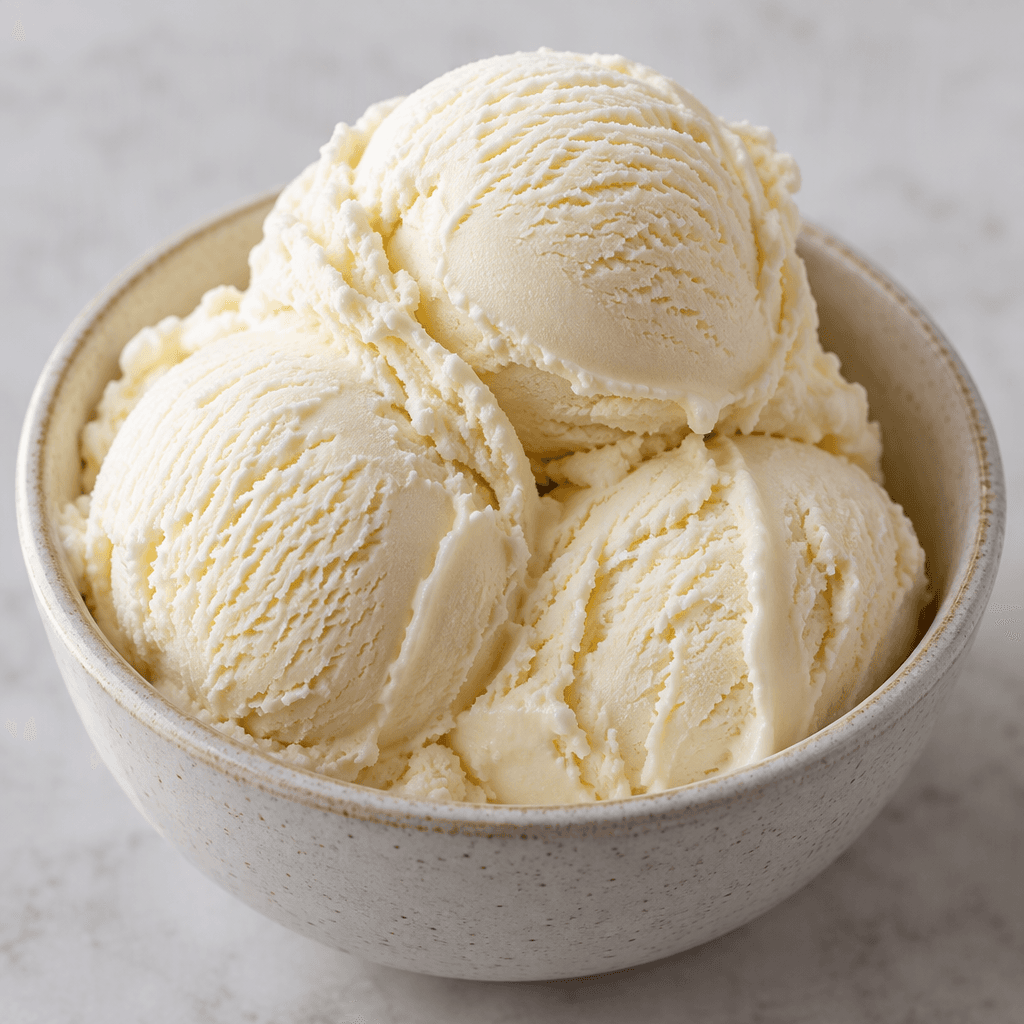
Mado ice cream Calories
Traditional Turkish ice cream, made with milk and salep, chewy texture, slow melting
In season: Summer
CALORIES · 100 G
GI
POTASSIUM · 100 G
FIBER · 100 G
Quick answer
1 piece (medium) of Mado ice cream (80 g) has 168 calories. That works out to 210 calories per 100 g. It contains 25.6 g of carbs, 3.4 g of protein, 6 g of fat and 0.2 g of fiber. Its 0.1 mg of B2 covers 11% of the Daily Value. Its glycemic index is 65 (medium), so it raises blood sugar at a moderate pace.
Mado ice cream Nutrition Facts
Selected: 1 piece (medium) · 80 g
168
KCAL / 80G
Carbs
25.6g
· 9% DV
Protein
3.4g
· 7% DV
Fat
6g
· 8% DV
Fiber
0.2g
· 1% DV
DV is the share of the daily value covered, on a 2,000 kcal reference diet.
Calories come from: Carbs 60% · Protein 8% · Fat 32%
Mado ice cream nutrition facts table · 1 piece (medium) (80 g)
| Nutrient | Amount | % DV |
|---|---|---|
| Calories | 168 kcal | |
| Total fat | 6 g | 8% |
| Saturated fat | 3.6 g | 18% |
| Trans fat | 0.03 g | |
| Sodium | 48 mg | 2% |
| Total carbohydrate | 25.6 g | 9% |
| Fiber | 0.2 g | 1% |
| Protein | 3.4 g | 7% |
Calories: Calories measure energy. Average daily need is 2,000 kcal. Excess calories are stored as fat, too few cause weight loss.
Carbs: Your body's primary energy source. The brain runs exclusively on carbs. Daily need: 275g.
Protein: Essential for muscle repair and cell growth. Daily need: 50g. Keeps you full and boosts metabolism.
Fat: Needed for hormone production and vitamin absorption. Daily need: 78g. Limit saturated fats, choose unsaturated.
Fiber: Critical for digestive health and satiety. Daily need: 28g. Stabilizes blood sugar, lowers cholesterol.

Log this food in EatBetter
100,000+ people use it
- Get your daily calorie target
- Snap your meal, log it in seconds
- See every vitamin and mineral

📸 Scan the code to get the app free.

How Many Calories in 1 Mado ice cream?
| Serving | Amount | Calories |
|---|---|---|
| 1 piece (medium) | 80 g | 168 kcal |
| 1 slice (thin) | 40 g | 84 kcal |
| 1 piece (small) | 50 g | 105 kcal |
| 1 slice (thick) | 70 g | 147 kcal |
| 100 g | 100 g | 210 kcal |
| 1 cup (medium) | 100 g | 210 kcal |
| 1 serving (medium) | 100 g | 210 kcal |
| 1 piece (large) | 120 g | 252 kcal |
| 1 cup (large) | 150 g | 315 kcal |
| 1 serving (large) | 150 g | 315 kcal |
Calculated from 210 calories per 100 g.
Frequently Asked Questions About Mado ice cream
What is Mado ice cream?
Mado ice cream is a Turkish ice cream associated with the Maraş tradition, made with milk and salep and known for its dense, stretchy texture. MADO is a brand, so its range can include different flavors and product recipes.
Why is Mado ice cream so chewy?
Mado ice cream gets its chewy, stretchy texture from salep and the way the mixture is worked while freezing. This makes it denser and more elastic than typical scoopable ice cream, rather than simply giving it a different flavor.
Where does Mado ice cream come from?
Mado ice cream is connected to Kahramanmaraş in southeastern Turkey, a region famous for its traditional dondurma. The MADO brand takes its name from Maraş dondurması and brings that style to its wider range of shops and products.
Is Mado ice cream the same as Maraş ice cream?
Mado ice cream follows the Maraş-style tradition, but the terms are not interchangeable. Maraş ice cream describes a regional style of Turkish dondurma, while MADO is a brand that sells ice cream and other foods.
How is Mado ice cream traditionally served?
Mado ice cream is served in scoops, often in a bowl or cone, and its stretchy texture makes it distinctive to eat. In Turkey, it may also be paired with desserts such as baklava or künefe.
What flavors does Mado ice cream come in?
Mado ice cream is available in plain, fruit, chocolate, and other traditional-style flavors, though the selection varies by shop and product range. Ask the particular shop or check its current menu if you are looking for a specific flavor.
Can you make Mado-style ice cream at home?
Yes, you can make a Mado-style ice cream at home with milk, sugar, and salep. Heating and cooling the mixture properly, then stirring it as it freezes, helps build a dense texture, though home equipment may not reproduce the traditional stretching process.
Does Mado ice cream melt more slowly than regular ice cream?
Mado ice cream can soften and melt more slowly than ordinary ice cream because its dense, stretchy structure holds together well. It still melts if left warm, so serve it promptly and do not leave it sitting out.
How should you store Mado ice cream after opening?
Keep Mado ice cream covered in the freezer after opening to limit exposure to air and freezer odors. Take out only the amount you plan to serve, and avoid repeatedly letting it soften and refreezing it, which can damage its texture.
Can people with diabetes eat Mado ice cream?
People with diabetes can eat Mado ice cream, but its sugar can raise blood glucose. The suitable portion depends on an individual’s eating and medication plan, so follow advice from your doctor or dietitian if you manage diabetes.
Mado ice cream Vitamins & Minerals
Vitamins
B2
0.14mg · 11% DV
B12
0.24µg · 10% DV
B5
0.4mg · 8% DV
Vitamin A
48µg · 5% DV
Minerals
Phosphorus
72mg · 10% DV
Calcium
96mg · 10% DV
Iodine
8µg · 5% DV
Zinc
0.4mg · 4% DV
Potassium ⭐
112mg · 3% DV
Sodium
48mg · 2% DV
Mado ice cream Glycemic Index
GLYCEMIC INDEX
GLYCEMIC LOAD
Accounts for portion size — a more realistic measure than GI alone.
How to Burn Off Mado ice cream
To burn the 168 calories in 1 piece (medium) (80 g):
🚶
Walking (5 km/h)
🏃
Running (8 km/h)
🚴
Cycling
🏊
Swimming
Times are calculated with the MET equation for a 70 kg adult. Actual burn varies with your weight, age and pace.
What is Mado ice cream?
Mado ice cream is a Turkish-style milk ice cream made with salep, the ground tuber that gives traditional Maraş-style dondurma its distinctive stretch and slow-melting body. Mado’s version brings that dense, smooth style to a scoopable dessert.
In Turkey it is commonly served in a cup or cone, either on its own or alongside sweets such as baklava. Its soft, milky taste and slightly chewy texture make it a satisfying dessert; nutritionally, it is mainly a source of carbohydrates, with some protein from the milk. A smaller scoop with fresh fruit is an easy way to keep the serving lighter.
How Nutritious Is Mado ice cream?
Nutrient density
Low
How many vitamins, minerals and how much fiber this food carries per calorie. A high score means a lot of nutrition for few calories.
Satiety score
Low
An EatBetter score computed from fiber, protein and calorie density. A high score means staying full longer on the same calories.
Both scores are calculated per 100 g and do not change with the selected portion. The satiety score is EatBetter's own calculation, not a clinical measure.
Is Mado ice cream Processed?
NOVA 3
Processed
1. Unprocessed
2. Minimally Processed
3. Processed
4. Ultra-Processed
NOVA classifies foods into 4 groups by industrial processing. NOVA 1 (unprocessed) is the healthiest.
Does Mado ice cream Contain Allergens?
Contains these allergens:
Which Diets Is Mado ice cream Good For?
Vegan
— Not suitable
Vegetarian
✓ Suitable
Gluten-Free
— Not suitable
Dairy-Free
— Not suitable
Mediterranean
✓ Suitable
Paleo
— Not suitable
Whole30
— Not suitable
DASH
— Not suitable
Keto
— Not suitable
Low FODMAP
— Not suitable
Mado ice cream Fat Profile
SATURATED
3.6g
MONOUNSATURATED
1.76g
POLYUNSATURATED
0.32g
Omega 6:3 ratio 2:1
Below the ideal 4:1 — a good omega balance.
Compare Mado ice cream
Foods Similar to Mado ice cream
🍦
Mado Ice Cream Pop
218 kcal
🍦
Ice Cream Cone
210 kcal
🍦
Maraş ice cream
180 kcal
🍫🍦
Chocolate ice cream bar
270 kcal
🍦
Cornetto Ice Cream
270 kcal
🍨
Strawberry ice cream
180 kcal
🍦
Waffle Cone
420 kcal
🍋🍦
Lemon ice cream
160 kcal
🍫🍦
Chocolate Ice Cream
210 kcal
🍦
Milk ice cream
130 kcal
🍦
Magnum Ice Cream
320 kcal
🍦
Magnum Mini Ice Cream
320 kcal
Have another question about Mado ice cream?
Ask the AI nutrition coach — calories, portions, alternatives and more, answered in seconds in the app.

Scan calories with your camera
Instant AI nutrition analysis

Nutrition data compiled from USDA FoodData Central and scientific sources.