

Ready & Packaged Foods
All →Vegetables & Legumes
All →Desserts & Confectionery
All →Meat & Protein
All →Grains & Bakery
All →Beverages
All →Milk & Dairy
All →

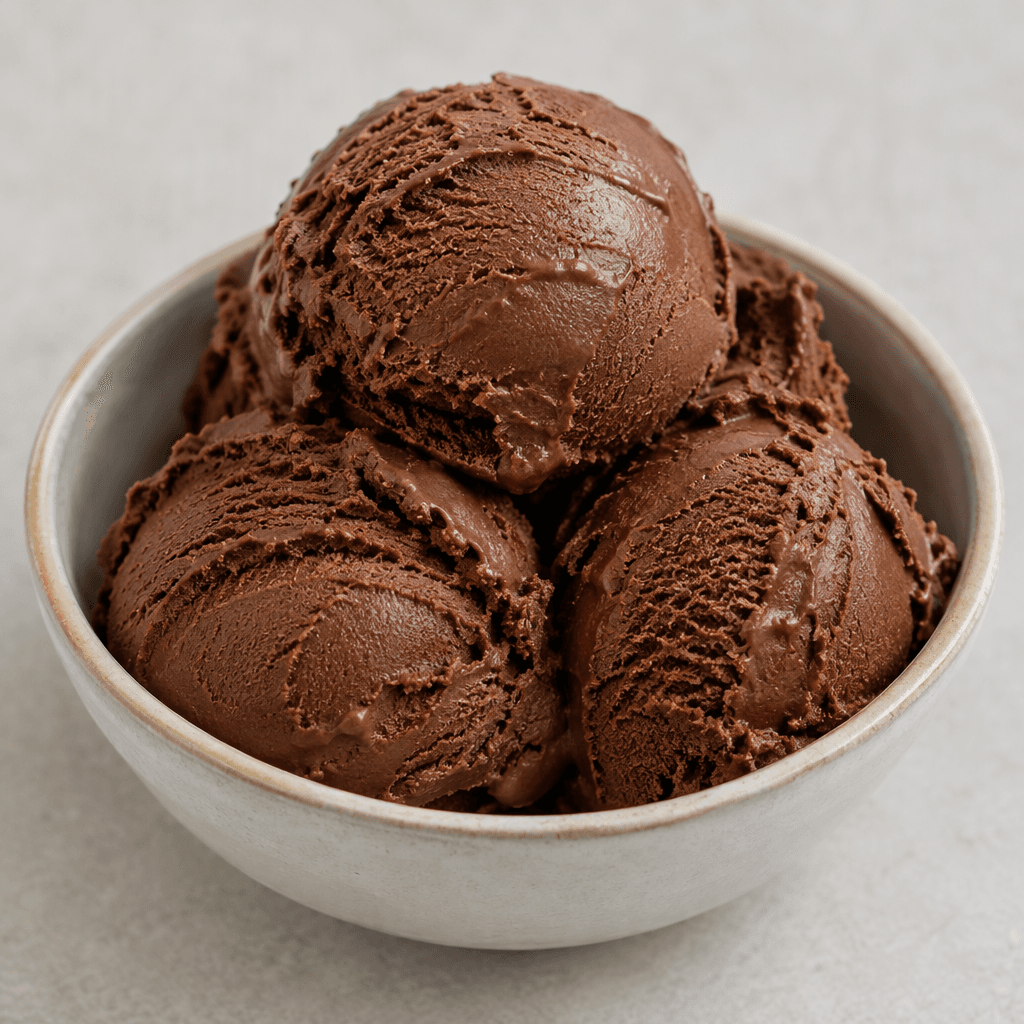
Chocolate Ice Cream Calories
Rich chocolate flavor, creamy ice cream
In season: Summer
CALORIES
GI
POTASSIUM
FIBER
Quick answer
1 cup (medium) of Chocolate Ice Cream (130 g) has 273 calories. That works out to 210 calories per 100 g. It contains 32.5 g of carbs, 5.2 g of protein, 13 g of fat and 2.6 g of fiber. Its 0.7 µg of B12 covers 27% of the Daily Value. Its glycemic index is 50 (medium), so it raises blood sugar at a moderate pace.
What is Chocolate Ice Cream?
Chocolate ice cream is a familiar frozen dessert made with a milk-and-cream base, sweetener and cocoa or chocolate. It has been made in many forms around the world, and is served in scoops, cones or bowls. The texture is usually smooth and creamy, with a rich cocoa taste that can range from mild to dark and intense.
It works as an after-dinner dessert, a summer treat or a topping for cakes and warm fruit; in Turkey, it is also commonly enjoyed from ice-cream shops or at home, sometimes alongside tea. With its combination of sugar and fat, it is best thought of as an indulgent sweet rather than an everyday source of protein. For a lighter serving, choose one modest scoop and pair it with fresh fruit.
Chocolate Ice Cream Nutrition Facts
Selected: 100 g
210
KCAL / 100G
Carbs
25g
· 9% DV
Protein
4g
· 8% DV
Fat
10g
· 13% DV
Fiber
2g
· 7% DV
DV is the share of the daily value covered, on a 2,000 kcal reference diet.
Calories come from: Carbs 49% · Protein 8% · Fat 43%
Chocolate Ice Cream Vitamins & Minerals
Vitamins
B12
0.5µg · 21% DV
B2
0.18mg · 14% DV
B5
0.5mg · 10% DV
Vitamin A
60µg · 7% DV
Minerals
Phosphorus
90mg · 13% DV
Calcium
110mg · 11% DV
Zinc
1mg · 9% DV
Iodine
10µg · 7% DV
How Nutritious Is Chocolate Ice Cream?
Nutrient density
Low
How many vitamins, minerals and how much fiber this food carries per calorie. A high score means a lot of nutrition for few calories.
Satiety score
Medium
An EatBetter score computed from fiber, protein and calorie density. A high score means staying full longer on the same calories.
Both scores are calculated per 100 g and do not change with the selected portion. The satiety score is EatBetter's own calculation, not a clinical measure.
Chocolate Ice Cream Glycemic Index
GLYCEMIC INDEX
GLYCEMIC LOAD
Accounts for portion size — a more realistic measure than GI alone.
How to Burn Off Chocolate Ice Cream
To burn the 210 calories in 100 g:
🚶
Walking (5 km/h)
🏃
Running (8 km/h)
🚴
Cycling
🏊
Swimming
Times are calculated with the MET equation for a 70 kg adult. Actual burn varies with your weight, age and pace.
Is Chocolate Ice Cream Processed?
NOVA 3
Processed
1. Unprocessed
2. Minimally Processed
3. Processed
4. Ultra-Processed
NOVA classifies foods into 4 groups by industrial processing. NOVA 1 (unprocessed) is the healthiest.
Does Chocolate Ice Cream Contain Allergens?
Contains these allergens:
Which Diets Is Chocolate Ice Cream Good For?
Vegan
— Not suitable
Vegetarian
✓ Suitable
Gluten-Free
— Not suitable
Dairy-Free
— Not suitable
Mediterranean
— Not suitable
Paleo
— Not suitable
Whole30
— Not suitable
DASH
— Not suitable
Keto
— Not suitable
Low FODMAP
— Not suitable
Chocolate Ice Cream Fat Profile
SATURATED
6g
MONOUNSATURATED
2.5g
POLYUNSATURATED
0.3g
Omega 6:3 ratio 9:1
Above the ideal 4:1 (9:1).
Compare Chocolate Ice Cream
Foods Similar to Chocolate Ice Cream
Frequently Asked Questions About Chocolate Ice Cream
How do you make Chocolate Ice Cream at home?
Chocolate Ice Cream is made by combining milk or cream, sugar, and cocoa or melted chocolate. Chill the cooked mixture before churning it in an ice cream maker; without a machine, freeze it in a covered container and stir it periodically for a smoother texture.
What is Chocolate Ice Cream made of?
Chocolate Ice Cream typically contains milk or cream, sugar, and cocoa or chocolate. Some recipes use egg yolks for a richer texture, while chocolate chips, nuts, and sauces are optional additions that vary by recipe.
Does Chocolate Ice Cream contain caffeine?
Yes, Chocolate Ice Cream can contain a small amount of caffeine from cocoa or chocolate. The amount varies with the type and quantity of chocolate used, so people sensitive to caffeine may prefer to avoid it close to bedtime.
Why does Chocolate Ice Cream get icy?
Chocolate Ice Cream gets icy when water forms large crystals during freezing. Slow freezing, repeated melting and refreezing, or leaving the container uncovered can cause this; keep it tightly sealed in the coldest part of the freezer.
Can you refreeze melted Chocolate Ice Cream?
Chocolate Ice Cream that thawed in the refrigerator while staying cold can be refrozen, though its texture may become grainy or icy. Discard it rather than refreezing if it has been fully melted or left at room temperature for an extended time.
Is Chocolate Ice Cream made with cocoa or melted chocolate?
Chocolate Ice Cream can be made with either cocoa powder or melted chocolate. Cocoa gives it a pronounced chocolate flavor, while chocolate adds cocoa butter and can make the finished dessert taste richer and feel creamier.
What goes well with Chocolate Ice Cream?
Chocolate Ice Cream pairs well with berries, banana, toasted nuts, and chocolate sauce. Serve it alongside brownies or cake for a richer dessert, or add fresh fruit when you want a brighter contrast to its creamy chocolate flavor.
How long does Chocolate Ice Cream last in the freezer?
Chocolate Ice Cream keeps best in the freezer in a tightly sealed container, following the storage directions on its package. For the best texture, limit how often it softens, and return the container to the freezer promptly after serving.
Can people with diabetes eat Chocolate Ice Cream?
People with diabetes can eat Chocolate Ice Cream, but its sugar can raise blood glucose. Keep the portion in line with your carbohydrate plan; a doctor or dietitian can help account for it in an individualized meal plan.
Is Chocolate Ice Cream safe for dogs?
No, Chocolate Ice Cream is not safe for dogs. Chocolate contains theobromine, which dogs cannot process well, and the dessert's dairy and sugar can also upset their stomachs; contact a veterinarian if your dog eats some.
Have another question about Chocolate Ice Cream?
Ask the AI nutrition coach — calories, portions, alternatives and more, answered in seconds in the app.

Scan calories with your camera
Instant AI nutrition analysis

Nutrition data compiled from USDA FoodData Central and scientific sources.