

Ready & Packaged Foods
All →Vegetables & Legumes
All →Desserts & Confectionery
All →Meat & Protein
All →Grains & Bakery
All →Beverages
All →Milk & Dairy
All →

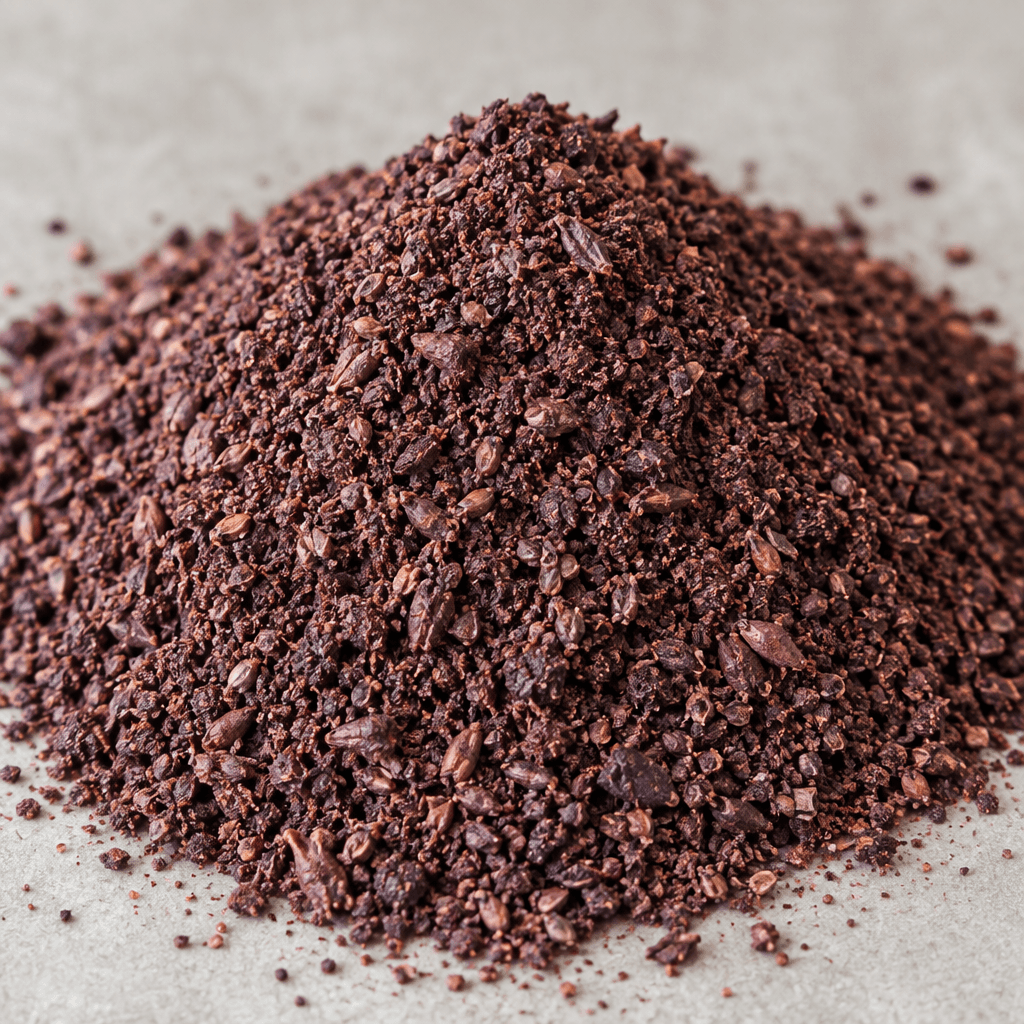
Ground Black Grape Seed Calories
Rich in antioxidants, fiber, and healthy fats
In season: Spring · Summer · Autumn · Winter
CALORIES
GI
POTASSIUM
FIBER
Quick answer
1 tablespoon (medium) of Ground Black Grape Seed (8 g) has 34 calories. That works out to 420 calories per 100 g. It contains 2.7 g of carbs, 1 g of protein, 1.8 g of fat and 2.2 g of fiber. Its 1.6 mg of Vitamin E covers 10% of the Daily Value. Its glycemic index is 10 (low), so it raises blood sugar slowly.
What is Ground Black Grape Seed?
Ground black grape seed is made by drying and finely grinding the seeds of black grapes. Whole grape seeds are rarely eaten on their own; in ground form, they can be stirred into foods or drinks. The powder is dark and slightly coarse, with a distinctly bitter, astringent taste.
It is commonly added in small amounts to yoghurt, porridge, smoothies or baked goods, rather than eaten by the spoonful. Its nutritional profile includes substantial fibre and fat: 100 g provides 28 g of fibre. The flavour can take over a dish, so start with a little and pair it with fruit, honey or another naturally sweet ingredient.
Ground Black Grape Seed Nutrition Facts
Selected: 100 g
420
KCAL / 100G
Carbs
34g
· 12% DV
Protein
12.5g
· 25% DV
Fat
23g
· 29% DV
Fiber
28g
· 100% DV
DV is the share of the daily value covered, on a 2,000 kcal reference diet.
Calories come from: Carbs 35% · Protein 13% · Fat 52%
Ground Black Grape Seed Vitamins & Minerals
Vitamins
Vitamin E
19.5mg · 130% DV
B1
0.13mg · 11% DV
Biotin
2.5µg · 8% DV
B2
0.09mg · 7% DV
Minerals
Manganese
2mg · 87% DV
Phosphorus
210mg · 30% DV
Magnesium
120mg · 29% DV
Iron
4mg · 22% DV
How Nutritious Is Ground Black Grape Seed?
Nutrient density
High
How many vitamins, minerals and how much fiber this food carries per calorie. A high score means a lot of nutrition for few calories.
Satiety score
Medium
An EatBetter score computed from fiber, protein and calorie density. A high score means staying full longer on the same calories.
Both scores are calculated per 100 g and do not change with the selected portion. The satiety score is EatBetter's own calculation, not a clinical measure.
Ground Black Grape Seed Glycemic Index
GLYCEMIC INDEX
GLYCEMIC LOAD
Accounts for portion size — a more realistic measure than GI alone.
How to Burn Off Ground Black Grape Seed
To burn the 420 calories in 100 g:
🚶
Walking (5 km/h)
🏃
Running (8 km/h)
🚴
Cycling
🏊
Swimming
Times are calculated with the MET equation for a 70 kg adult. Actual burn varies with your weight, age and pace.
Is Ground Black Grape Seed Processed?
NOVA 2
Minimally Processed
1. Unprocessed
2. Minimally Processed
3. Processed
4. Ultra-Processed
NOVA classifies foods into 4 groups by industrial processing. NOVA 1 (unprocessed) is the healthiest.
Does Ground Black Grape Seed Contain Allergens?
No known major allergens
Which Diets Is Ground Black Grape Seed Good For?
Vegan
✓ Suitable
Vegetarian
✓ Suitable
Gluten-Free
✓ Suitable
Dairy-Free
— Not suitable
Mediterranean
✓ Suitable
Paleo
✓ Suitable
Whole30
— Not suitable
DASH
— Not suitable
Keto
✓ Suitable
Low FODMAP
— Not suitable
Ground Black Grape Seed Fat Profile
SATURATED
2.9g
MONOUNSATURATED
5.2g
POLYUNSATURATED
14.5g
Omega 6:3 ratio 6.4:1
Above the ideal 4:1 (6.4:1).
Compare Ground Black Grape Seed
Foods Similar to Ground Black Grape Seed
Frequently Asked Questions About Ground Black Grape Seed
How do you use ground black grape seed?
Mix ground black grape seed into yogurt, oatmeal, or a smoothie. Its texture can be slightly gritty and its flavor is bitter, so combining it with fruit or another strongly flavored food can make it easier to eat.
What are the benefits of ground black grape seed?
Ground black grape seed contains antioxidant compounds, fiber, and fats. It can contribute these to a varied diet, but it is not a proven treatment or cure for any condition, and its benefits should not be confused with those of concentrated supplements.
How much ground black grape seed should you take per day?
A typical serving is about one medium tablespoon, or roughly 8 grams. There is no need to take large amounts; its high fiber content may cause digestive discomfort if you suddenly add a lot to your diet.
Is ground black grape seed the same as grape seed extract?
No. Ground black grape seed is made by grinding the seeds, while grape seed extract is processed to concentrate selected compounds. Their composition and strength can differ, so a serving of powder is not interchangeable with an extract supplement.
Can you put ground black grape seed in a smoothie?
Yes, ground black grape seed can be blended into a smoothie. It may add a bitter, tannic note and a slightly grainy texture, so pair it with ingredients such as berries, banana, or yogurt to balance the flavor.
Can ground black grape seed be used in baking?
Yes, you can mix ground black grape seed into bread, muffins, or other batters. Its dark color and bitter taste may change the finished bake, so start with a small amount rather than replacing a large share of the flour.
Does ground black grape seed taste bitter?
Yes, ground black grape seed usually tastes bitter and astringent because grape seeds contain tannins. It will not taste like sweet grape flesh; mixing it with yogurt, fruit, or oats can soften the flavor.
How should you store ground black grape seed?
Keep ground black grape seed in a tightly sealed container away from heat, moisture, and direct light. The seeds contain fat, which can become stale over time; follow the package date and discard it if its smell or taste turns rancid.
Can ground black grape seed help with weight loss?
Ground black grape seed does not cause weight loss by itself. Its fiber may help make a meal more filling, but it still provides energy, so using a modest portion is more practical than adding large amounts.
Can ground black grape seed interact with blood-thinning medication?
It may be important to check before combining ground black grape seed with blood-thinning medication, since grape seed products could affect bleeding risk. Ask your clinician or pharmacist before using it regularly alongside these medicines.
Have another question about Ground Black Grape Seed?
Ask the AI nutrition coach — calories, portions, alternatives and more, answered in seconds in the app.

Scan calories with your camera
Instant AI nutrition analysis

Nutrition data compiled from USDA FoodData Central and scientific sources.