

Ready & Packaged Foods
All →Vegetables & Legumes
All →Desserts & Confectionery
All →Meat & Protein
All →Grains & Bakery
All →Beverages
All →Milk & Dairy
All →

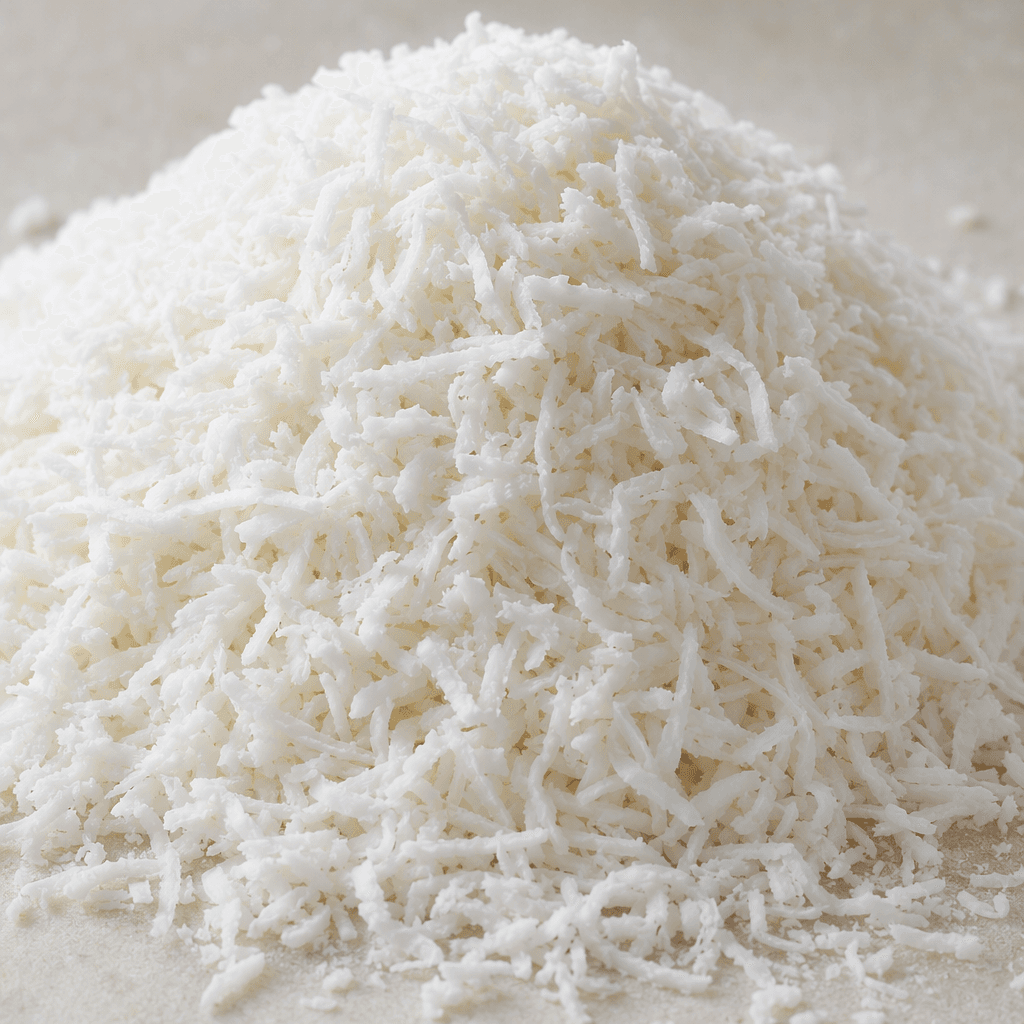
Grated coconut Calories
Source of fiber and healthy fats, tropical flavor
In season: Summer · Autumn
CALORIES
GI
POTASSIUM
FIBER
Quick answer
2 tablespoon (medium) of Grated coconut (15 g) has 53 calories. That works out to 354 calories per 100 g. It contains 2.3 g of carbs, 0.5 g of protein, 5 g of fat and 1.3 g of fiber. Its 0.2 mg of Manganese covers 10% of the Daily Value. Its glycemic index is 45 (low), so it raises blood sugar slowly.
What is Grated coconut?
Grated coconut is the white flesh of a mature coconut shredded into fine strands or flakes. It is sold fresh or dried; dried grated coconut is especially handy for baking and keeping in the pantry, while fresh coconut is softer and moister.
Its sweet, fragrant flavour and lightly chewy texture work well in cakes, biscuits, granola and puddings. In South and Southeast Asian cooking, coconut is also stirred into curries, rice dishes and chutneys; in many other kitchens, it is sprinkled over yoghurt or fruit. It is rich in fat and provides fibre, so a small amount brings plenty of flavour. Add it near the end of cooking when you want the shreds to retain some texture.
Grated coconut Nutrition Facts
Selected: 100 g
354
KCAL / 100G
Carbs
15.2g
· 6% DV
Protein
3.3g
· 7% DV
Fat
33.5g
· 43% DV
Fiber
9g
· 32% DV
DV is the share of the daily value covered, on a 2,000 kcal reference diet.
Calories come from: Carbs 16% · Protein 4% · Fat 80%
Grated coconut Vitamins & Minerals
Vitamins
Folate
26µg · 7% DV
B1
0.07mg · 6% DV
B5
0.3mg · 6% DV
Vitamin C
3.3mg · 4% DV
Minerals
Manganese
2mg · 87% DV
Selenium
10µg · 18% DV
Phosphorus
113mg · 16% DV
Iron
2mg · 11% DV
How Nutritious Is Grated coconut?
Nutrient density
Medium
How many vitamins, minerals and how much fiber this food carries per calorie. A high score means a lot of nutrition for few calories.
Satiety score
Medium
An EatBetter score computed from fiber, protein and calorie density. A high score means staying full longer on the same calories.
Both scores are calculated per 100 g and do not change with the selected portion. The satiety score is EatBetter's own calculation, not a clinical measure.
Grated coconut Glycemic Index
GLYCEMIC INDEX
GLYCEMIC LOAD
Accounts for portion size — a more realistic measure than GI alone.
How to Burn Off Grated coconut
To burn the 354 calories in 100 g:
🚶
Walking (5 km/h)
🏃
Running (8 km/h)
🚴
Cycling
🏊
Swimming
Times are calculated with the MET equation for a 70 kg adult. Actual burn varies with your weight, age and pace.
Is Grated coconut Processed?
NOVA 2
Minimally Processed
1. Unprocessed
2. Minimally Processed
3. Processed
4. Ultra-Processed
NOVA classifies foods into 4 groups by industrial processing. NOVA 1 (unprocessed) is the healthiest.
Does Grated coconut Contain Allergens?
No known major allergens
Which Diets Is Grated coconut Good For?
Vegan
✓ Suitable
Vegetarian
✓ Suitable
Gluten-Free
✓ Suitable
Dairy-Free
— Not suitable
Mediterranean
✓ Suitable
Paleo
✓ Suitable
Whole30
— Not suitable
DASH
— Not suitable
Keto
✓ Suitable
Low FODMAP
— Not suitable
Grated coconut Fat Profile
SATURATED
29.7g
MONOUNSATURATED
1.43g
POLYUNSATURATED
0.37g
Omega 6:3 ratio 7.5:1
Above the ideal 4:1 (7.5:1).
Compare Grated coconut
Foods Similar to Grated coconut
Frequently Asked Questions About Grated coconut
What is the difference between grated coconut and desiccated coconut?
Grated coconut describes coconut cut into small pieces, while desiccated coconut is specifically dried. In many shops, the terms refer to the same fine, dry product, but grated coconut can also mean freshly grated, moist coconut.
How do you use grated coconut in cooking?
Grated coconut adds texture and coconut flavor to cakes, biscuits, curries, granola, and smoothie bowls. Stir it into batters or sprinkle it over finished dishes; for a stronger toasted flavor, brown it separately before adding.
Is grated coconut sweetened?
Grated coconut may be sweetened or unsweetened, depending on the product. Unsweetened coconut is the better choice when you want to control sweetness in a recipe; check the ingredient list because the appearance alone may not tell you.
How should you store grated coconut after opening?
Store opened grated coconut in an airtight container in a cool, dry place, away from sunlight and moisture. A dry cupboard is suitable; keeping moisture out helps preserve its texture and prevents it from clumping.
Can you toast grated coconut?
Yes, grated coconut toasts well in a dry skillet or on a baking tray. Use low to medium heat and stir or check it often, because the fine shreds can go from golden to burnt quickly.
Can you freeze grated coconut?
Yes, grated coconut can be frozen in an airtight freezer-safe container or bag. Portion it before freezing so you can take out only what you need; thaw it in the refrigerator or add it frozen to cooked dishes.
Can you make grated coconut from a fresh coconut?
Yes, crack a fresh coconut, remove the flesh from the shell, and grate it finely. Freshly grated coconut is moist and perishable, so use it promptly or dry it gently before storing it as a pantry ingredient.
Can grated coconut replace coconut flour?
No, grated coconut is not a direct substitute for coconut flour. Coconut flour is finely milled and absorbs much more liquid, so swapping it cup for cup can make baked goods dry or change their structure.
Can you eat grated coconut without cooking it?
Yes, packaged grated coconut can generally be eaten as sold and sprinkled over fruit, cereal, or yogurt. Freshly grated coconut also needs no cooking, though it is moist and should be used sooner than dried coconut.
How can you tell if grated coconut has gone bad?
Discard grated coconut if you see mold, notice damp clumps, or detect an unpleasant rancid smell or taste. Keep it sealed and dry after opening, and follow the storage directions on the package.
Have another question about Grated coconut?
Ask the AI nutrition coach — calories, portions, alternatives and more, answered in seconds in the app.

Scan calories with your camera
Instant AI nutrition analysis

Nutrition data compiled from USDA FoodData Central and scientific sources.