

Ready & Packaged Foods
All →Vegetables & Legumes
All →Desserts & Confectionery
All →Meat & Protein
All →Grains & Bakery
All →Beverages
All →Milk & Dairy
All →

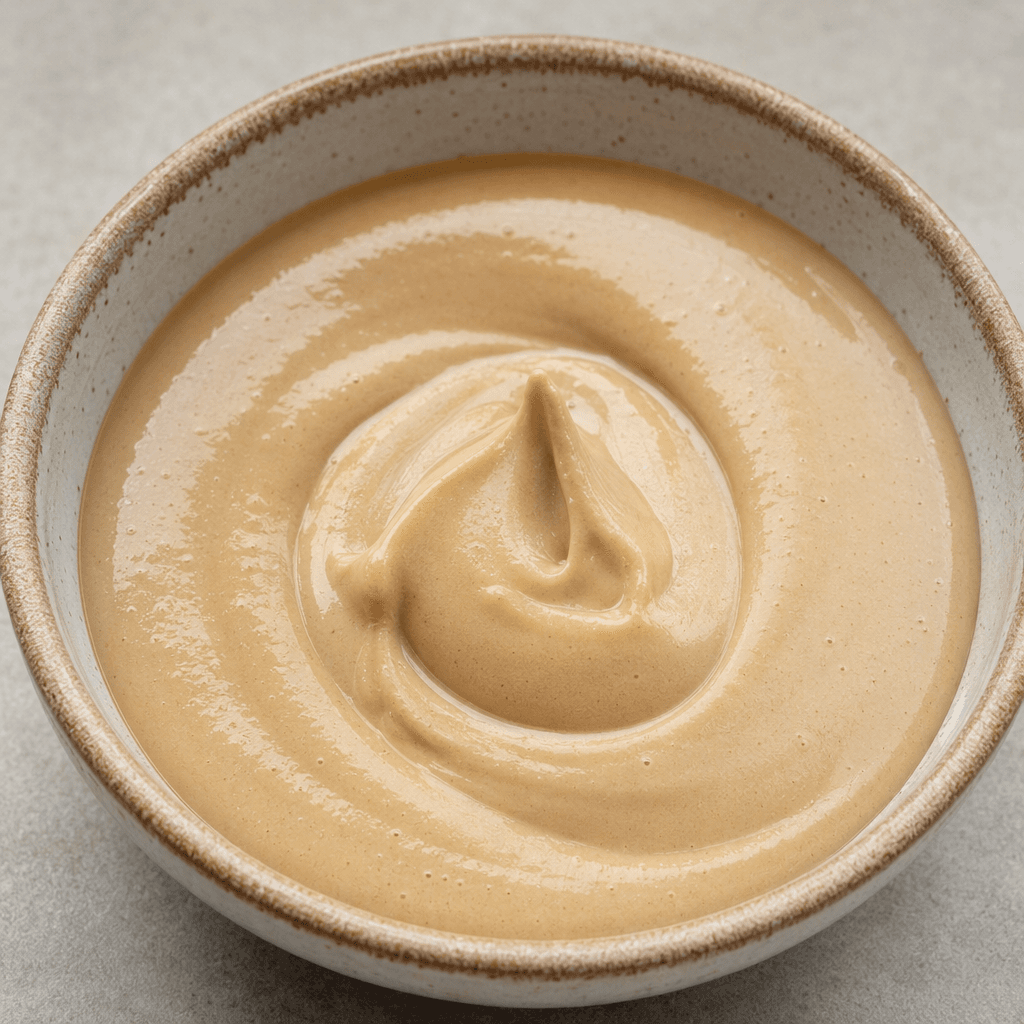
Tahini Calories
Sesame paste, source of healthy fats, protein, and calcium
In season: Spring · Summer · Autumn · Winter
CALORIES
GI
POTASSIUM
FIBER
Quick answer
1 tablespoon (medium) of Tahini (15 g) has 89 calories. That works out to 595 calories per 100 g. It contains 3.5 g of carbs, 2.6 g of protein, 8.1 g of fat and 1.4 g of fiber. Its 0.2 mg of Copper covers 27% of the Daily Value. Its glycemic index is 35 (low), so it raises blood sugar slowly.
What is Tahini?
Tahini is a smooth paste made by grinding sesame seeds, widely used in Middle Eastern and eastern Mediterranean cooking. It has a rich, nutty flavour with a slight bitterness, and a thick, creamy texture; oil may separate on standing, so stir it before use. It is a familiar ingredient in hummus and other dips, and works well in dressings, sauces and sweets. Tahini is energy-dense, with mostly fats alongside plant protein and fibre. A little goes a long way: thin it with lemon juice and water for a quick dressing, or drizzle it over roasted vegetables.
Tahini Nutrition Facts
Selected: 100 g
595
KCAL / 100G
Carbs
23.5g
· 9% DV
Protein
17g
· 34% DV
Fat
53.7g
· 69% DV
Fiber
9.3g
· 33% DV
DV is the share of the daily value covered, on a 2,000 kcal reference diet.
Calories come from: Carbs 15% · Protein 11% · Fat 74%
Tahini Vitamins & Minerals
Vitamins
B1
0.79mg · 66% DV
B3
5.9mg · 37% DV
B6
0.47mg · 28% DV
Biotin
8µg · 27% DV
Minerals
Copper
2mg · 222% DV
Phosphorus
638mg · 91% DV
Manganese
2mg · 87% DV
Zinc
5mg · 45% DV
How Nutritious Is Tahini?
Nutrient density
High
How many vitamins, minerals and how much fiber this food carries per calorie. A high score means a lot of nutrition for few calories.
Satiety score
Medium
An EatBetter score computed from fiber, protein and calorie density. A high score means staying full longer on the same calories.
Both scores are calculated per 100 g and do not change with the selected portion. The satiety score is EatBetter's own calculation, not a clinical measure.
Tahini Glycemic Index
GLYCEMIC INDEX
GLYCEMIC LOAD
Accounts for portion size — a more realistic measure than GI alone.
How to Burn Off Tahini
To burn the 595 calories in 100 g:
🚶
Walking (5 km/h)
🏃
Running (8 km/h)
🚴
Cycling
🏊
Swimming
Times are calculated with the MET equation for a 70 kg adult. Actual burn varies with your weight, age and pace.
Is Tahini Processed?
NOVA 2
Minimally Processed
1. Unprocessed
2. Minimally Processed
3. Processed
4. Ultra-Processed
NOVA classifies foods into 4 groups by industrial processing. NOVA 1 (unprocessed) is the healthiest.
Does Tahini Contain Allergens?
Contains these allergens:
Which Diets Is Tahini Good For?
Vegan
✓ Suitable
Vegetarian
✓ Suitable
Gluten-Free
✓ Suitable
Dairy-Free
— Not suitable
Mediterranean
✓ Suitable
Paleo
✓ Suitable
Whole30
— Not suitable
DASH
— Not suitable
Keto
✓ Suitable
Low FODMAP
— Not suitable
Tahini Fat Profile
SATURATED
7.5g
MONOUNSATURATED
19.7g
POLYUNSATURATED
22.2g
Omega 6:3 ratio 72.3:1
Above the ideal 4:1 (72.3:1).
Compare Tahini
Foods Similar to Tahini
Frequently Asked Questions About Tahini
What is tahini made from?
Tahini is made from ground sesame seeds. The seeds are usually hulled and sometimes toasted before grinding, which gives tahini its smooth texture and nutty flavor; varieties can differ in color and taste.
How do you use tahini?
Tahini works in both savory and sweet recipes. Stir it into hummus, whisk it with lemon juice and water for a sauce, drizzle it over roasted vegetables, or add it to cookies and brownies.
How do you make tahini at home?
You can make tahini at home by blending toasted sesame seeds until they release their oils and form a smooth paste. Scrape down the sides as needed; a high-powered blender or food processor gives the silkiest result.
Does tahini need to be refrigerated?
No, tahini does not have to be refrigerated if you keep it tightly closed in a cool, dry cupboard. Refrigeration can slow rancidity in a warm kitchen, but it also makes tahini thicker and harder to stir.
Why does oil separate in tahini?
Oil rises to the top of tahini naturally because the sesame paste is not fully stable. This separation does not mean it has spoiled; stir from the bottom with a clean utensil until the paste is even.
How do you make tahini sauce?
Tahini sauce is made by whisking tahini with lemon juice, garlic, and water until smooth. It may thicken at first, then loosen as you add water a little at a time; season with salt to taste.
What can you use instead of tahini in hummus?
You can make hummus without tahini, or replace it with sunflower seed butter for a similar creamy texture. Peanut or almond butter also works, but each gives the hummus a noticeably different flavor.
Does tahini go bad?
Yes, tahini can go rancid over time, especially if exposed to heat or air. Discard it if it smells sour or paint-like, tastes unusually bitter, or shows mold; keep water and crumbs out of the jar.
Is tahini healthy?
Tahini can be a nutritious addition to meals because it is made from sesame seeds and provides unsaturated fats, protein, and minerals. It is also energy-dense, so a modest spoonful can add flavor without needing a large serving.
Can you eat tahini straight from the jar?
Yes, you can eat tahini straight from the jar. Its thick, rich texture is easier to enjoy when stirred first; many people also spread it on toast, mix it with honey, or thin it with lemon juice.
Have another question about Tahini?
Ask the AI nutrition coach — calories, portions, alternatives and more, answered in seconds in the app.

Scan calories with your camera
Instant AI nutrition analysis

Nutrition data compiled from USDA FoodData Central and scientific sources.