

Ready & Packaged Foods
All →Vegetables & Legumes
All →Desserts & Confectionery
All →Meat & Protein
All →Grains & Bakery
All →Beverages
All →Milk & Dairy
All →

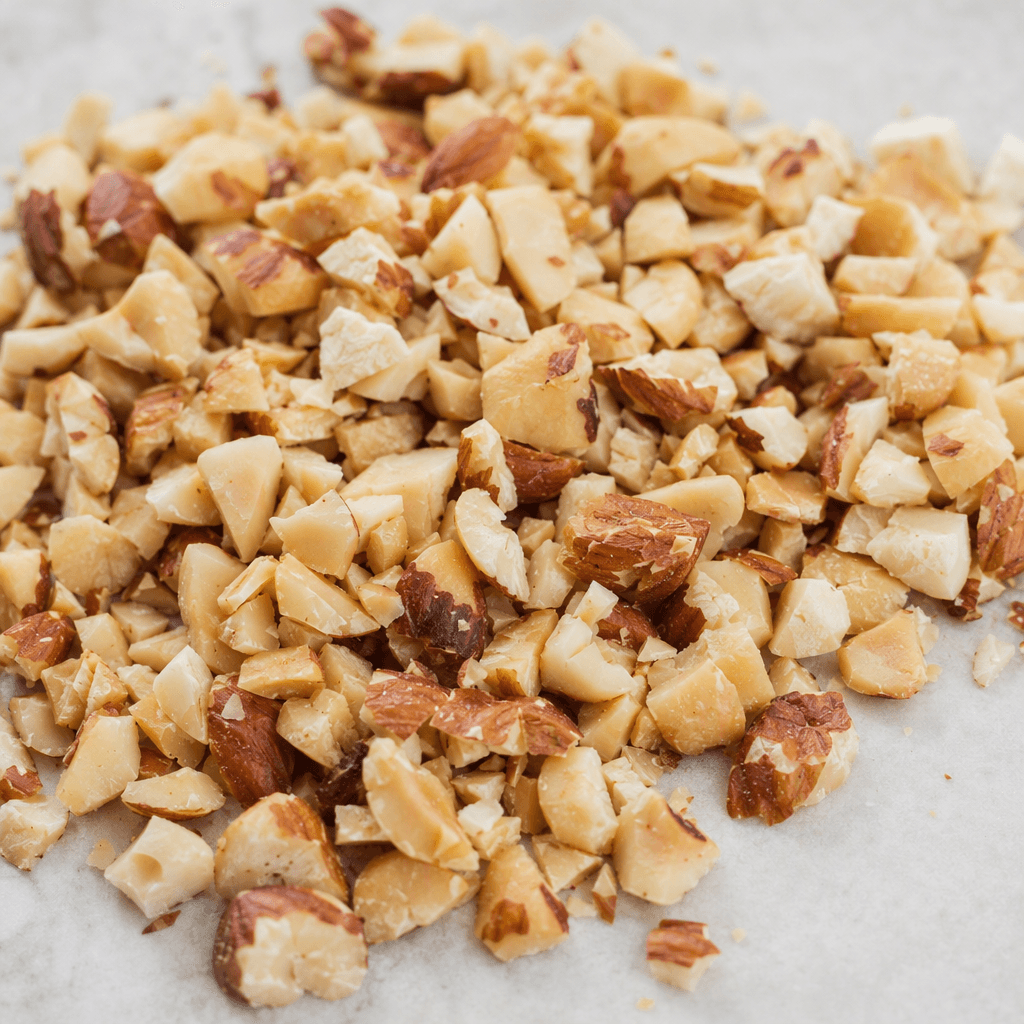
Hazelnut pieces Calories
Healthy fats, Vitamin E, Magnesium, Fiber
In season: Autumn · Winter
CALORIES
GI
POTASSIUM
FIBER
Quick answer
1 tablespoon (medium) of Hazelnut pieces (10 g) has 63 calories. That works out to 628 calories per 100 g. It contains 1.7 g of carbs, 1.5 g of protein, 6.1 g of fat and 1 g of fiber. Its 0.6 mg of Manganese covers 27% of the Daily Value. Its glycemic index is 15 (low), so it raises blood sugar slowly.
What is Hazelnut pieces?
Hazelnut pieces are chopped hazelnuts, sold raw or roasted and ranging from coarse chunks to small bits. Hazelnuts are especially associated with Turkey, but the pieces are used widely in home cooking and baking, from cakes and biscuits to chocolate and praline.
They taste gently sweet and nutty, with a crisp bite; roasting brings out a deeper aroma. Sprinkle them over porridge, yoghurt or salads, or fold them into batters and cookie dough. They are energy-dense, with healthy fats and useful amounts of fibre, vitamin E and magnesium. A small handful adds crunch and flavour to a snack, while a quick dry-toast before serving makes the nutty taste stand out.
Hazelnut pieces Nutrition Facts
Selected: 100 g
628
KCAL / 100G
Carbs
17g
· 6% DV
Protein
15g
· 30% DV
Fat
61g
· 78% DV
Fiber
10g
· 36% DV
DV is the share of the daily value covered, on a 2,000 kcal reference diet.
Calories come from: Carbs 10% · Protein 9% · Fat 81%
Hazelnut pieces Vitamins & Minerals
Vitamins
Vitamin E
15mg · 100% DV
B6
0.56mg · 33% DV
Biotin
10µg · 33% DV
Folate
113µg · 28% DV
Minerals
Manganese
6mg · 261% DV
Copper
2mg · 222% DV
Phosphorus
290mg · 41% DV
Magnesium
163mg · 39% DV
How Nutritious Is Hazelnut pieces?
Nutrient density
Very high
How many vitamins, minerals and how much fiber this food carries per calorie. A high score means a lot of nutrition for few calories.
Satiety score
Medium
An EatBetter score computed from fiber, protein and calorie density. A high score means staying full longer on the same calories.
Both scores are calculated per 100 g and do not change with the selected portion. The satiety score is EatBetter's own calculation, not a clinical measure.
Hazelnut pieces Glycemic Index
GLYCEMIC INDEX
GLYCEMIC LOAD
Accounts for portion size — a more realistic measure than GI alone.
How to Burn Off Hazelnut pieces
To burn the 628 calories in 100 g:
🚶
Walking (5 km/h)
🏃
Running (8 km/h)
🚴
Cycling
🏊
Swimming
Times are calculated with the MET equation for a 70 kg adult. Actual burn varies with your weight, age and pace.
Is Hazelnut pieces Processed?
NOVA 2
Minimally Processed
1. Unprocessed
2. Minimally Processed
3. Processed
4. Ultra-Processed
NOVA classifies foods into 4 groups by industrial processing. NOVA 1 (unprocessed) is the healthiest.
Does Hazelnut pieces Contain Allergens?
Contains these allergens:
Which Diets Is Hazelnut pieces Good For?
Vegan
✓ Suitable
Vegetarian
✓ Suitable
Gluten-Free
✓ Suitable
Dairy-Free
— Not suitable
Mediterranean
✓ Suitable
Paleo
✓ Suitable
Whole30
— Not suitable
DASH
— Not suitable
Keto
✓ Suitable
Low FODMAP
— Not suitable
Hazelnut pieces Fat Profile
SATURATED
4.5g
MONOUNSATURATED
46g
POLYUNSATURATED
7.9g
Omega 6:3 ratio 86.7:1
Above the ideal 4:1 (86.7:1).
Compare Hazelnut pieces
Foods Similar to Hazelnut pieces
Frequently Asked Questions About Hazelnut pieces
How do you toast hazelnut pieces without burning them?
Toast hazelnut pieces in a dry skillet over medium-low heat, stirring constantly until fragrant and lightly golden. Their small size makes them burn faster than whole hazelnuts, so transfer them to a cool plate as soon as they are done.
How should you store hazelnut pieces?
Keep hazelnut pieces in an airtight container in a cool, dark place. Because chopped nuts expose more surface to air, refrigeration can help preserve their flavor, especially in a warm kitchen. Discard pieces that smell or taste stale.
Can you freeze hazelnut pieces?
Yes, hazelnut pieces freeze well. Seal them in a freezer-safe airtight container or bag, removing excess air to protect their flavor. Take out only what you need, and use thawed pieces promptly rather than freezing them again.
How can you use hazelnut pieces in baking?
Hazelnut pieces add crunch to cookies, brownies, cakes, and muffins. Fold them into batter near the end so they stay evenly distributed, or sprinkle them on top before baking. Toasting them first gives baked goods a deeper, nuttier flavor.
Can hazelnut pieces replace pine nuts in pesto?
Yes, hazelnut pieces can replace pine nuts in pesto, though they give it a richer, more distinctly nutty taste. Briefly toast and cool them first, then blend with the herbs, oil, cheese, and other ingredients until the texture is right.
Do hazelnut pieces have to be roasted before eating?
No, hazelnut pieces do not have to be roasted; fresh, properly stored pieces can be eaten raw. Roasting deepens their flavor and makes them crisper, so choose based on the recipe or the texture you prefer.
Can you make hazelnut butter from hazelnut pieces?
Yes, you can blend hazelnut pieces into hazelnut butter, but a food processor may need time to turn the crumbs into a smooth paste. Pause to scrape down the sides, and avoid adding water, which can make the mixture seize.
Should you remove the skins from hazelnut pieces?
No, removing the thin brown skins from hazelnut pieces is usually unnecessary; they are edible. The skins can taste slightly bitter, so if you want a milder flavor, toast the pieces briefly and rub them with a clean towel to loosen some skin.
Can hazelnut pieces replace whole hazelnuts in recipes?
Yes, hazelnut pieces can replace whole hazelnuts when a recipe needs chopped nuts or a topping. They will not provide the same whole-nut crunch or appearance, and they toast faster, so watch them closely during cooking.
How do you know if hazelnut pieces have gone rancid?
Rancid hazelnut pieces often smell sharp, stale, or like old oil, and their flavor may turn bitter. Fresh pieces should smell mildly nutty. If the odor or taste is unpleasant, discard them rather than trying to mask it in a recipe.
Have another question about Hazelnut pieces?
Ask the AI nutrition coach — calories, portions, alternatives and more, answered in seconds in the app.

Scan calories with your camera
Instant AI nutrition analysis

Nutrition data compiled from USDA FoodData Central and scientific sources.